Dog Breed:
Silky Terrier



Other Common Names:
Australian Silky Terrier
Description:
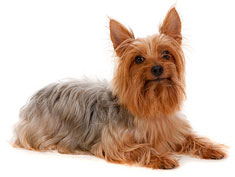
The Silky Terrier is a fine boned long-haired dog with small cat-like feet and upright triangular ears. This dog breed is generally low set.
Country of Origin:
Silky Terriers originated in Australia
Height:
Silky Terriers range from 9 to 10 inches (23-25 cm.)
Weight:
Silky Terriers weight between 8 and 11 pounds (4-5 kg.)
Colors:
Silky Terriers are born black; their coats eventually becomes blue & fire red, or blue with tan markings.
Coat:
The Silky Terrier sheds little to no hair. It should be bathed and combed daily to keep its coat in top condition.
Temperament:
This quick smart dog breed is mindful of his territory. Curious and attentive, the Silky Terrier is an enthusiastic digger. This docile breed makes a good watchdog and an excellent traveling companion.
Health Concerns:
Some health problems that affect the Silky Terrier are intervertebral disc disease, elbow dysplasia, patellar luxation, legg-Perthes, diabetes, epilepsy and tracheal collapse.
Life Expectancy:
The life-span of the Silky Terrier is about 12-15 years.
Living Environment:
The Silky Terrier does well living in an apartment, but it has excellent stamina and loves to play outside.
AKC Group:
Silky Terriers are in the Toy Group