Dog Breed:
Vizsla
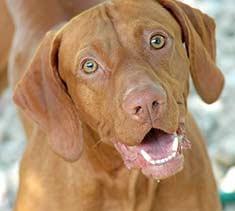


Description:
The Vizsla is a medium-sized dog breed, muscular but lightly built, enabling it to be fast and graceful in its gait, covering a lot of ground. The Vizsla is known to have great endurance and stamina. A very energetic dog breed, the Vizsla is happiest when he has something to do.
Country of Origin:
The Vizsla originated in Hungary.
Height:
Male Vizslas range from 22 inches to 26 inches. Female Vizslas range from 20 inches to 24 inches.
Weight:
Male Vizslas range from 22 inches to 26 inches. Female Vizslas range from 20 inches to 24 inches.
Colors:
Vizslas are typically a solid golden rust.
Coat:
Vizslas have a short, dense and smooth coat that requires minimal brushing.
Temperament:
The Vizsla is a friendly and loving dog breed that adapts well to family life. Alert and responsive, the Vizsla makes a good watchdog. The owner of a Vizsla should be an active and energetic leader because if not given enough exercise, the Vizsla may become destructive.
Health Concerns:
The Vizsla is susceptible to skin problems, hip dysplasia and epilepsy.
Life Expectancy:
The expected life span of the Vizsla is 10-14 years.
Living Environment:
Vizslas need frequent exercise and daily mental challenges. Vizslas make good housedogs, but a fenced yard and plenty of stimulation is crucial for this alert and gentle dog breed.
AKC Group:
The Vizsla is in the Sporting group.
This breed has many names – Hungarian Vizsla, Hungarian Pointer, Maygyar Vizsla – but they all add up to one beautiful dog. Although the Vizsla is a great all-around pointer and retriever, he is also a fabulous companion and family dog.
What does the Vizsla look like?
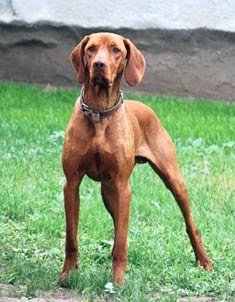
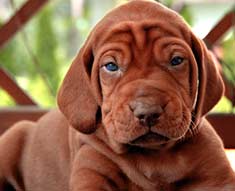
One of the characteristics that has made the Vizsla immensely popular is his small size. Weighing in at 40 – 65 pounds and standing 21 – 25 inches tall, the Vizsla is one of the smaller sporting breeds. His distinctive rust-colored coat is short and smooth, with no undercoat. His nose color should blend with his coat, as should his light-colored eyes, which are usually green or blue. The eye-rims, lips, toenails, and pads of the feet are also close to the same color as the coat.
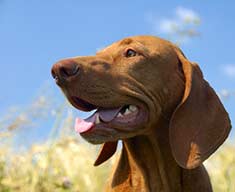
The dog’s coat color may range from copper to russet gold to dark sandy gold, but solid dark mahogany and pale yellow are considered faults. A small white patch on the chest is permissible, but it must not extend onto the shoulders or neck.
This dog is so energetic, it is tough to keep weight on him. Being able to see the stark outline of the ribs, hipbones, and spine is considered normal in this dog. As the dog ages and becomes less active, his food rations should be adjusted accordingly to keep him from becoming obese.
There has been some controversy about tail-docking in recent years, with many critics decrying the procedure as unnecessary and barbaric. However, certain breeds require tail docking to prevent damage to the tail, and the Vizsla’s tail should be routinely docked before the puppy reaches 3 days of age.
Two-thirds of the Vizsla’s tail is strong and thick, but the last one-third of the tail is very thin and whip-like. As the dog runs after its prey, he wags his tail vigorously, leaving it susceptible to splitting and bleeding. Once the tail is damaged, it often does not heal appropriately and may eventually have to be amputated. At the very young age when most Vizslas are docked, the nerve structure to the tail is not yet developed, and the procedure does not cause undue pain.
How does the Vizsla act?
This highly affectionate dog often appears to have Velcro attached to him, as he rarely leaves his guardian’s side. In fact, if permitted to get away with it, he will sleep in bed with his guardians, preferring to be under the covers because his short single coat does not offer much protection from the cold.
Vizslas have an intense high-energy drive and require lots of regular exercise. This dog runs like the wind and will not be happy without the opportunity to stretch his muscles daily.
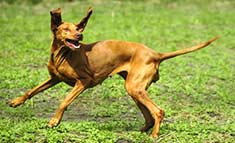
The Vizsla is a natural hunter and relatively easy to train using positive reinforcement such as praise and treats. This breed is very sensitive and will not take well to harsh training. Vizslas work equally well on land and sea, serving both as pointers and as retrievers.
Highly intelligent, the Vizsla needs mental stimulation as well as physical. If he doesn’t have a challenge, he may become depressed or obsessive-compulsive. An obsessive-compulsive dog may continually lick himself causing sores to develop. The Vizsla enjoys constant companionship, and may become destructive if left alone for long periods of time.
A good way to keep your Vizsla occupied and provide him with the companionship he craves is to get him involved with dog sports such as agility, lure coursing, dock diving, or flyball.
What are the grooming requirements for a Vizsla?
The Vizsla is a very low-maintenance dog. He does not pick up dog odor, unless he goes swimming after birds fairly often. Bathing once every three to six months is generally sufficient unless he rolls in something fragrant while out on a run. His short coat requires very little brushing. This breed does shed, but not excessively. Rubbing the dog with a sweater made of synthetic fibers will pick up loose hairs and prevent them from landing on your furniture.
How was the Vizsla breed developed?
The Vizsla’s ancestors were depicted in primitive stone etchings over a thousand years ago, shown with Magyar hunters, and was described in a written work as early as 1357. Originally reserved only for the ruling class, they were prized for their hunting ability and companionship.
As the Austria-Hungary empire was carved up into smaller republics, Vizslas found themselves living in many parts of Eastern Europe, even though they all share Hungarian ancestry. After near extinction at the end of World War II, the dozen or so pure-bred specimens were carefully bred to further the standard we see today. The breed was brought to the United States in the early 1950s and was recognized by the American Kennel Club in 1960.
Where have I seen this breed?
The Vizsla has never been among the most popular breeds in the United States, ranking at number 44 on the AKC’s list of 161 breeds. The breed is much sought-after as a gun dog, but his high energy requirements scare many prospective guardians. Clifford the Big Red Dog is perhaps the most notable member of the breed, although a giant one, at that.
The Vizsla has been used in development of several other breeds including the Weimaraner, the Wire-haired Vizsla, and the German Shorthair Pointer, resulting in a strong resemblance between these breeds.
Is this the dog for me?
You will not likely find a dog that likes to cuddle more than the Vizsla. If your lap can handle a 50-pound load, this is the dog that will keep you warm when you sit, crawl under the covers with you at night, and follow you from room to room throughout the day. However, his high energy needs dictate that he must get at least 30 minutes of big-muscle exercise each and every day. If you have a large yard, it will be sufficient to allow him to romp there. However, if you don’t have the luxury of green space at your home, you must find a dog park or some other place where your Vizsla can run freely off-leash.
If you can support his high-energy needs, or if you need an outstanding gun dog, the Vizsla may well be the dog you are looking for.