Dog Sports
For dog breeds that need a mental challenge, dog sports may provide just the outlet your dog craves to keep him occupied and happy. The best thing about dog sports is that all dogs, regardless of pedigree, size, or alteration, can compete.
Although there are many sports that involve dogs such as tossing a ball or catching a Frisbee, certain dog sports are sanctioned and recognized as creating champions in the dog world.
Flyball
One of the few dog sports that involves teams rather than individual dogs, flyball sends each dog over a line of hurdles, then to a spring loaded pad on the front of a box. When the dog pounces on the pad, a tennis ball is released from the box. The dog must catch the ball and travel back to the handler. This act of catching the ball on the fly is where the sport gets its name. When the first dog on the team returns, the second dog begins his run, continuing until all four dogs on the team have completed the relay.
Flyball is sanctioned by the North American Flyball Association (NAFA), which sets the rules for the sport. Hurdles range in height from 7 inches to 14 inches, with the hurdle height for each team being determined by the shortest dog on the team. The shortest dog is measured at the withers, or shoulders, then officials subtract five inches to arrive at the hurdle height. However, even very small dogs must be able to jump a minimum 7-inch hurdle, while the largest dogs need only jump maximum 14-inch hurdles.
Flyball history
Dog trainers in Southern California combined hurdling with tennis ball retrieval in the late 1960’s and early 1970’s. Herbert Wagner developed the first flyball box and demonstrated the sport on the Tonight Show with Johnny Carson. Flyball clubs soon developed across the United States and Canada, with the current-day NAFA growing out of a joint venture between the Michigan and Ontario clubs. Today, there are over 400 clubs and 6,500 dogs involved in flyball. Over 300 tournaments are held each year all over North America, and the sport has spread throughout the United Kingdom, and European Union.
Champion Flyballers
Teams may be composed of dogs all of the same breed or of a mixture of breeds. Terriers and herding dogs such as Border Collies currently dominate the sport, although the top point-earner as of April, 2009 was a mixed-breed.
For any team that completes its race in under 24 seconds, each dog receives 25 points towards a flyball title. If the team finishes in under 28 seconds, each dog receives 5 points, and in under 32 seconds, 1 point. Any dog who accumulates 20 points is given the title of Flyball Dog (FD), the lowest rank. At 500 points, a dog becomes a Flyball Dog Champion (FDCh), and at 100,000 points, the dog is awarded the Hobbes Award, the highest classification. (Hobbes was the first dog ever to reach 100,000 points.)
Shadow, the mixed breed dog at the top of the leader board, became the first dog to reach 150,000 points in August of 2008. Handler Karen Larkin credits her team, Pawsitive Attitudes, with helping and supporting Shadow to this remarkable accomplishment.
Agility
One of the fastest growing dog sports, agility competitions combine speed and precision to run dogs through the various obstacles in a course. Obstacles may include those which must be contacted in a certain way like see-saws and A-frames, rigid or collapsed tunnels, hurdles, jumps, weave poles, and pause tables where the dog must stand still for a certain number of seconds before continuing through the course.
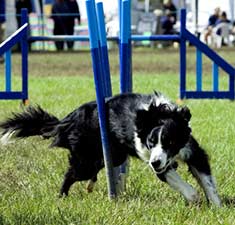
Governing bodies for agility training
Agility events are sanctioned by the North American Dog Agility Council (NADAC), the United States Dog Agility Association (USDAA), or the American Kennel Club (AKC). As with all AKC competitions, AKC agility is open only to purebred dogs. However, the dogs need not be show-quality dogs and may be spayed or neutered.
Under NADAC rules, dogs enter at the novice level then advance to the open level and then on to the elite level. Jump heights are determined by the division (standard, junior, veteran), as well as by the height of the dog. Each division includes categories for proficient and skilled. Skilled competitors may jump lower heights, but proficient competitors earn more qualifying points.
USDAA rules specify that a standard course include, at a minimum, three contact obstacles, two types of tunnels, weave poles, a table, and a tire jump. At each event, the judge designs the course and sets a standard time. A dog’s score is determined by adding course penalties such as the dog’s paws not touching the correct place on a contact obstacle to the number of seconds by which the dog’s time exceeded the standard time. The dog with the lowest score wins.
Non-standard USDAA courses are available where bonus points may be earned or where certain obstacles are excluded or where dogs compete in relay teams.
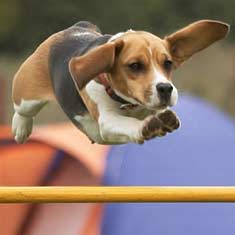
Top physical form is required for agility training
Agility training is unique as compared to other dog sports in that the handler must be in top physical form, just as the dog is. In most dog sports, the handler stands still and lets the dog do all of the running and jumping. In agility, the handler runs alongside the dog, encouraging him through the various obstacles. It is not unheard of for a handler to blow out a knee when turning a corner as he runs the course.
Other Dog Sports
Lure coursing is also a very popular dog sport, but it is only open to certain breeds, those known as sight hounds. Breeds included in this group include the Afghan Hound, the Basenji, the Greyhound, the Rhodesian Ridgeback, the Saluki, and the Whippet.
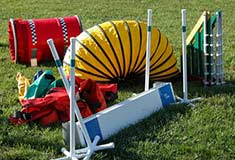
Because these dogs live for the chase, a lure course is designed by placing pulleys around a field to represent the route a prey animal might take when being chased by a sight hound. A plastic lure is attached to the string running through the pulleys, and the dog chases the lure through the course. Dogs are scored based on speed, agility, endurance, enthusiasm, and follow.
Some handlers place great emphasis on scores, while others look only to the fact that their dog had a great time. According to the American Sighthound Field Association website, someone once said of lure coursing, “Don’t tell my dog how he placed – he thinks he had a good time.”
Dock Diving is a sport that involves a dog running the length of a dock then jumping into a lake or pool to retrieve a toy thrown by the handler. Big Air is a long jump, while Extreme Vertical resembles the track and field high jump event. The third event in dock diving is speed retrieve, where the dog jumps into the water and swims out to snatch a toy mounted at the end of a pole. Iron dogs compete in all three events. These events are sanctioned by an organization known as DockDogs, based in Medina, Ohio.
Dog Scootering is similar to the mushing events held in Alaska such as the Iditarod Sled Dog Race. Dogs, either alone or in teams, pull a human riding on a kick scooter rather than a dog sled. The scooter is unmotorized and uses mountain-bike tires. Larger dogs such as Great Danes and Huskies generally pull alone, while smaller dogs pull in teams.
Sheepdog Trials are events where herding dogs move sheep around an enclosure as directed by the dogs’ handlers. These events are popular in the United Kingdom, where the skill is not just a sport but a necessity in hilly farm country. There are several events, but all center around the dog’s ability to keep between three and six sheep under control.
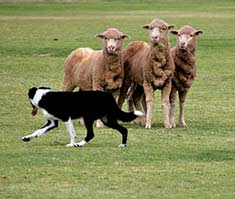
In one event, two dogs work together to divide the sheep into two groups, which is difficult because sheep tend to stay together. One dog herds half of the sheep into a pen while the other dog keeps the rest of the herd still, usually only by using his head and an “evil-eye” stare. (Those of you who have ever had to keep your children quiet in church know exactly what this means.)
Events are scored by taking deductions from the maximum possible score for each fault such as when the sheep move off line. If the course is not completed in the maximum allotted time, no points are awarded.
No matter which sport you choose to pursue with your canine companion, you will realize a closer relationship with him and will likely improve both your physical fitness and your dog’s.

Doggies Den: Latest Articles
 Homemade Thanksgiving Treats for Your Dog
NUTRITION We all want to include our dogs in our holiday celebrations, but hopefully, you're aware that sharing table scraps with your dog isn't always the best idea.
 Keeping Your Dog Safe during the Summer Months
HEALTH Summer is coming on fast, so it’s time to plan how you will keep your dog safe and healthy through the lazy, carefree, warm days.
 Vaccination Time Again-Keeping Your Puppy Healthy
DOG HEALTH So you have your new puppy picked out. There are quite a few shots, treatments and examinations that will keep the newest member of your family healthy.
 Canine Thanksgiving Feast
NUTRITION With the wide variety of food at Thanksgiving dinner, chances are you'll want to give your dog something special, too. If you're contemplating what to feed your dog for the holiday, here is a guide to a great Canine Thanksgiving Feast.
 Dog Walking Tips Every Owner Should Know
DOG FUN Walking your dog is not only crucial to keeping him healthy and happy, it strengthens the bond between your canine friend and his caregiver. There are a lot of obstacles out there. Don’t forget these simple tips to keep your walk fun and safe in the outside world.
 The Benefits of Physiotherapy for your Dog
HEALTH The same techniques that physiotherapists use to treat a variety of injuries and conditions in humans have been adapted to suit animals with great success. Family pets, show dogs, and working dogs can all benefit greatly from physiotherapy. Dogs whose activities involve a lot of agility are especially susceptible to the types of problems that physiotherapy can address.
 The Decision- Adding a Dog to Your Family
FIRST TIME OWNERSBringing a dog into your family is a decision where many people don’t realize it’s magnitude until after they have the dog. There are a number of things that you need to research before you decide to purchase a dog, and it starts right in your own home.
 Bringing Your Dog Into Your New Baby's Life
HEALTH Many believe that a dog and a new baby cannot happily coexist, so therefore the dog has to go. This is not necessarily the case.  A new baby does not mean you have to abandon your dog.

Doggies Den:
Most Popular Articles

Dog Pregnancy Symptoms
HEALTHIf you suspect your dog might be pregnant, check out part one in this series on pregnant dogs, where we cover pregnant dog symptoms.
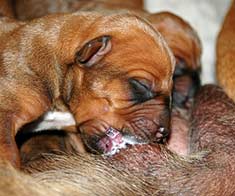
Dog Birth
HEALTHIn the third article of our dog pregnancy series, we look at the wonderful, but messy, process of bringing newborn puppies into the world.
Indoor Dog Potties
DOG PRODUCTSIt's been a long day at work. You were so busy, you didn't even take time to eat a sandwich, let alone run home to let your dog out. You're on your way home, knowing the poor dog is crossing his or her legs by now, when your car breaks down, delaying you even further. Can't somebody make this easier?
Your Dog’s Digestive System
PHYSIOLOGYEver wonder why your dog eats so fast? Or why he eats gross things? Or why he gets sick to his stomach? Or why his waste stinks so bad? Some of these things are normal, some are not.

Canine Respiratory System
BREATHINGThe basic function of your dog's respiratory system is to bring oxygen in to and remove carbon dioxide from the body. Knowing the symptoms of respiratory diseases can help you help your stay healthy.
Shelter Dog Adoption Tips for Success
ADOPTION Are you intimidated by the prospect of "rescuing" a dog from a shelter? One reason that you may be wary of adopting a dog from a shelter is not knowing how to choose. Adopting a dog from a shelter can be a rewarding process, if you're prepared to do a reasonable amount of research.
Canine Urinary Tract Infections
SYMPTOMS AND TREATMENTDoes your dog seem to be having trouble relieving his or her bladder? Learn how to recognize the signs of urinary tract infections and how to treat them before they spread.
What to do for Dog Diarrhea
SYMPTOMS AND REMEDIESIf you have dogs in your house for any length of time, you have likely experienced at least one bout of dog diarrhea. Beyond the pain in the tuckus involved in cleaning up the mess, you should know what causes diarrhea, and when it's important to see the vet.
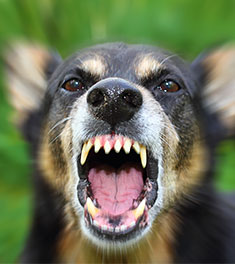
What to do for a Dog Bite
DOG BEHAVIOR Getting bitten by a dog can be scary, and you may be tempted to run around in circles for a while, trying to figure out what to do. Here's our guide to help you manage the situation.
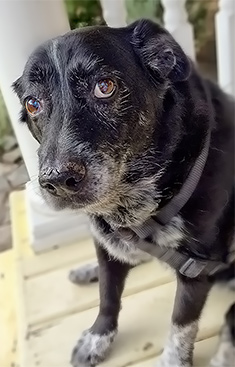
Top Ten Tips for Living with a Senior Dog
DOG HEALTH Bringing home a new puppy is so exciting, but it doesn’t take all that long for your exuberant puppy to grow into a senior dog who may have special needs. Here are the doggies.com top ten tips for taking care of your companion who has been with you through so much.