Dogs and Winter
The snow falls, Jack Frost nips at your nose, the windows are glazed over, and the pond begins to freeze. Seems like a Burl and Ives print. While you're enjoying the cold weather and winter sports, keep in mind some special considerations for your dog during the long winter's night.
Sporting Events
Some dog sporting events are especially geared toward winter, such as sled racing. Winter sports can be lots of fun for your dog, even if his favorite thing is to simply burrow through the snow drifts. However, it is vital that precautions are taken to de-ice your dog's paws after he's out in the snow. Small pieces of ice can get stuck between the pads of his or her paws, causing damage to the sensitive areas of the feet. Spend a just a few seconds examining your dog's paws whenever he or she comes in from a romp in the snow. It can save you from many weeks of trying to repair a torn foot pad.

If you take your dog to observe human sporting events during the winter, remember to provide for his or her warmth. You likely have foot warmers and glove heaters if you spend a lot of time outdoors, and chances are you know how to dress in layers to keep out the wind. Most dogs have no such protection. While Huskies, Malamutes, and other dogs bred in the coldest regions of the world have coats built to protect them from the cold, most dogs do not have such a luxury.
In fact, many dogs such as Chihuahuas cannot tolerate the cold for very long at all. Provide your dog with a sweater if he shivers when you're outside. Remember that although you may be sitting on a hard bench watching the game, your dog is sitting on the cold ground. Consider providing a blanket for him to lay on to keep the chill from his bones. This is especially important for older dogs where arthritis may become an issue.
Shelter
Dogs, being pack animals, would much prefer to spend most of their time in your home with the family. If that's just not possible, and your dog does have to spend a great deal of time outdoors in the winter, please make sure you provide adequate shelter for him or her.
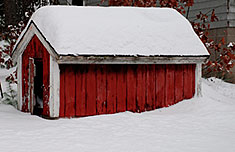
A sturdy dog house or at least some type of enclosure should be provided to keep out some of the wind. In addition, straw should be laid down to provide the dog with a place to burrow for some warmth. If you can't get straw, at least line the space with an old blanket or two to give him or her something in which to snuggle. They are even making dog-sized Snuggie® blankets now, so you have no excuse for leaving your dog out unprotected in the cold.
Food
Although your dog may not be as active during the winter months as he or she is during the summer, you may find that you need to keep feeding the same amount of food. This is because more of the dog's metabolism will be used to warm the dog than has to be used in the summer months.
If your dog stays indoors most of the time, you may find that cutting back on his or her food during the winter is required to prevent obesity. Most of us are less active in the winter, and if you're not outside walking and playing, your dog probably isn't either. The goal is to keep your dog's weight reasonably consistent from season to season throughout the year.
Exercise
When it's so cold outside you wouldn't normally take out the garbage, the temptation is to just be lazy inside, but for many dogs, lazy isn't a style that fits too well. High energy dogs need to have some outlet for their vigor or they may well become destructive. Find a place where you can toss a tennis ball or play some other type of active game with your dog before he or she decides to make his or her own fun with the stuffing in your sofa.
Water
Keep in mind that an outdoor water dish will quickly freeze over in many parts of the country during the winter months. Check and refill the dish often, or purchase a heated dish if possible.
The other water hazard you must watch for during the winter is the lakes and ponds your dog may have access to. Every winter, we read stories of dogs who venture onto ice that is too thin to hold them. They fall through and are unable to get out of the water. Usually, the stories we read are about the heroics of those who went out on the ice to save the dog, but it is likely that there are many dogs who disappear this way before a hero arrives. Keep your dog on a leash near the water so he doesn't fall in, and make sure you know where your dog is if you have water on or near your property.
Hunting
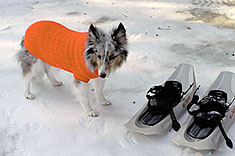
One of the major reasons some people have dogs is to use them for hunting. Training a good hunting dog is not something that can be done easily or cheaply, so it pays to protect your investment. Buy your dog the biggest, brightest orange collar and vest you can find to keep him from getting shot by some yahoo out on his first hunting expedition.
Invest in a GPS collar to enable you to find your dog if he gets overly excited and gets away from you while he is chasing prey.
Holidays
Rich food, turkey bones, chocolate, and tinsel are just a few of the holiday horrors awaiting your pet in the wintertime. Check out the article on Fall and Winter Holidays for more details.
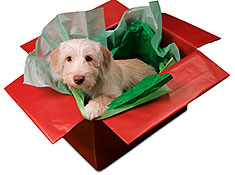
Keep in mind that dogs make horrible holiday gifts. Although it is absolutely adorable to see a puppy pop up out of a box, a cute red or blue ribbon around his neck, you are asking the recipient to take on a whole lot of responsibility that he or she may not be up for. The cute puppy may well grow into a giant that is ill-suited to the recipient's home, or the person may just not know what to expect out of a puppy. Either way, many "present dogs" end up in shelters because the new guardians cannot take care of them.
Winter can indeed be a time of wonderland, but we must remember that our dogs need special care to keep them fed, watered, sheltered, safe, and occupied.

Doggies Den: Latest Articles
 Homemade Thanksgiving Treats for Your Dog
NUTRITION We all want to include our dogs in our holiday celebrations, but hopefully, you're aware that sharing table scraps with your dog isn't always the best idea.
 Keeping Your Dog Safe during the Summer Months
HEALTH Summer is coming on fast, so it’s time to plan how you will keep your dog safe and healthy through the lazy, carefree, warm days.
 Vaccination Time Again-Keeping Your Puppy Healthy
DOG HEALTH So you have your new puppy picked out. There are quite a few shots, treatments and examinations that will keep the newest member of your family healthy.
 Canine Thanksgiving Feast
NUTRITION With the wide variety of food at Thanksgiving dinner, chances are you'll want to give your dog something special, too. If you're contemplating what to feed your dog for the holiday, here is a guide to a great Canine Thanksgiving Feast.
 Dog Walking Tips Every Owner Should Know
DOG FUN Walking your dog is not only crucial to keeping him healthy and happy, it strengthens the bond between your canine friend and his caregiver. There are a lot of obstacles out there. Don’t forget these simple tips to keep your walk fun and safe in the outside world.
 The Benefits of Physiotherapy for your Dog
HEALTH The same techniques that physiotherapists use to treat a variety of injuries and conditions in humans have been adapted to suit animals with great success. Family pets, show dogs, and working dogs can all benefit greatly from physiotherapy. Dogs whose activities involve a lot of agility are especially susceptible to the types of problems that physiotherapy can address.
 The Decision- Adding a Dog to Your Family
FIRST TIME OWNERSBringing a dog into your family is a decision where many people don’t realize it’s magnitude until after they have the dog. There are a number of things that you need to research before you decide to purchase a dog, and it starts right in your own home.
 Bringing Your Dog Into Your New Baby's Life
HEALTH Many believe that a dog and a new baby cannot happily coexist, so therefore the dog has to go. This is not necessarily the case. A new baby does not mean you have to abandon your dog.
Doggies Den:
Most Popular Articles
Dog Pregnancy Symptoms
HEALTHIf you suspect your dog might be pregnant, check out part one in this series on pregnant dogs, where we cover pregnant dog symptoms.
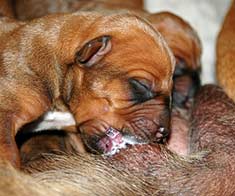
Dog Birth
HEALTHIn the third article of our dog pregnancy series, we look at the wonderful, but messy, process of bringing newborn puppies into the world.
Indoor Dog Potties
DOG PRODUCTSIt's been a long day at work. You were so busy, you didn't even take time to eat a sandwich, let alone run home to let your dog out. You're on your way home, knowing the poor dog is crossing his or her legs by now, when your car breaks down, delaying you even further. Can't somebody make this easier?
Your Dog’s Digestive System
PHYSIOLOGYEver wonder why your dog eats so fast? Or why he eats gross things? Or why he gets sick to his stomach? Or why his waste stinks so bad? Some of these things are normal, some are not.
Canine Respiratory System
BREATHINGThe basic function of your dog's respiratory system is to bring oxygen in to and remove carbon dioxide from the body. Knowing the symptoms of respiratory diseases can help you help your stay healthy.
Shelter Dog Adoption Tips for Success
ADOPTION Are you intimidated by the prospect of "rescuing" a dog from a shelter? One reason that you may be wary of adopting a dog from a shelter is not knowing how to choose. Adopting a dog from a shelter can be a rewarding process, if you're prepared to do a reasonable amount of research.
Canine Urinary Tract Infections
SYMPTOMS AND TREATMENTDoes your dog seem to be having trouble relieving his or her bladder? Learn how to recognize the signs of urinary tract infections and how to treat them before they spread.
What to do for Dog Diarrhea
SYMPTOMS AND REMEDIESIf you have dogs in your house for any length of time, you have likely experienced at least one bout of dog diarrhea. Beyond the pain in the tuckus involved in cleaning up the mess, you should know what causes diarrhea, and when it's important to see the vet.
What to do for a Dog Bite
DOG BEHAVIOR Getting bitten by a dog can be scary, and you may be tempted to run around in circles for a while, trying to figure out what to do. Here's our guide to help you manage the situation.
Top Ten Tips for Living with a Senior Dog
DOG HEALTH Bringing home a new puppy is so exciting, but it doesn’t take all that long for your exuberant puppy to grow into a senior dog who may have special needs. Here are the doggies.com top ten tips for taking care of your companion who has been with you through so much.