Cockapoo Breed Guide
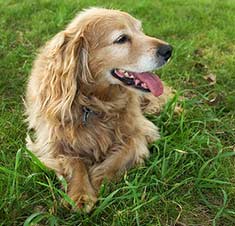
This adorable little hybrid is the result of crossing a Cocker Spaniel with a Poodle. Known in the United States since about 1950, many Cockapoo puppies are now the result of breeding between two adult Cockapoos, rather than starting with the original purebreds. It is not acceptable to breed a Cockapoo with a Cocker Spaniel or with a Poodle. This would produce a dog that is ¾ of one breed and ¼ of the other, while the Cockapoo is defined as a 50:50 combination of DNA. In other countries, this same dog is called the Spoodle, resulting from a different combination pattern of the same two breed names.
The Cockapoo draws its characteristics from both of its parent breeds. From the Cocker Spaniel, the Cockapoo inherits most of his personality traits, such as being outgoing and loving. The Cocker Spaniel genetics also bring a sturdy body, as well as the ear infections common to floppy-eared breeds. The Poodle inheritance includes intelligence, high activity level, low-level shedding, and low dander production.
The American Kennel Club does not recognize the Cockapoo as a purebred because successive generations do not consistently produce predictable characteristics of the breed. For example, if you bred two poodles to each other, you are passing on to the puppies pretty similar DNA from both sides. Therefore, you would expect that the puppies would look similar to both of the parents and would be likely to have the desirable characteristics responsible breeders try to promote by selectively breeding only the most outstanding examples of the poodle breed.
You've heard the old joke: "She has her grandmother's face…and boy, does it look better without the wrinkles!" (Thanks. I'll be here all week. Don't forget to tip your veal and try the waitress!) The point is that certain familial traits are passed from one side of the family or the other, and each side has very different DNA. This is what happens when you cross two different breeds to create a hybrid. Any given puppy may inherit mostly Cocker characteristics or mostly Poodle characteristics or a mish-mash of both.
A breed standard simply cannot be devised at this time that will apply to most Cockapoos because there is a huge variance in looks and temperament from dog to dog depending on which parent breed they favor. However, there are three major Cockapoo clubs in the United States working to establish the Cockapoo as a recognized breed by breeding Cockapoos among themselves rather than by starting with a Cocker Spaniel and a Poodle. Continually breeding Cockapoo to Cockapoo should produce the same results as purebred breeding, that is, the consistent production of predictable characteristics.
Some purebred breeders will tell you that a hybrid dog inherits only the worst tendencies of each of the parent breeds. This may be a glass half-full vs. glass half-empty type of argument. What Cockapoo breeders have noted is that the Cocker-Poodle mix brings out the best in both breeds, known as hybrid vigor. In fact, Cockapoos have a longer life span than many dogs of their size, living as long as 18 to even 22 years. In addition, by crossing two different breeds, you are enlarging the gene pool, thus reducing the chances that defects will be reproduced in successive generations.
The Poodles most commonly bred to Cocker Spaniels are the toy and miniature. The Toy Poodle stands less than 10 inches and weighs just 6 to 9 pounds. The Miniature Poodle stands 10 - 15 inches and weighs 15 to 17 pounds. The Cocker itself (which is usually the dam in the mating) stands 14 to 17 inches tall and weighs 25 to 34 pounds. The mating produces a Cockapoo somewhere in between the two, standing 10 - 15 inches tall and weighing 6 - 20 pounds.
The wide range in the Cockapoo's stats is likely the result of the fact that some breeders use toy poodles, producing Cockapoos at the low end of the range, while others use miniature poodles, producing the larger Cockapoos. The proposed breed standard for the Cockapoo includes four ranges to differentiate between the various sizes. A Teacup Toy is under six pounds, a Toy is 6 - 12 pounds, a Miniature is 13 - 18 pounds, while a Maxi is over 19 pounds.
The coat of a Cockapoo may be any color. The style ranges, as you might expect, from the defined curls of a Poodle to the wavy, nearly straight, hair of a Cocker. However, the dog should not totally resemble either of the parent breeds. The fur around the eyes is generally trimmed to prevent the dog's vision from being obscured. Other than that, the fur may be clipped to a 2 - 3" "puppy cut" or left naturally long, which requires frequent brushing to prevent tangles. The tail is undocked and may be carried straight or curled.
That said, the planned standard will stress disposition and health much more strongly than appearance. A Cockapoo should be neither aggressive nor shy. The Cockapoo Club of America recommends looking for a puppy with a calm, mellow disposition, sweet and patient nature, intelligence, loyalty, friendliness, sturdiness, stamina, and good health.
Some of the problems common to Cocker Spaniels and Poodles should be less likely in Cockapoos because of the enlarging gene pool. However, a prospective Cockapoo family needs to be aware of the major problems which could be passed on to the puppy. These include
- Progressive Retinal Atrophy, a group of degenerative eye diseases which can lead to blindness. Dogs which will be used for breeding should first be tested using the protocol set forth by the Canine Eye Research Foundation (CERF) to assure that this genetic disease is not present.
- Patellar Luxation, a genetic disease which causes the kneecap to stray from its normal location. Surgery can correct this problem when it is found in a puppy.
- Hip Dysplasia, which can be found by a testing protocol developed by the Orthopedic Foundation for Animals (OFA). Again, this testing should be done before any breeding occurs, even though this disease is primarily associated with larger dogs.
- Legge-Calves-Perthes Disease, or aseptic necrosis of the femoral head. This disease is more common in small animals than is hip dysplasia. This inherited disease causes the blood supply to the top of the thighbone to become compromised, causing the bone to die. When necrosis is discovered, a surgeon must remove the affected section of the bone, and the dog then undergoes extensive physical therapy to recover use of the leg.
When choosing a breeder, prospective buyers should ask to see the parent dogs' CERF and OFA certifications and should be able to visually inspect the parents for any obvious lameness or other defects prior to purchasing a puppy. Once genetic health is properly assured, the choice from among a litter of puppies should be temperament. Keep in mind that the planned breed standard is much more about how the dog acts than how he looks. A happy, outgoing, intelligent, and active dog will provide the family with lovable companionship for years and years to come.

Doggies Den: Latest Articles
 Homemade Thanksgiving Treats for Your Dog
NUTRITION We all want to include our dogs in our holiday celebrations, but hopefully, you're aware that sharing table scraps with your dog isn't always the best idea.
 Keeping Your Dog Safe during the Summer Months
HEALTH Summer is coming on fast, so it’s time to plan how you will keep your dog safe and healthy through the lazy, carefree, warm days.
 Vaccination Time Again-Keeping Your Puppy Healthy
DOG HEALTH So you have your new puppy picked out. There are quite a few shots, treatments and examinations that will keep the newest member of your family healthy.
 Canine Thanksgiving Feast
NUTRITION With the wide variety of food at Thanksgiving dinner, chances are you'll want to give your dog something special, too. If you're contemplating what to feed your dog for the holiday, here is a guide to a great Canine Thanksgiving Feast.
 Dog Walking Tips Every Owner Should Know
DOG FUN Walking your dog is not only crucial to keeping him healthy and happy, it strengthens the bond between your canine friend and his caregiver. There are a lot of obstacles out there. Don’t forget these simple tips to keep your walk fun and safe in the outside world.
 The Benefits of Physiotherapy for your Dog
HEALTH The same techniques that physiotherapists use to treat a variety of injuries and conditions in humans have been adapted to suit animals with great success. Family pets, show dogs, and working dogs can all benefit greatly from physiotherapy. Dogs whose activities involve a lot of agility are especially susceptible to the types of problems that physiotherapy can address.
 The Decision- Adding a Dog to Your Family
FIRST TIME OWNERSBringing a dog into your family is a decision where many people don’t realize it’s magnitude until after they have the dog. There are a number of things that you need to research before you decide to purchase a dog, and it starts right in your own home.
 Bringing Your Dog Into Your New Baby's Life
HEALTH Many believe that a dog and a new baby cannot happily coexist, so therefore the dog has to go. This is not necessarily the case. A new baby does not mean you have to abandon your dog.

Doggies Den:
Most Popular Articles
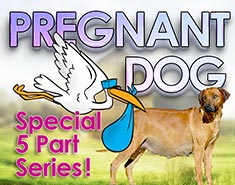
Dog Pregnancy Symptoms
HEALTHIf you suspect your dog might be pregnant, check out part one in this series on pregnant dogs, where we cover pregnant dog symptoms.
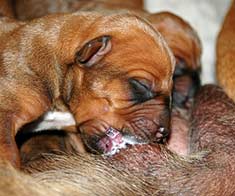
Dog Birth
HEALTHIn the third article of our dog pregnancy series, we look at the wonderful, but messy, process of bringing newborn puppies into the world.
Indoor Dog Potties
DOG PRODUCTSIt's been a long day at work. You were so busy, you didn't even take time to eat a sandwich, let alone run home to let your dog out. You're on your way home, knowing the poor dog is crossing his or her legs by now, when your car breaks down, delaying you even further. Can't somebody make this easier?
Your Dog’s Digestive System
PHYSIOLOGYEver wonder why your dog eats so fast? Or why he eats gross things? Or why he gets sick to his stomach? Or why his waste stinks so bad? Some of these things are normal, some are not.

Canine Respiratory System
BREATHINGThe basic function of your dog's respiratory system is to bring oxygen in to and remove carbon dioxide from the body. Knowing the symptoms of respiratory diseases can help you help your stay healthy.
Shelter Dog Adoption Tips for Success
ADOPTION Are you intimidated by the prospect of "rescuing" a dog from a shelter? One reason that you may be wary of adopting a dog from a shelter is not knowing how to choose. Adopting a dog from a shelter can be a rewarding process, if you're prepared to do a reasonable amount of research.
Canine Urinary Tract Infections
SYMPTOMS AND TREATMENTDoes your dog seem to be having trouble relieving his or her bladder? Learn how to recognize the signs of urinary tract infections and how to treat them before they spread.
What to do for Dog Diarrhea
SYMPTOMS AND REMEDIESIf you have dogs in your house for any length of time, you have likely experienced at least one bout of dog diarrhea. Beyond the pain in the tuckus involved in cleaning up the mess, you should know what causes diarrhea, and when it's important to see the vet.
What to do for a Dog Bite
DOG BEHAVIOR Getting bitten by a dog can be scary, and you may be tempted to run around in circles for a while, trying to figure out what to do. Here's our guide to help you manage the situation.
Top Ten Tips for Living with a Senior Dog
DOG HEALTH Bringing home a new puppy is so exciting, but it doesn’t take all that long for your exuberant puppy to grow into a senior dog who may have special needs. Here are the doggies.com top ten tips for taking care of your companion who has been with you through so much.