Pomeranian Breed Guide
The Pomeranian, one of many small, long-haired dogs, is perhaps best distinguished from the crowd by his wedge-shaped head, resembling that of a fox. The breed originated in an area known as Pomerania, what now constitutes eastern Germany and northern Poland. In some countries, they are known as the Toy German Spitz, honoring their origins as a Spitz-type of dog. Another part of the dog’s characteristic appearance is the tail that lies up over the back, a hallmark of Spitz descendants.
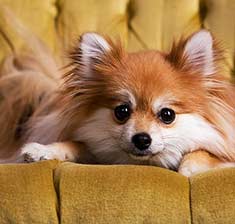
The smallest of the Spitz descendants, the average Pomeranian weighs just 3 – 7 pounds. Keep in mind there is only one breed standard for the dog. Some unscrupulous breeders will try to sell undersized dogs as “teacup” or “pocket” or “toy” Pomeranians, but there is no such thing. They are all Pomeranians; they just vary in size.
Pom’s have a soft, thick undercoat, covered by a long, straight overcoat. The undercoat is shed each year in male dogs. In unaltered females, the undercoat is shed when they go into heat, after they deliver a litter, and when they are stressed. Under all of that fur is a small muscular dog resembling a Chihuahua.
Coat colors can include just about anything, including solid black, black and tan, blue, blue and tan, chocolate, chocolate and tan, cream, cream sable, orange, orange sable, red, red sable, sable, beaver, brindle, chocolate sable, white, and wolf sable. As a reminder, sable is when each individual strand of hair has a base color and a different tip color, usually black. The Pomeranian also comes in a merle color, which is where one color is present in several different shades. Finally, Poms with a white undercoat covered with topcoat patches in one or more color are called Parti-Color.
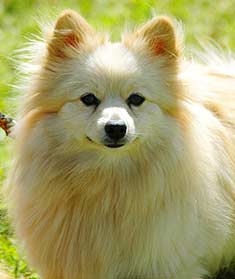
The long fur of the Pom requires regular grooming. Daily brushing against the grain of the hair keeps mats from forming and prevents dry skin and dandruff by distributing oil from the skin throughout the fur. Frequent bathing is not recommended, as it will remove the natural oils from the dog’s skin. Trimming is not necessary, as the dog’s fur tends to break off rather than continuing to grow as a Yorkie’s would. Pomeranians require frequent teeth-brushing, as tartar build-up is common in the breed. Other than brushing teeth and hair, the dog requires very little grooming upkeep.
The friendly, active Pomeranian socializes well with other dogs and animals. They love to play, but they can become easily over-heated because of their double-coat, and will often seek out a cool floor for a nap. They may even spill out their water bowls in search of relief from the heat. Remember that this dog descended from sled dogs in northern Europe, and as such is best suited to cooler environments.
Their outgoing, excitable nature means they are not typically lap dogs. They would prefer to lay at their masters’ feet, even when the master is moving. You really have to be careful not to step on them! They tend to bark when excited. This trait can be countered by making sure you do not reward the dog for barking. Never, ever ask the dog to “speak” for a treat, and don’t give the dog a treat to try to get him to pipe down.
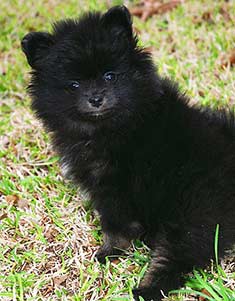
Because they are so small, many people may feel that these dogs would be great with children. Not so much. If a Pom puppy is brought into a home with small children, he will adapt, but adding a child to the home of an older Pomeranian is not always such a good idea.
Pomeranians have been popular dogs throughout history, most recently placing in the top 15 registered breeds with the American Kennel Club. Michelangelo reportedly had a Pom who watched him paint the Sistine Chapel. Sir Isaac Newton had one, but we’re not sure how popular she was after she tipped over a candle on his papers, destroying 20 years of research notes. Other famous Pomeranian guardians include Mozart, King Edward, Queen Victoria, Marie Antoinette, Harry Houdini, and Charles Darwin. In pop culture, Poms have been sighted with Paris Hilton, Nicole Richie, and Sharon Osbourne.
The Pomeranian generally lives from 12 – 20 years, with very few health problems. Like many toy-sized dogs, Poms can suffer from patella luxation, where the kneecap slips off of the femur, causing pain and temporary lameness. When the quadriceps muscle of the thigh relaxes, the kneecap slides into place, and the dog walks normally, until next time. Some dogs may be afflicted more severely, requiring surgery to return the patella to its normal position and anchor it there. This problem is generally more severe in dogs who are overweight or have suffered injuries to the hindquarters.
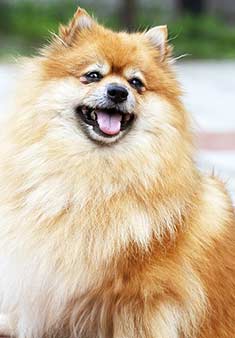
Another health problem that may affect Pomeranians, particularly if they are overweight, is a collapsing trachea. In this condition, the trachea partially closes. Under normal circumstances, the dog acts just fine, but when excited he will cough or make a honking sound as he tries to move a higher volume of air through the compromised opening.
For the most part, the adorable, outgoing Pomeranian makes a wonderful companion. Although you must make a commitment to keep up with his grooming, the friendship you will gain will be well worth the effort! Could Michelangelo, Mozart, Harry Houdini, and Paris Hilton have all been wrong?

Doggies Den: Latest Articles
 Homemade Thanksgiving Treats for Your Dog
NUTRITION We all want to include our dogs in our holiday celebrations, but hopefully, you're aware that sharing table scraps with your dog isn't always the best idea.
 Keeping Your Dog Safe during the Summer Months
HEALTH Summer is coming on fast, so it’s time to plan how you will keep your dog safe and healthy through the lazy, carefree, warm days.
 Vaccination Time Again-Keeping Your Puppy Healthy
DOG HEALTH So you have your new puppy picked out. There are quite a few shots, treatments and examinations that will keep the newest member of your family healthy.
 Canine Thanksgiving Feast
NUTRITION With the wide variety of food at Thanksgiving dinner, chances are you'll want to give your dog something special, too. If you're contemplating what to feed your dog for the holiday, here is a guide to a great Canine Thanksgiving Feast.
 Dog Walking Tips Every Owner Should Know
DOG FUN Walking your dog is not only crucial to keeping him healthy and happy, it strengthens the bond between your canine friend and his caregiver. There are a lot of obstacles out there. Don’t forget these simple tips to keep your walk fun and safe in the outside world.
 The Benefits of Physiotherapy for your Dog
HEALTH The same techniques that physiotherapists use to treat a variety of injuries and conditions in humans have been adapted to suit animals with great success. Family pets, show dogs, and working dogs can all benefit greatly from physiotherapy. Dogs whose activities involve a lot of agility are especially susceptible to the types of problems that physiotherapy can address.
 The Decision- Adding a Dog to Your Family
FIRST TIME OWNERSBringing a dog into your family is a decision where many people don’t realize it’s magnitude until after they have the dog. There are a number of things that you need to research before you decide to purchase a dog, and it starts right in your own home.
 Bringing Your Dog Into Your New Baby's Life
HEALTH Many believe that a dog and a new baby cannot happily coexist, so therefore the dog has to go. This is not necessarily the case.  A new baby does not mean you have to abandon your dog.
Doggies Den:
Most Popular Articles
Dog Pregnancy Symptoms
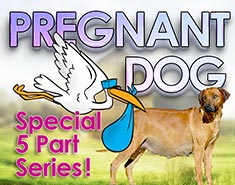
HEALTHIf you suspect your dog might be pregnant, check out part one in this series on pregnant dogs, where we cover pregnant dog symptoms.
Dog Birth
HEALTHIn the third article of our dog pregnancy series, we look at the wonderful, but messy, process of bringing newborn puppies into the world.
Indoor Dog Potties
DOG PRODUCTSIt's been a long day at work. You were so busy, you didn't even take time to eat a sandwich, let alone run home to let your dog out. You're on your way home, knowing the poor dog is crossing his or her legs by now, when your car breaks down, delaying you even further. Can't somebody make this easier?
Your Dog’s Digestive System
PHYSIOLOGYEver wonder why your dog eats so fast? Or why he eats gross things? Or why he gets sick to his stomach? Or why his waste stinks so bad? Some of these things are normal, some are not.
Canine Respiratory System
BREATHINGThe basic function of your dog's respiratory system is to bring oxygen in to and remove carbon dioxide from the body. Knowing the symptoms of respiratory diseases can help you help your stay healthy.
Shelter Dog Adoption Tips for Success
ADOPTION Are you intimidated by the prospect of "rescuing" a dog from a shelter? One reason that you may be wary of adopting a dog from a shelter is not knowing how to choose. Adopting a dog from a shelter can be a rewarding process, if you're prepared to do a reasonable amount of research.
Canine Urinary Tract Infections
SYMPTOMS AND TREATMENTDoes your dog seem to be having trouble relieving his or her bladder? Learn how to recognize the signs of urinary tract infections and how to treat them before they spread.
What to do for Dog Diarrhea
SYMPTOMS AND REMEDIESIf you have dogs in your house for any length of time, you have likely experienced at least one bout of dog diarrhea. Beyond the pain in the tuckus involved in cleaning up the mess, you should know what causes diarrhea, and when it's important to see the vet.
What to do for a Dog Bite
DOG BEHAVIOR Getting bitten by a dog can be scary, and you may be tempted to run around in circles for a while, trying to figure out what to do. Here's our guide to help you manage the situation.
Top Ten Tips for Living with a Senior Dog
DOG HEALTH Bringing home a new puppy is so exciting, but it doesn’t take all that long for your exuberant puppy to grow into a senior dog who may have special needs. Here are the doggies.com top ten tips for taking care of your companion who has been with you through so much.