Boxers- In Depth
Boxers are square-framed, muscular dogs of medium size. They are known for their toned muscles and their sleek short coats. Boxers’ penetrating stare and broad muzzles give them an appearance of constant alertness. The standard breed of Boxers recognizes two distinct colorings: fawn and brindle. Fawn coloration ranges from a light tawny to a dark, almost reddish brown. Brindle coloring is marked by black stripes. These stripe patterns vary and cover a spectrum spanning a few well-defined slashes to an almost reversal in coloring in which the stripes dominant the fawn background.
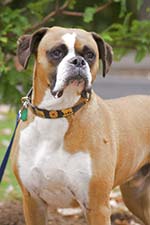
Although originally bred for hunting and work, Boxers have always been known for their obedience. While this is still true, Boxers also make great family pets because they are extremely playful and energetic. They even have a repertoire of unique characteristics and mannerisms that have brought them love throughout dog communities. One of these is a common excited dance often described as “kidney beaning,” in which Boxers will maneuver its head to its hindquarters forming a semi-circle (and resembling a kidney bean) and then spin around in a circle. Another distinct trait is the sound Boxers make when wound up or eager. The noise is like an adorably pathetic choo-choo train and sounds something like “woo woo,” somewhere between a bark, a whine, and a squeal.
Intelligence is another common Boxer characteristic. This can be both a positive and a negative aspect when it comes to training. Boxers will learn very quickly and retain information well. Their liveliness translates into to an eagerness to learn and please. However, their smarts and playfulness can also be hindrance to training. Boxers can be stubborn. Sometimes, knowing exactly what is expected of them, they will disobey commands. This can turn into a game for them if it is not dealt with patiently and firmly.

Boxers are wonderful pets, but they are not for every owner. Because of their playfulness and their incredible amounts of energy, they need to be walked or run at least twice a day. They also require a lot of attention. Games and rubdowns are essential. In addition to physical workouts, they need mental stimulation. Obedience and trick training are ideal for this purpose and provide them with positive outlets for energy. If Boxers’ needs are not properly met, if they can’t expend their energies chasing a ball or running through the neighborhood, they will create their own games like ‘chew up the couch’ or ‘hide the shoe.’
Boxers were first bred in Germany and originate from the Brabanter Bullenbeisser of Belgium. Boxers were working dogs from the start. German elites chose Boxers for hunting because of their strength, intelligence, and agility. As was popular at the turn of the nineteenth century, Boxers were used to hunt wild boars because their jaws were ideal for holding large game. Their ears were cropped to prevent injury on these dangerous escapades. Boxers, known for their obedience as well as their power and dexterity, were excellent work dogs. In the 1800’s they became popular dogs for cattle dealers.
The modern Boxer is the result of an 1830 cross breeding between Brabanter Bullenbeissers and an early form of the English Bulldog. The original breed was white in color. However, these Boxers did not gain much recognition until the start of the German Boxer Klub in the 1860s. The English name, Boxer, is thought to originate from the dogs’ instinctual use of its front paws during play and fighting.
In 1895, a standardized conception of what the Boxer breed should look like was established. As with the original progeny, these Boxers were white and pictures from this time period corroborate. By 1925, however, this standard was changed and white was no longer accepted as the typical color for the breed. It has been theorized that this change was concomitant with Boxers’ use as police dogs, where darker coloring was essential for work at night.

Doggies Den: Latest Articles
 Homemade Thanksgiving Treats for Your Dog
NUTRITION We all want to include our dogs in our holiday celebrations, but hopefully, you're aware that sharing table scraps with your dog isn't always the best idea.
 Keeping Your Dog Safe during the Summer Months
HEALTH Summer is coming on fast, so it’s time to plan how you will keep your dog safe and healthy through the lazy, carefree, warm days.
 Vaccination Time Again-Keeping Your Puppy Healthy
DOG HEALTH So you have your new puppy picked out. There are quite a few shots, treatments and examinations that will keep the newest member of your family healthy.
 Canine Thanksgiving Feast
NUTRITION With the wide variety of food at Thanksgiving dinner, chances are you'll want to give your dog something special, too. If you're contemplating what to feed your dog for the holiday, here is a guide to a great Canine Thanksgiving Feast.
 Dog Walking Tips Every Owner Should Know
DOG FUN Walking your dog is not only crucial to keeping him healthy and happy, it strengthens the bond between your canine friend and his caregiver. There are a lot of obstacles out there. Don’t forget these simple tips to keep your walk fun and safe in the outside world.
 The Benefits of Physiotherapy for your Dog
HEALTH The same techniques that physiotherapists use to treat a variety of injuries and conditions in humans have been adapted to suit animals with great success. Family pets, show dogs, and working dogs can all benefit greatly from physiotherapy. Dogs whose activities involve a lot of agility are especially susceptible to the types of problems that physiotherapy can address.
 The Decision- Adding a Dog to Your Family
FIRST TIME OWNERSBringing a dog into your family is a decision where many people don’t realize it’s magnitude until after they have the dog. There are a number of things that you need to research before you decide to purchase a dog, and it starts right in your own home.
 Bringing Your Dog Into Your New Baby's Life
HEALTH Many believe that a dog and a new baby cannot happily coexist, so therefore the dog has to go. This is not necessarily the case.  A new baby does not mean you have to abandon your dog.

Doggies Den:
Most Popular Articles
Dog Pregnancy Symptoms
HEALTHIf you suspect your dog might be pregnant, check out part one in this series on pregnant dogs, where we cover pregnant dog symptoms.
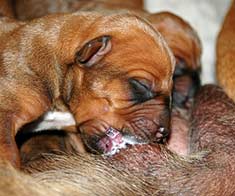
Dog Birth
HEALTHIn the third article of our dog pregnancy series, we look at the wonderful, but messy, process of bringing newborn puppies into the world.

Indoor Dog Potties
DOG PRODUCTSIt's been a long day at work. You were so busy, you didn't even take time to eat a sandwich, let alone run home to let your dog out. You're on your way home, knowing the poor dog is crossing his or her legs by now, when your car breaks down, delaying you even further. Can't somebody make this easier?
Your Dog’s Digestive System
PHYSIOLOGYEver wonder why your dog eats so fast? Or why he eats gross things? Or why he gets sick to his stomach? Or why his waste stinks so bad? Some of these things are normal, some are not.

Canine Respiratory System
BREATHINGThe basic function of your dog's respiratory system is to bring oxygen in to and remove carbon dioxide from the body. Knowing the symptoms of respiratory diseases can help you help your stay healthy.
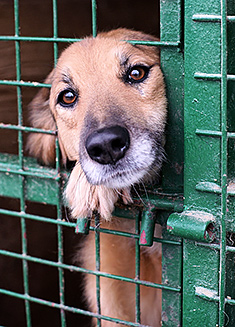
Shelter Dog Adoption Tips for Success
ADOPTION Are you intimidated by the prospect of "rescuing" a dog from a shelter? One reason that you may be wary of adopting a dog from a shelter is not knowing how to choose. Adopting a dog from a shelter can be a rewarding process, if you're prepared to do a reasonable amount of research.
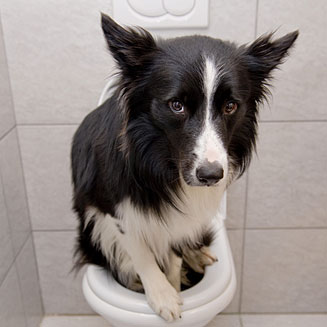
Canine Urinary Tract Infections
SYMPTOMS AND TREATMENTDoes your dog seem to be having trouble relieving his or her bladder? Learn how to recognize the signs of urinary tract infections and how to treat them before they spread.
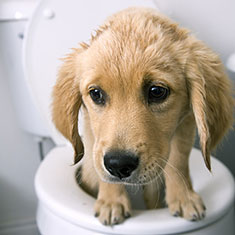
What to do for Dog Diarrhea
SYMPTOMS AND REMEDIESIf you have dogs in your house for any length of time, you have likely experienced at least one bout of dog diarrhea. Beyond the pain in the tuckus involved in cleaning up the mess, you should know what causes diarrhea, and when it's important to see the vet.
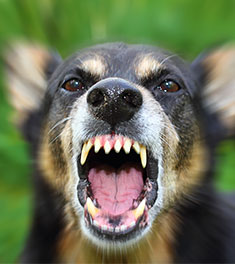
What to do for a Dog Bite
DOG BEHAVIOR Getting bitten by a dog can be scary, and you may be tempted to run around in circles for a while, trying to figure out what to do. Here's our guide to help you manage the situation.
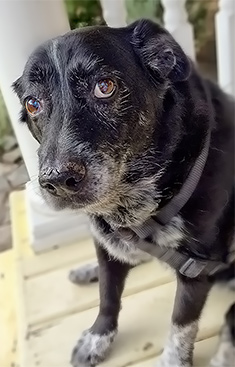
Top Ten Tips for Living with a Senior Dog
DOG HEALTH Bringing home a new puppy is so exciting, but it doesn’t take all that long for your exuberant puppy to grow into a senior dog who may have special needs. Here are the doggies.com top ten tips for taking care of your companion who has been with you through so much.