Whippet Breed Guide
Similar in appearance to the Greyhound, this lively dog is active and playful, and very competitive in sports, just like his larger cousin. This breed was created in Northern England in the mid-to-late 19th century by crossing the original Greyhound with small terriers to create a small hunting dog who wouldn’t be too expensive to feed and would be fast enough to catch rabbits. Because these small dogs were generally owned by working class people, they are sometimes known as the “poor man’s greyhound.”
When the dogs were not needed for hunting, they would be raced, using a rag as a lure, leading to the races being called “rag races” and the dogs being called a “poor man’s racehorse.”
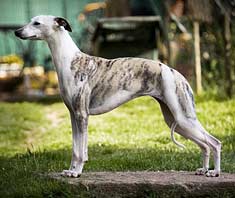
What does a Whippet look like?
This medium-sized dog stands between 17 and 20 inches high and weighs from 25 to 40 pounds. Males are generally one or two inches taller and three to six pounds heavier than females. There is no specific standard for the color or pattern of the coat, as coat color is not considered relevant to the dog’s racing purpose. The fur is short and easy to care for.
These dogs are generally very thin and lean, as befits their racing heritage. Their fur is short and does not keep them well-insulated in cold climates. Some say there is a long-haired variety of the dog, but these are generally thought to be mixed breeds and are disqualified from showing and racing events.
Do Whippets have a nice temperament?
These dogs are sweet and lovable, good with people young and old, as well as with other dogs. They may bark at strangers, but they are friendly and not suited to work as guard dogs. Barking is not excessive, making them a good choice for apartment living.
Strongly independent, many Whippets don’t believe that training is for them, and they may be hard to housebreak. In spite of their independence, these dogs are most content when close to their families, even to the point of spending a great deal of time in a lucky person’s lap! Careful and continual exposure to a variety of people and places can help the Whippet to overcome his shyness and become comfortable with strangers.
Because of their hunting heritage, Whippets are prone to chasing anything that moves. Secure fencing is a must to keep these dogs from running into traffic in pursuit of a squirrel or rabbit or even the neighbor’s cat. However, once you bring the dog indoors, he or she may be content to spend the whole day napping on your favorite chair. As is characteristic of most sighthounds, Whippets often sleep on their backs in what is known as a “cockroach” position, the legs raised high in the air.
What are sighthounds?
There are two types of hounds: scent hounds and sighthounds. As the names suggest, scent hounds such as Beagles, Bassets, and Bloodhounds hunt by the smell of their prey, and sighthounds hunt by looking for their prey. Breeds included in the sighthound group are the Greyhound, Whippet, Afghan Hound, and Irish Wolfhound
Now that most of our food comes in plastic wrap from the grocery store, these amazing dogs have transferred their skills to the racetrack. Many of these dogs compete in lure coursing, straight track racing, and oval track racing. Betting is not permitted, and these sports are set up totally for the dogs’ enjoyment. In lure coursing, a dog’s natural instincts are put to the test by running a lure of some kind along a wire for the dog to chase. The lure may be as simple as a plastic trash bag and may include a noisemaker to simulate the sounds made by prey in the wild. Some Whippets also enjoy flyball and agility competitions.
Whippets can make good housepets, but they must be given ample opportunity for regular exercise. This doesn’t mean that they will need a 5-mile run each day, but do need to have a place to run when they want to. If they are not given this opportunity, they may become destructive, and your home may have to bear the brunt of this type of behavior.
Why is the Whippet such a superior athlete?
Like most athletic dogs, a Whippet has an extra-large chest cavity, allowing plenty of room for his or her heart and lungs. The Whippet’s heart is very large and beats very slowly at rest. When the dog is sleeping, his heart may even stop intermittently.
A chemical called myostatin is present in all of us to keep muscles from getting excessively large. In Whippets, a mutation has been identified that prevents myostatin from performing its role. Dogs who have one copy of the mutant gene are especially fast, but those with two copies are not suited to racing as they become too large. Due to their larger, stockier appearance, dogs with two copies of the mutation are called “bully whippets”.
Interestingly, the mutation has not been found in any other breed of dog. It is thought that the mutation may not have been carried forward in Greyhounds (the Whippet's closest relative) because although it allows the dog to run faster, it may not be helpful in endurance. Greyhound races are typically three times as long as Whippet races, so evolution would have eliminated Greyhounds with the mutation, while allowing Whippets to carry it forward through the generations.
Another factor in the success of Whippets as racers is the very low percentage of fat in their bodies. Owners and veterinarians must be cognizant of this fact, as it effects the way in which the dog’s body processes and stores many medications, making it very easy to overdose the animal.
What are the health concerns with the Whippet?
As with most medium-sized dogs, Whippets can be expected to live between 12 and 15 years. There are not many genetic health problems, but eye defects have been noted in rare instances. The American Whippet Club advocates that breeders have their animals tested prior to breeding. Ask to see CERF certification for any puppy you are considering buying. This is your assurance that the breeding pair has been examined by a veterinarian, found to be free of genetic eye problems, and listed with the Canine Eye Registration Foundation.
Is this the right breed for me?
If you are looking for a medium-sized dog with very little grooming requirements and a wonderful temperament, the Whippet may be just the one. However, if you have new carpets which may suffer during housebreaking or if you cannot provide a safe fenced area where the dog can exercise, your home may be better suited to another breed.

Doggies Den: Latest Articles
 Homemade Thanksgiving Treats for Your Dog
NUTRITION We all want to include our dogs in our holiday celebrations, but hopefully, you're aware that sharing table scraps with your dog isn't always the best idea.
 Keeping Your Dog Safe during the Summer Months
HEALTH Summer is coming on fast, so it’s time to plan how you will keep your dog safe and healthy through the lazy, carefree, warm days.
 Vaccination Time Again-Keeping Your Puppy Healthy
DOG HEALTH So you have your new puppy picked out. There are quite a few shots, treatments and examinations that will keep the newest member of your family healthy.
 Canine Thanksgiving Feast
NUTRITION With the wide variety of food at Thanksgiving dinner, chances are you'll want to give your dog something special, too. If you're contemplating what to feed your dog for the holiday, here is a guide to a great Canine Thanksgiving Feast.
 Dog Walking Tips Every Owner Should Know
DOG FUN Walking your dog is not only crucial to keeping him healthy and happy, it strengthens the bond between your canine friend and his caregiver. There are a lot of obstacles out there. Don’t forget these simple tips to keep your walk fun and safe in the outside world.
 The Benefits of Physiotherapy for your Dog
HEALTH The same techniques that physiotherapists use to treat a variety of injuries and conditions in humans have been adapted to suit animals with great success. Family pets, show dogs, and working dogs can all benefit greatly from physiotherapy. Dogs whose activities involve a lot of agility are especially susceptible to the types of problems that physiotherapy can address.
 The Decision- Adding a Dog to Your Family
FIRST TIME OWNERSBringing a dog into your family is a decision where many people don’t realize it’s magnitude until after they have the dog. There are a number of things that you need to research before you decide to purchase a dog, and it starts right in your own home.
 Bringing Your Dog Into Your New Baby's Life
HEALTH Many believe that a dog and a new baby cannot happily coexist, so therefore the dog has to go. This is not necessarily the case.  A new baby does not mean you have to abandon your dog.

Doggies Den:
Most Popular Articles
Dog Pregnancy Symptoms
HEALTHIf you suspect your dog might be pregnant, check out part one in this series on pregnant dogs, where we cover pregnant dog symptoms.
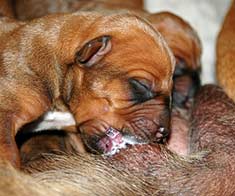
Dog Birth
HEALTHIn the third article of our dog pregnancy series, we look at the wonderful, but messy, process of bringing newborn puppies into the world.
Indoor Dog Potties
DOG PRODUCTSIt's been a long day at work. You were so busy, you didn't even take time to eat a sandwich, let alone run home to let your dog out. You're on your way home, knowing the poor dog is crossing his or her legs by now, when your car breaks down, delaying you even further. Can't somebody make this easier?
Your Dog’s Digestive System
PHYSIOLOGYEver wonder why your dog eats so fast? Or why he eats gross things? Or why he gets sick to his stomach? Or why his waste stinks so bad? Some of these things are normal, some are not.

Canine Respiratory System
BREATHINGThe basic function of your dog's respiratory system is to bring oxygen in to and remove carbon dioxide from the body. Knowing the symptoms of respiratory diseases can help you help your stay healthy.
Shelter Dog Adoption Tips for Success
ADOPTION Are you intimidated by the prospect of "rescuing" a dog from a shelter? One reason that you may be wary of adopting a dog from a shelter is not knowing how to choose. Adopting a dog from a shelter can be a rewarding process, if you're prepared to do a reasonable amount of research.
Canine Urinary Tract Infections
SYMPTOMS AND TREATMENTDoes your dog seem to be having trouble relieving his or her bladder? Learn how to recognize the signs of urinary tract infections and how to treat them before they spread.
What to do for Dog Diarrhea
SYMPTOMS AND REMEDIESIf you have dogs in your house for any length of time, you have likely experienced at least one bout of dog diarrhea. Beyond the pain in the tuckus involved in cleaning up the mess, you should know what causes diarrhea, and when it's important to see the vet.
What to do for a Dog Bite
DOG BEHAVIOR Getting bitten by a dog can be scary, and you may be tempted to run around in circles for a while, trying to figure out what to do. Here's our guide to help you manage the situation.
Top Ten Tips for Living with a Senior Dog
DOG HEALTH Bringing home a new puppy is so exciting, but it doesn’t take all that long for your exuberant puppy to grow into a senior dog who may have special needs. Here are the doggies.com top ten tips for taking care of your companion who has been with you through so much.