The Toy Group
The American Kennel Club’s toy group includes 21 breeds of dogs who are small in stature, but big in heart. These dogs are especially popular among those who have small homes, but beware apartment dwellers: many of these breeds are very prone to barking, perhaps to prove they are scarier than their small size would lead people to assume.
The toy group is generally thought of as dogs who were primarily bred for companionship rather than for hunting, guarding, or herding. However, all breed groups include dogs of small stature, and the classification of some breeds but not others into the toy group is fairly arbitrary.
Small dogs like those in the toy group may be desirable to some because they minimize many of the negative aspects of having a dog in the house. Due to their small size, toy breeds shed less, eat less, poop less, and cost less to have around. In addition, it is much easier to control a 10-pound dog than one that is larger, regardless of the training either of them has received.
Each of the dogs in the toy group has a distinct personality, but there are some similarities between the different breeds. For example, most of them live somewhere between 12 and 15 years, and most adult toy dogs weigh no more than 15 pounds. Some Cavalier King Charles Spaniels and Pug reach 20 pounds, but these breeds are definitely the exception to the rule. It’s much more common for toy dogs to weigh under 10 pounds.
Because of their delicate neck structure, it is not recommended that you attach a leash to a toy dog’s collar. Rather, use the collar to hold the tags and walk the dog using a harness to prevent damaging the windpipe.
With their small size and fragility, these dogs are not often recommended for houses with small children. Children often like to pick up a small dog, and it doesn’t take much for the dog to slip through a child’s hands and fall crashing to the floor, which can result in serious injury, particularly to the spine.
Some of the more popular toy breeds will be briefly explored below.
Cavalier King Charles Spaniel
Like any spaniel, the Cavalier will chase anything that moves. When he’s not hunting, this cutie will enjoy sitting on your lap, which may be a problem if you have trouble with hair on your pants. They shed a lot, requiring daily brushing just to keep up. The Cavalier is reasonably easy to train and wants nothing more than to see you smile and praise him. If you are someone who can devote a lot of time to your dog, this may be the one you want. However, if you are away from home for long periods of time, don’t expect your Cavalier to be happy alone.
Chihuahua
The Chihuahua is the smallest of all dog breeds and has developed somewhat of a cult following. The problem is, many people buy a Chihuahua without having the slightest idea of what they are getting into. These dogs often end up in shelters. In fact, West Coast shelters have been over-run with Chihuahuas, and several organizations have banded together to ship the dogs to the East Coast, where they are in high demand.
These dogs are great lap-sitters, but they make good watchdogs as well. The short-haired variety requires very little grooming, while the long-haired Chihuahua needs occasional brushing. Neither type has high exercise requirements. Difficult to train, these dogs may be snappy, and are not recommended for small children. They are also hard to potty train, so don’t get one right after you get new carpeting!
Chinese Crested
The Chinese Crested is that little dog with its tongue hanging out the side of its mouth that always wins the “ugliest dog” contests. The Powderpuff variety is entirely covered with soft, straight hair while the hairless variety has hair only on his head, tail, and feet. Both can come from the same litter. This dog comes in a wide variety of colors and the hairless variety (obviously) doesn’t shed. However, the hairless variety does need skin care to avoid sunburn and dryness. The Chinese Crested is emotionally needed and will require frequent attention from his family.
Havanese
The very energetic Havanese has a great temperament for getting along with other pets and even well-behaved children. These dogs are smart and very easy to train for obedience or more active sports such as agility. One caution for families of this breed: buy only from a breeder who will show you a certificate from the Canine Eye Registration Foundation (CERF) because they are susceptible to genetic eye diseases.
Italian Greyhound
This short-haired dog has very minimal grooming requirements and almost no shedding, making him ideal for households that include people with allergies. His quiet disposition makes him perfect for apartment living, but terrible as a watchdog. He will require obedience training and will be difficult to housebreak, but once past that puppy stage, the dog requires very little maintenance, other than daily exercise.
Like their larger American cousins, the Italian Greyhounds are very quick and will take off like a bat out of hell if not properly contained. Because he is himself quiet, the Italian Greyhound doesn’t appreciate the chaos that comes with small children. If you live in a cold climate, you will have to watch your dog very carefully as his thin skin does not provide much protection from winter chills.
Japanese Chin
These long-haired affectionate dogs will follow you from room to room, seeking constant attention from the family. They do not have a high energy level, being perfectly happy to sleep in your lap or on a high perch in the same room where you are. They are not recommended for families with small children because they are somewhat fragile, but they are ideal for seniors because of their low exercise requirements. The Japanese Chin is a high shedder, and regular brushing is required. This dog is not a watchdog because of his quiet nature.
Maltese
This intelligent dog makes a great watchdog and is very trainable. The downside? Housebreaking and coat care. Notoriously stubborn, the Maltese doesn’t take to potty training easily, and most people have trouble keeping the dog’s coat white. Daily brushing is required to keep the coat shiny and silky. This dog loves the attention and would be perfectly content to spend his whole life in your lap.
Miniature Pinscher
It’s important to remember if you have a Min Pin that the dog doesn’t know he is a miniature. He is a watchdog par excellence, both brave and adventurous. He is energetic and very assertive, requiring a firm hand to control. He is a master of escape and will take any possible avenue out of your house, given the chance.
Papillon
Sweet and affectionate, this fragile little dog must be treated with kid gloves. The dog has a high energy level and doesn’t realize he is easily hurt, so it is important that his family take adequate care not to be overly rough with him. Papillons are very affectionate and enjoy people making a fuss, which is fortunate as they shed a bunch. Daily grooming is necessary.
Pekingese
A big watchdog in a small package, the Peke is very independent. He is one of the few toy dogs that won’t mind being left home alone for extended periods of time. However, this toughness and independence translate into a dog that is difficult to train. The Peke is a homebody, and you will have to be sure he gets proper exercise. With his heavy coat, the Peke is unsuitable for hot climates. Air conditioning is a must.
Pomeranian
This little lap dog thinks he is the boss! Although he’ll love sitting on your lap, he’ll do it under his terms and in his own good time. He is well-suited to life in an apartment and makes a good watchdog. Extensive socialization can curb his instinct to bark continuously. Shedding is heavy, and daily grooming required. Oral care is also important, as these dogs are prone to tooth loss.
Pug
Looking at this dog’s short coat, you may assume he doesn’t shed, but that would not be the case. Daily grooming is required, but can be accomplished rather quickly. The Pug gets along with children and other pets, and has minimal exercise requirements. His pushed in nose means the Pug may have respiratory issues and cannot tolerate heat. Eye injuries are common due to the bulging eyes in this breed.
Shih Tzu
This playful and affectionate dog is excellent for apartment living, as long as you don’t have new carpet. These dogs are notoriously hard to housebreak. Other than that, however, they are generally easy to train. They don’t shed much, but consistent grooming is required to deal with tangles.
Toy Poodle
One of three varieties of the same dog, the Toy Poodle is among the smartest of the toy breeds. He requires intense mental stimulation to curb excessive barking. Like all Poodles, the Toy is a good choice for people with allergies because he doesn’t shed much. Professional trimming may be required every 6 – 8 weeks. He is a great watchdog and requires little exercise, making him well-suited to apartment living.
Yorkshire Terrier
This beautiful, long-haired dog is among the most popular breeds in the United States. Although feisty, the Yorkie will form an intense, loyal bond with at least one person in the family and makes a good watchdog. That gorgeous coat requires frequent brushing, and show dogs often spend most of their time between shows with their hair rolled up in paper to prevent it from drying out and becoming tangled. Barking is a given due to the terrier in him, and the Yorkie will also be interested in chasing and digging up your yard.
A final caveat about small dogs. Toy dogs are not the same as teacup dogs, although some would have you think so. There is no recognized breed or variety of dog that includes the word “teacup”. Rather, teacup dogs are generally the runts of litters, or dogs that have been bred to be smaller than others of the breed. Often, these dogs have multiple health problems because of the way they are bred or simply because they are the least healthy of the litter, producing their runt size. Reputable breeders will not try to sell you a dog advertised as a teacup.

Doggies Den: Latest Articles
 Homemade Thanksgiving Treats for Your Dog
NUTRITION We all want to include our dogs in our holiday celebrations, but hopefully, you're aware that sharing table scraps with your dog isn't always the best idea.
 Keeping Your Dog Safe during the Summer Months
HEALTH Summer is coming on fast, so it’s time to plan how you will keep your dog safe and healthy through the lazy, carefree, warm days.
 Vaccination Time Again-Keeping Your Puppy Healthy
DOG HEALTH So you have your new puppy picked out. There are quite a few shots, treatments and examinations that will keep the newest member of your family healthy.
 Canine Thanksgiving Feast
NUTRITION With the wide variety of food at Thanksgiving dinner, chances are you'll want to give your dog something special, too. If you're contemplating what to feed your dog for the holiday, here is a guide to a great Canine Thanksgiving Feast.
 Dog Walking Tips Every Owner Should Know
DOG FUN Walking your dog is not only crucial to keeping him healthy and happy, it strengthens the bond between your canine friend and his caregiver. There are a lot of obstacles out there. Don’t forget these simple tips to keep your walk fun and safe in the outside world.
 The Benefits of Physiotherapy for your Dog
HEALTH The same techniques that physiotherapists use to treat a variety of injuries and conditions in humans have been adapted to suit animals with great success. Family pets, show dogs, and working dogs can all benefit greatly from physiotherapy. Dogs whose activities involve a lot of agility are especially susceptible to the types of problems that physiotherapy can address.
 The Decision- Adding a Dog to Your Family
FIRST TIME OWNERSBringing a dog into your family is a decision where many people don’t realize it’s magnitude until after they have the dog. There are a number of things that you need to research before you decide to purchase a dog, and it starts right in your own home.
 Bringing Your Dog Into Your New Baby's Life
HEALTH Many believe that a dog and a new baby cannot happily coexist, so therefore the dog has to go. This is not necessarily the case.  A new baby does not mean you have to abandon your dog.

Doggies Den:
Most Popular Articles
Dog Pregnancy Symptoms
HEALTHIf you suspect your dog might be pregnant, check out part one in this series on pregnant dogs, where we cover pregnant dog symptoms.
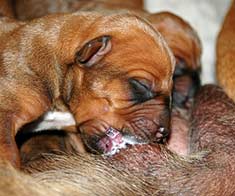
Dog Birth
HEALTHIn the third article of our dog pregnancy series, we look at the wonderful, but messy, process of bringing newborn puppies into the world.
Indoor Dog Potties
DOG PRODUCTSIt's been a long day at work. You were so busy, you didn't even take time to eat a sandwich, let alone run home to let your dog out. You're on your way home, knowing the poor dog is crossing his or her legs by now, when your car breaks down, delaying you even further. Can't somebody make this easier?
Your Dog’s Digestive System
PHYSIOLOGYEver wonder why your dog eats so fast? Or why he eats gross things? Or why he gets sick to his stomach? Or why his waste stinks so bad? Some of these things are normal, some are not.
Canine Respiratory System
BREATHINGThe basic function of your dog's respiratory system is to bring oxygen in to and remove carbon dioxide from the body. Knowing the symptoms of respiratory diseases can help you help your stay healthy.
Shelter Dog Adoption Tips for Success
ADOPTION Are you intimidated by the prospect of "rescuing" a dog from a shelter? One reason that you may be wary of adopting a dog from a shelter is not knowing how to choose. Adopting a dog from a shelter can be a rewarding process, if you're prepared to do a reasonable amount of research.
Canine Urinary Tract Infections
SYMPTOMS AND TREATMENTDoes your dog seem to be having trouble relieving his or her bladder? Learn how to recognize the signs of urinary tract infections and how to treat them before they spread.
What to do for Dog Diarrhea
SYMPTOMS AND REMEDIESIf you have dogs in your house for any length of time, you have likely experienced at least one bout of dog diarrhea. Beyond the pain in the tuckus involved in cleaning up the mess, you should know what causes diarrhea, and when it's important to see the vet.
What to do for a Dog Bite
DOG BEHAVIOR Getting bitten by a dog can be scary, and you may be tempted to run around in circles for a while, trying to figure out what to do. Here's our guide to help you manage the situation.
Top Ten Tips for Living with a Senior Dog
DOG HEALTH Bringing home a new puppy is so exciting, but it doesn’t take all that long for your exuberant puppy to grow into a senior dog who may have special needs. Here are the doggies.com top ten tips for taking care of your companion who has been with you through so much.