Rhodesian Ridgeback: Winning Blend Of Opposites
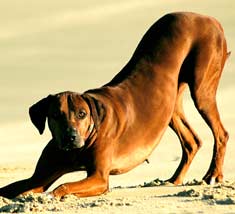
The first thing you are likely to notice about a Rhodesian Ridgeback is the strip of fur which creates a ridge along its spine by growing in the opposite direction from the rest of the animal’s coat. This ridge of fur is somewhat emblematic of the Rhodesian Ridgeback breed, because these dogs possess a combination of traits which sometime seem confusingly contradictory. A Rhodesian Ridgeback can be happy lazing in the sun for hours, yet instantly on guard when its family or territory is approached by strangers.
African Origin
The Rhodesian Ridgeback has its origins on the farms of the African veldt, where the breed was developed to protect farm livestock from big game predators. A medium to large breed, with the largest males standing 27” and weighing about eighty pounds, the Rhodesian Ridgebacks of today are descended from European dogs, including Great Danes and bloodhounds, brought to what is now Zimbabwe and the indigenous Hottentot hunting dog, responsible for the animals’ ridged backs.
Remarkable Stamina
Rhodesians Ridgebacks have been bred to withstand the rigors of long distance trekking over the African plains, so are comfortable in hot climates and can be active longer than most dogs without requiring either water or food. While they are sometimes referred to as African Lion Dogs, Rhodesian Ridgebacks were used to track lions, but never actually attacked them. They did their jobs exceptionally well, being fearless in the chase, and expert at holding the lions until their masters could shoot them.
Lion Hunter
The same traits that enabled Rhodesian Ridgebacks to stand up to African lions--courage, tenacity, intelligence, and great physical stamina--are traits that make them excellent guard dogs. But those same valuable guarding instincts can make a Ridgeback very possessive of its family. Ridgebacks are also among the most independent-spirited of dogs, and they need owners who train them with both kindness and authority.
Family Friendly
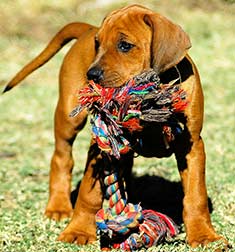
While Ridgeback puppies may need firm handling in multi-pet households so that they do not attempt to dominate, they usually adapt quite well. A Ridgeback is a natural people dog, and as long as it is introduced into your family before the age of five, will become strongly bonded to them. These dogs are intelligent enough to master the basics of training easily; you should have no problem teaching your Ridgeback to respond properly to the commands “Sit,” “Stay,” “Down,” “Come,” and “Quiet.”
Basic Training a Must
Basic obedience training, in fact, is essential with Ridgebacks because they are both big and smart, and you need to establish early that you are bigger and smarter. But you can’t expect your Ridgeback to win accolades at advanced obedience classes, simply because his or her hound mind is wired for self-reliance. Just make sure your puppy gets plenty of positive reinforcement for its good behavior, or you may run into some behavioral difficulties when it is older. On the whole, however, the Rhodesian Ridgeback breed is an adaptable one, and will take well to a variety of environments.
Give Lots of Exercise
Caring for a Ridgeback will require you to devote plenty of time to exercise, because you’ll be dealing with a dog bred for hunting over large distances, and will have to work hard to get your Ridgeback tired. Find ways to do it which let the animal feel as if he or she is on the chase, and use the leash at all times so that the hunting instinct does not lead to undesirable consequences. Jogging or cycling with your Ridgeback on a leash are two suggestions.
Lure Coursing
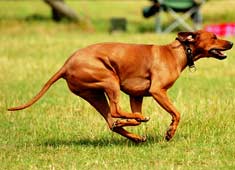
You can also consider Lure Coursing as a sport for your Ridgeback. One of the most amazing characteristics of the Ridgeback breed is that the dogs are both scenthounds and sighthounds. Lure coursing is a canine performance challenge which allows sighthounds to chase plastic bags over a course laid out to imitate the path a fleeing rabbit might follow. The American Kennel Club has its own rules for lure coursing.
The lures used in lure coursing competition will travel at speeds of up to 35 or 40 miles per hour, over a looped course spread out on a field of between eight and ten acres. So as you can see, lure coursing is an activity which will let your Ridgeback feel as if he or she were back on the African veldt, and free to let loose all that boundless Ridgeback energy!
This Dog Has It All
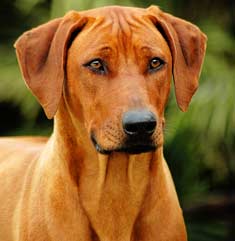
If you are looking for a dog breed in which fearlessness, physical beauty, strength, agility, intelligence, and loyalty are all present, and you have the time and energy it takes to train and exercise such an animal in appropriately stimulating ways, then the Rhodesian Ridgeback could be the dog for you!

Doggies Den: Latest Articles
 Homemade Thanksgiving Treats for Your Dog
NUTRITION We all want to include our dogs in our holiday celebrations, but hopefully, you're aware that sharing table scraps with your dog isn't always the best idea.
 Keeping Your Dog Safe during the Summer Months
HEALTH Summer is coming on fast, so it’s time to plan how you will keep your dog safe and healthy through the lazy, carefree, warm days.
 Vaccination Time Again-Keeping Your Puppy Healthy
DOG HEALTH So you have your new puppy picked out. There are quite a few shots, treatments and examinations that will keep the newest member of your family healthy.
 Canine Thanksgiving Feast
NUTRITION With the wide variety of food at Thanksgiving dinner, chances are you'll want to give your dog something special, too. If you're contemplating what to feed your dog for the holiday, here is a guide to a great Canine Thanksgiving Feast.
 Dog Walking Tips Every Owner Should Know
DOG FUN Walking your dog is not only crucial to keeping him healthy and happy, it strengthens the bond between your canine friend and his caregiver. There are a lot of obstacles out there. Don’t forget these simple tips to keep your walk fun and safe in the outside world.
 The Benefits of Physiotherapy for your Dog
HEALTH The same techniques that physiotherapists use to treat a variety of injuries and conditions in humans have been adapted to suit animals with great success. Family pets, show dogs, and working dogs can all benefit greatly from physiotherapy. Dogs whose activities involve a lot of agility are especially susceptible to the types of problems that physiotherapy can address.
 The Decision- Adding a Dog to Your Family
FIRST TIME OWNERSBringing a dog into your family is a decision where many people don’t realize it’s magnitude until after they have the dog. There are a number of things that you need to research before you decide to purchase a dog, and it starts right in your own home.
 Bringing Your Dog Into Your New Baby's Life
HEALTH Many believe that a dog and a new baby cannot happily coexist, so therefore the dog has to go. This is not necessarily the case.  A new baby does not mean you have to abandon your dog.

Doggies Den:
Most Popular Articles

Dog Pregnancy Symptoms
HEALTHIf you suspect your dog might be pregnant, check out part one in this series on pregnant dogs, where we cover pregnant dog symptoms.
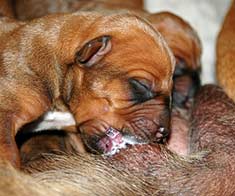
Dog Birth
HEALTHIn the third article of our dog pregnancy series, we look at the wonderful, but messy, process of bringing newborn puppies into the world.

Indoor Dog Potties
DOG PRODUCTSIt's been a long day at work. You were so busy, you didn't even take time to eat a sandwich, let alone run home to let your dog out. You're on your way home, knowing the poor dog is crossing his or her legs by now, when your car breaks down, delaying you even further. Can't somebody make this easier?
Your Dog’s Digestive System
PHYSIOLOGYEver wonder why your dog eats so fast? Or why he eats gross things? Or why he gets sick to his stomach? Or why his waste stinks so bad? Some of these things are normal, some are not.

Canine Respiratory System
BREATHINGThe basic function of your dog's respiratory system is to bring oxygen in to and remove carbon dioxide from the body. Knowing the symptoms of respiratory diseases can help you help your stay healthy.

Shelter Dog Adoption Tips for Success
ADOPTION Are you intimidated by the prospect of "rescuing" a dog from a shelter? One reason that you may be wary of adopting a dog from a shelter is not knowing how to choose. Adopting a dog from a shelter can be a rewarding process, if you're prepared to do a reasonable amount of research.
Canine Urinary Tract Infections
SYMPTOMS AND TREATMENTDoes your dog seem to be having trouble relieving his or her bladder? Learn how to recognize the signs of urinary tract infections and how to treat them before they spread.

What to do for Dog Diarrhea
SYMPTOMS AND REMEDIESIf you have dogs in your house for any length of time, you have likely experienced at least one bout of dog diarrhea. Beyond the pain in the tuckus involved in cleaning up the mess, you should know what causes diarrhea, and when it's important to see the vet.
What to do for a Dog Bite
DOG BEHAVIOR Getting bitten by a dog can be scary, and you may be tempted to run around in circles for a while, trying to figure out what to do. Here's our guide to help you manage the situation.
Top Ten Tips for Living with a Senior Dog
DOG HEALTH Bringing home a new puppy is so exciting, but it doesn’t take all that long for your exuberant puppy to grow into a senior dog who may have special needs. Here are the doggies.com top ten tips for taking care of your companion who has been with you through so much.