Irish Water Spaniel - In Depth
This beautiful dog may remind you of a Standard Poodle, but they are very distinct breeds. They both have that great curly coat, but the similarities pretty much end there. The Irish Water Spaniel is one of the rarer breeds, ranking 154th of the 175 breeds recognized by the AKC based on the number of dogs registered in 2012. (Poodles, incidentally, are ranked at number 8.)
Distinguishing Characteristics of the Irish Water Spaniel
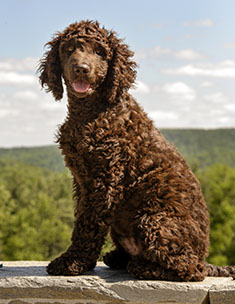
The Irish Water Spaniel has a topknot made of long, loose curls that comes to a well-defined peak covering the eyes. They also have a beard growing at the back of the throat, often with sideburns that might rival Elvis. The face is smooth-coated and requires very little grooming to stay that way, unlike the Poodle, which requires a good bit of effort to shape the facial fur.
Between his toes, the Irish Water Spaniel has webbing to aid him in swimming quickly after game. The coat is always liver-colored, with a purplish hue. The undercoat is dense and short to provide warmth, and the outer coat is longer and provides water resistance. Although they do shed a bit, the fur tends not to work its way into your clothing and furniture. Rather, it clumps together to form dust bunnies which are more easily collected and disposed of.
The most distinguishing feature of the Irish Water Spaniel is perhaps the tail. It is completely fur-less except for about 2 – 3 inches at the base of the tail, which is covered in curls. The remainder of the tail is similar to a rat tail, giving rise to the nickname “Rat tailed spaniel”.
The Irish Water Spaniel is the largest of the spaniels, standing between 22 and 24 inches tall at the shoulder and weighing between 55 and 65 pounds.
Temperament
The Irish Water Spaniel is very loyal and can be a watchdog if properly socialized to the task. They have a fierce bark, but are bred not to bark excessively. Because they are used to working as a team with hunters, they are exceptionally interested in pleasing you. This can make training a breeze, as long as you keep it interesting.
They are very smart, but also very playful. They require companionship and can become destructive if left home alone for long periods of time with nothing to do.
Irish Water Spaniels are great with older children, but may be overwhelmed by little ones. They are somewhat wary of strangers, but once they decide you are a friend, you will be one for life.
Aside from the show ring and the hunting field, Irish Water Spaniels excel at obedience trials, agility, and dock diving.
History of the Irish Water Spaniel
The Irish Water Spaniel has its ancestral roots as far back as the early 1600’s, although today’s breed was truly developed as a distinct breed in the mid-1800’s, a result of inter-breeding between the South Country Water Spaniel and the North Country Water Spaniel in Ireland.
Justin McCarthy of Dublin is credited with refining the breed into a type that was repeatable for future generations. The dogs were imported into North America by the 1870’s and was once the third most popular sporting dog in the United States.
Grooming your Irish Water Spaniel
Don’t be dissuaded by that curly coat; grooming an Irish Water Spaniel is not terribly difficult, particularly if you get your dog used to the grooming table when he is just a pup. Brush your young dog with a natural bristled brush gently, just enough to remove any dead hair and stimulate the circulation enough to promote a healthy coat. Keep him busy by plying him with treats while you brush, and make your grooming sessions short – no more than five minutes. Just enough to let him know that grooming is nothing to be feared.
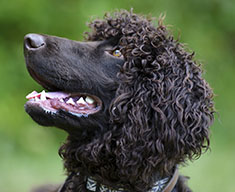
As the dog gets older, you will add a few more steps to keep the dog’s coat in tip-top shape. Start with a coarse brush to remove surface dirt, then comb through the whole coat with a wide-toothed comb. You will likely come across one or more mats, which are simply combinations of dead hair and dirt.
To break up a mat, you can try to gently break it apart with your fingers. Working a little vinegar into the mat can also help soften the tangle so you can break it free more easily. There is a commercially available tool called a mat separator, which is a wooden paddle studded with rows of nails. Use this as a rake to pull the mat apart. Cutting the mat out should be a last resort, as it often leaves an unsightly hole in the coat.
After the comb-through, use a slicker brush and brush against the fall of the hair to add fullness to the coat. To shape the coat, trim lightly with scissors, getting rid of any long hairs that don’t fall in line, as well as the sun-burned ends of the coat.
Bathing is often not necessary for an Irish Water Spaniel. If your dog swims a lot, you will just want to hose off the dirt, chlorine, or muddy water after he gets out. Exposure to water will curl the fur into the desired ringlets.
Health Problems
The Irish Water Spaniel is an overall healthy breed, but because the gene pool is very small, there are a few things to be aware of. Like any largish dog, the Irish Water Spaniel may be prone to hip dysplasia. Puppy buyers should ask to see certification from either the Orthopedic Foundation for Animals or the PennHIP program, showing that both parents are free from any signs of this crippling disease.
Other diseases that may be seen in this breed include hypothyroidism, seizures, cancer, and ear infections. Thoroughly cleaning the ears during regular grooming sessions can help keep ear infections to a minimum.
Some Irish Water Spaniels have been found to have a sensitivity to certain drugs of the sulfa family and some anesthesia agents.
Is the Irish Water Spaniel the right breed for your family?
If you’re looking for an uncommon dog who loves to spend time indoors with your family or who will make a great hunting companion, this may be just the breed you’re looking for. However, if you’re not often home during the day and if you don’t have time for frequent grooming, you may want to look at another breed.

Doggies Den: Latest Articles
 Homemade Thanksgiving Treats for Your Dog
NUTRITION We all want to include our dogs in our holiday celebrations, but hopefully, you're aware that sharing table scraps with your dog isn't always the best idea.
 Keeping Your Dog Safe during the Summer Months
HEALTH Summer is coming on fast, so it’s time to plan how you will keep your dog safe and healthy through the lazy, carefree, warm days.
 Vaccination Time Again-Keeping Your Puppy Healthy
DOG HEALTH So you have your new puppy picked out. There are quite a few shots, treatments and examinations that will keep the newest member of your family healthy.
 Canine Thanksgiving Feast
NUTRITION With the wide variety of food at Thanksgiving dinner, chances are you'll want to give your dog something special, too. If you're contemplating what to feed your dog for the holiday, here is a guide to a great Canine Thanksgiving Feast.
 Dog Walking Tips Every Owner Should Know
DOG FUN Walking your dog is not only crucial to keeping him healthy and happy, it strengthens the bond between your canine friend and his caregiver. There are a lot of obstacles out there. Don’t forget these simple tips to keep your walk fun and safe in the outside world.
 The Benefits of Physiotherapy for your Dog
HEALTH The same techniques that physiotherapists use to treat a variety of injuries and conditions in humans have been adapted to suit animals with great success. Family pets, show dogs, and working dogs can all benefit greatly from physiotherapy. Dogs whose activities involve a lot of agility are especially susceptible to the types of problems that physiotherapy can address.
 The Decision- Adding a Dog to Your Family
FIRST TIME OWNERSBringing a dog into your family is a decision where many people don’t realize it’s magnitude until after they have the dog. There are a number of things that you need to research before you decide to purchase a dog, and it starts right in your own home.
 Bringing Your Dog Into Your New Baby's Life
HEALTH Many believe that a dog and a new baby cannot happily coexist, so therefore the dog has to go. This is not necessarily the case.  A new baby does not mean you have to abandon your dog.

Doggies Den:
Most Popular Articles
Dog Pregnancy Symptoms
HEALTHIf you suspect your dog might be pregnant, check out part one in this series on pregnant dogs, where we cover pregnant dog symptoms.
Dog Birth
HEALTHIn the third article of our dog pregnancy series, we look at the wonderful, but messy, process of bringing newborn puppies into the world.

Indoor Dog Potties
DOG PRODUCTSIt's been a long day at work. You were so busy, you didn't even take time to eat a sandwich, let alone run home to let your dog out. You're on your way home, knowing the poor dog is crossing his or her legs by now, when your car breaks down, delaying you even further. Can't somebody make this easier?
Your Dog’s Digestive System
PHYSIOLOGYEver wonder why your dog eats so fast? Or why he eats gross things? Or why he gets sick to his stomach? Or why his waste stinks so bad? Some of these things are normal, some are not.

Canine Respiratory System
BREATHINGThe basic function of your dog's respiratory system is to bring oxygen in to and remove carbon dioxide from the body. Knowing the symptoms of respiratory diseases can help you help your stay healthy.
Shelter Dog Adoption Tips for Success
ADOPTION Are you intimidated by the prospect of "rescuing" a dog from a shelter? One reason that you may be wary of adopting a dog from a shelter is not knowing how to choose. Adopting a dog from a shelter can be a rewarding process, if you're prepared to do a reasonable amount of research.
Canine Urinary Tract Infections
SYMPTOMS AND TREATMENTDoes your dog seem to be having trouble relieving his or her bladder? Learn how to recognize the signs of urinary tract infections and how to treat them before they spread.
What to do for Dog Diarrhea
SYMPTOMS AND REMEDIESIf you have dogs in your house for any length of time, you have likely experienced at least one bout of dog diarrhea. Beyond the pain in the tuckus involved in cleaning up the mess, you should know what causes diarrhea, and when it's important to see the vet.
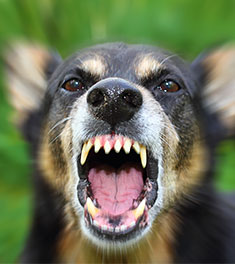
What to do for a Dog Bite
DOG BEHAVIOR Getting bitten by a dog can be scary, and you may be tempted to run around in circles for a while, trying to figure out what to do. Here's our guide to help you manage the situation.
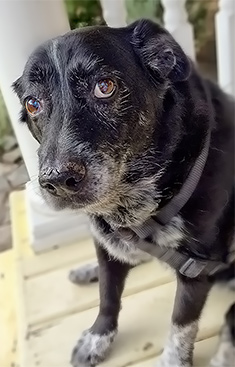
Top Ten Tips for Living with a Senior Dog
DOG HEALTH Bringing home a new puppy is so exciting, but it doesn’t take all that long for your exuberant puppy to grow into a senior dog who may have special needs. Here are the doggies.com top ten tips for taking care of your companion who has been with you through so much.