Keeshond Breed Guide
The beautiful silver and black Keeshond (pronounced kayz-hawnd) is one of the few dog breeds to have originated in the Netherlands. The dog is relatively rare in the United States, but is gaining in popularity, having jumped from number 103 to the number 86 spot on the AKC’s most registered dogs list in 2013.
What does the Keeshond look like?
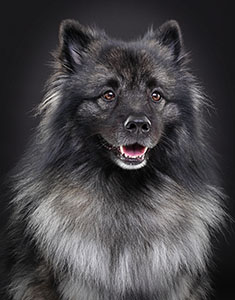
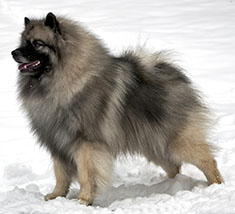
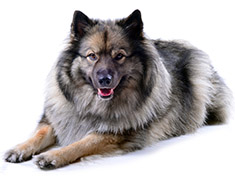
The Keeshond is of medium size, about 17- 18 inches tall and weighing usually 30 – 40 pounds when full grown. The richly plumed tail curls up over the back, and there is a prominent ruff of fur around the collar area. The ruff is generally more pronounced in males than in females. The ears are small, triangular and erect. These dogs have a double-layer coat that is silver and black and simply stunning. The soft undercoat is pale grey and downy, while the top coat is grey with black tips and somewhat harsh.
The marking on the coat is what makes this dog so distinct and beautiful. The plume of the tail is grey, but the tip is black. The legs and feet are a light grey – almost to the point of being cream colored, creating the effect of trousers. The shoulder lines are marked with grey. The ears are always dark. There should not be any white on the dog at all. The top portion of the face is grey, with small black lines forming granny glasses markings around the eyes. This type of marking is known as spectacles.
Shedding
Like most double-coated dogs, the Keeshond blows his undercoat seasonally. For males, this typically occurs once per year, while females go through the process twice. The entire undercoat is shed over about two weeks so a new one can grow in. You might be tempted to shave your Keeshond to avoid the mess of the late pre-summer molt, but resist! The double coat provides insulation from the hot weather, allowing your dog to keep his cool through the summer. Clipping also results in the loss of the black tips on the fur, removing much of the distinctive beauty of the dog.
Frequent bathing will do nothing but dry out your dog’s skin. Brushing is the preferred method of removing dirt from a Keeshond’s coat. The coat should be brushed twice weekly, not only to remove dirt, but also to keep skin oils distributed through the coat and to remove any dead fur.
Where did the Keeshond come from?
The original function of Keeshonden was to guard barges. In the 18th century, the Netherlands experienced a rebellion against the ruling House of Orange. One of the rebel patriots, Cornelius de Gyselaer, gave his nickname (Kees) to the breed, and the dog became a symbol of the rebellion.
When the House of Orange returned to power, the breed nearly became extinct and was not bred popularly until the mid 1920’s. The comeback appears to have occurred simultaneously in both England (where the dog was known as the Dutch Barge Dog) and in the US.
The importation of this breed into the United States is credited to German Carl Hinderer, who brought his Schloss Adelsburg Kennel from Germany to America in 1923. At that time, the dog was known in the US as the Wolfspitz due to its similarities to the other dogs of Spitz ancestry, such as the Chow Chow, the Pomeranian, and the American Eskimo dog.
Because feelings of ill will toward Germany followed the First World War, the AKC was reluctant to register the Wolfspitz. However, when Herr Hinderer brought one of his dogs with him to AKC headquarters in New York City, the Club’s president, Dr. DeMond, was so taken with the dog, he agreed to begin registrations in 1930, but only if the name was changed to Keeshond. Hinderer also translated the breed standard from German into English.
What is the temperament of a Keeshond?
These smart, playful dogs are known for their ability to quickly learn new tricks. The problem is that they will learn tricks you really wish they didn’t know, so you must be careful which behaviors you reward and which ones you ignore. If they were larger in size, Keeshonden would make excellent guide dogs for the blind because they are so smart and eager to please.
Given their smaller size, they are often used as therapy dogs, helping children and others feel more at ease during personal crises. At least one Keeshond was at Ground Zero in New York following the 9/11 blast, where she comforted rescue workers overcome by the carnage.
Keeshonden love their people and do not do well if kept isolated in a kennel or back yard. In fact, they often become so clingy, they are referred to as a Velcro dog. They will sit by a closed door for hours, just waiting for their favorite person to return.
They need to be kept mentally stimulated to avoid the destructive chewing and digging associated with boredom. If kept alone for long periods, Keeshonden have a tendency to become problem barkers.
In keeping with their barge-guarding heritage Keeshonden are great watch dogs and will bark loudly at strangers. However, they will follow their family’s lead, accepting the stranger as a friend if the family does so. They are not known for aggression.
This breed is good with children and other dogs, and responds well to positive training methods. Slightly timid, the dog will react stubbornly if harsh training methods are used.
You may hear Keeshonden referred to as the “smiling Dutchman” due to their heritage and friendly disposition.
Are there any health concerns with Keeshonden?
The Keeshond is a generally healthy breed, with most of them living well past the age of 10. Average age at death is 12 years old, and one in four dogs will remain in good health until they die of simple old age after about 14 - 15 years.
There are a few diseases which can (rarely) be passed genetically in Keeshonden. Hip dyslplasia, luxating patellas, epilepsy, Cushing’s disease, diabetes and primary hyperparathyroidism are among the most common. Prospective puppy buyers can improve their chances of getting a healthy dog by asking the breeder for documentation regarding the health of both parents from the Orthopedic Foundation of America (OFA) and from the Veterinary Diagnostic Laboratory at Cornell University, which recently isolated the gene responsible for primary hyperparathyroidism.
Is the Keeshond the right dog for me?
If you are looking for a wonderful family companion who wants nothing more than to be with you, the Keeshond may be just the right dog for you. However, if you have an aversion to dealing with abundant shedding once or twice a year, or if you don’t have the spare time to play with your dog, you should consider a breed that doesn’t blow its coat and doesn’t mind spending time alone.

Doggies Den: Latest Articles
 Homemade Thanksgiving Treats for Your Dog
NUTRITION We all want to include our dogs in our holiday celebrations, but hopefully, you're aware that sharing table scraps with your dog isn't always the best idea.
 Keeping Your Dog Safe during the Summer Months
HEALTH Summer is coming on fast, so it’s time to plan how you will keep your dog safe and healthy through the lazy, carefree, warm days.
 Vaccination Time Again-Keeping Your Puppy Healthy
DOG HEALTH So you have your new puppy picked out. There are quite a few shots, treatments and examinations that will keep the newest member of your family healthy.
 Canine Thanksgiving Feast
NUTRITION With the wide variety of food at Thanksgiving dinner, chances are you'll want to give your dog something special, too. If you're contemplating what to feed your dog for the holiday, here is a guide to a great Canine Thanksgiving Feast.
 Dog Walking Tips Every Owner Should Know
DOG FUN Walking your dog is not only crucial to keeping him healthy and happy, it strengthens the bond between your canine friend and his caregiver. There are a lot of obstacles out there. Don’t forget these simple tips to keep your walk fun and safe in the outside world.
 The Benefits of Physiotherapy for your Dog
HEALTH The same techniques that physiotherapists use to treat a variety of injuries and conditions in humans have been adapted to suit animals with great success. Family pets, show dogs, and working dogs can all benefit greatly from physiotherapy. Dogs whose activities involve a lot of agility are especially susceptible to the types of problems that physiotherapy can address.
 The Decision- Adding a Dog to Your Family
FIRST TIME OWNERSBringing a dog into your family is a decision where many people don’t realize it’s magnitude until after they have the dog. There are a number of things that you need to research before you decide to purchase a dog, and it starts right in your own home.
 Bringing Your Dog Into Your New Baby's Life
HEALTH Many believe that a dog and a new baby cannot happily coexist, so therefore the dog has to go. This is not necessarily the case.  A new baby does not mean you have to abandon your dog.

Doggies Den:
Most Popular Articles
Dog Pregnancy Symptoms
HEALTHIf you suspect your dog might be pregnant, check out part one in this series on pregnant dogs, where we cover pregnant dog symptoms.
Dog Birth
HEALTHIn the third article of our dog pregnancy series, we look at the wonderful, but messy, process of bringing newborn puppies into the world.
Indoor Dog Potties
DOG PRODUCTSIt's been a long day at work. You were so busy, you didn't even take time to eat a sandwich, let alone run home to let your dog out. You're on your way home, knowing the poor dog is crossing his or her legs by now, when your car breaks down, delaying you even further. Can't somebody make this easier?
Your Dog’s Digestive System
PHYSIOLOGYEver wonder why your dog eats so fast? Or why he eats gross things? Or why he gets sick to his stomach? Or why his waste stinks so bad? Some of these things are normal, some are not.
Canine Respiratory System
BREATHINGThe basic function of your dog's respiratory system is to bring oxygen in to and remove carbon dioxide from the body. Knowing the symptoms of respiratory diseases can help you help your stay healthy.
Shelter Dog Adoption Tips for Success
ADOPTION Are you intimidated by the prospect of "rescuing" a dog from a shelter? One reason that you may be wary of adopting a dog from a shelter is not knowing how to choose. Adopting a dog from a shelter can be a rewarding process, if you're prepared to do a reasonable amount of research.
Canine Urinary Tract Infections
SYMPTOMS AND TREATMENTDoes your dog seem to be having trouble relieving his or her bladder? Learn how to recognize the signs of urinary tract infections and how to treat them before they spread.
What to do for Dog Diarrhea
SYMPTOMS AND REMEDIESIf you have dogs in your house for any length of time, you have likely experienced at least one bout of dog diarrhea. Beyond the pain in the tuckus involved in cleaning up the mess, you should know what causes diarrhea, and when it's important to see the vet.
What to do for a Dog Bite
DOG BEHAVIOR Getting bitten by a dog can be scary, and you may be tempted to run around in circles for a while, trying to figure out what to do. Here's our guide to help you manage the situation.
Top Ten Tips for Living with a Senior Dog
DOG HEALTH Bringing home a new puppy is so exciting, but it doesn’t take all that long for your exuberant puppy to grow into a senior dog who may have special needs. Here are the doggies.com top ten tips for taking care of your companion who has been with you through so much.