Chihuahua Breed Guide
How could you not love the Taco Bell dog? In addition to the dog in commercials, you may have seen the Chihuahua in the Legally Blonde movies and in Batman Returns. The breed has also been featured on TV in That's So Raven, Courage the Cowardly Dog, Krypto The Superdog, Ren & Stimpy, and The Simpsons. Even Cesar Millan has featured his own Chihuahua, Coco, on his Dog Whisperer series.
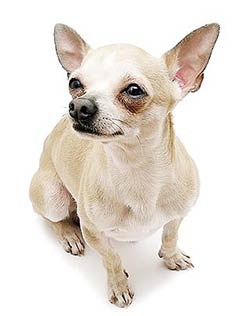
The Chihuahua was discovered in Mexico, in the state of Chihuahua, of course! Originating from at least the 9th century, the Chihuahua is the oldest of the breeds originating in the Western Hemisphere. The breed likely developed as a mix between the Techichi dog favored by the predecessors of the ancient Aztecs, and the miniature Chinese dogs brought to Mexico by the Spanish Conquistadors in the 15th and 16th centuries. It is said that Christopher Columbus carried the new breed to the European continent on one of his sailings back to Spain from the new world.
These dogs are extremely small - the smallest breed in the world. The breed standard says they shouldn't weigh more than 6 pounds, and in the British breed standard it even states that if two dogs are relatively equal in a show, the smaller one should be given preference. In the pet world, as opposed to the show world, Chihuahuas often grow as big as 12 pounds. They stand just 6 - 9 inches tall. Most other dogs would probably consider them an hors d'ouevre.
Some people may describe a Chihuahua as teacup, pocket-sized, tiny toy, miniature, or standard, attempting to convey that a particular dog is worth a higher price or better in some way. The Chihuahua Club of America points out that there is only one breed standard, and any individual dog may weigh anywhere from 2 to 12 pounds. Adding a modifier in front of the breed name is not correct, as there is no such thing as a miniature or teacup Chihuahua, and smaller dogs of the breed are not any different or more valuable than the larger examples.
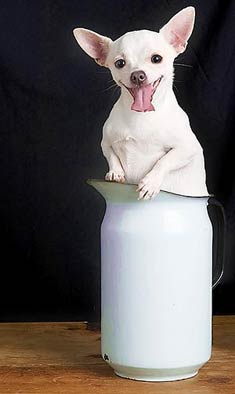
The Chihuahua comes in two coat types: short hair and long. Paradoxically, the long-haired type actually sheds less than the short-haired type. The short haired dog is sometimes called smooth-coated, although this, too, is misleading, as the fur may have a whiskery feel to it. The long coated type generally looks fluffy due to a downy undercoat which also makes them feel very soft.
Coloring in the breed is all over the map. Chihuahuas are acceptable in any color except merle (also known as dapple) because this color is associated with health risks such as deafness and blindness. Dapple coloring is when light-colored spots are present on a background of a darker shade of the same color. Merle dogs may not be shown in most countries, as breeders try to remove this gene from the breeding pool. Acceptable colors range from solid black to solid white, with any patterning except dapple. However, the classic color is fawn, the same as the dog from the commercials.
In spite of their small size, Chihuahuas can be ferocious. You must take care when the dog is around larger dogs as he is easily injured. Some Chihuahuas prefer the company of other Chihuahuas rather than different breeds of dogs, but when they do play with other, larger dogs, they don't understand that they are the underdog due to their size.
These dogs are very loyal, sometimes to only one member of the family. Jealousy of human relationships is not unheard of when a Chihuahua decides that you belong to him, but proper socialization can help the dog learn to accept other humans. The breed is known for being needy. They want all of your attention, all of the time. Chihuahuas are not recommended for homes with small children, as they have a tendency to bite when frightened. The dog's temperament is often high-strung, making him not appreciate the noise and commotion associated with toddlers and pre-schoolers.
The biggest challenge to the health of a Chihuahua is overfeeding. With their small bodies, they really don't need a lot of food, and snacks are definitely out. These dogs are known for being picky eaters, so care must be taken to make them eat the right foods. Overfeeding of dog food and table scraps can lead to joint problems, diabetes, tracheal collapse, chronic bronchitis, and a shorter life.
An interesting difference between Chihuahuas and all other dog breeds is that Chis are born with a soft spot in their skulls, called a molera. The soft spot hardens over the first six months of life as the skull knits itself closed. This is similar to a human baby's soft spot, and care must be taken to prevent injury to the dog's brain until the skull is fully closed.
You must make sure your veterinarian has experience with baby Chihuahuas due to the soft spot and the possibility of hydrocephalus. The two are often mistaken for each other, which can have deadly consequences. Just as in other toy breeds, the Chihuahua is prone to swelling on the brain because the cerebrospinal fluid cannot drain properly from the skull. A dog with hydrocephalus will have many soft spots in the skull because the additional fluid in the cranial cavity keeps the skull plates from fusing. The puppy will have large eyes due to the fluid pressure, but Chihuahuas have large eyes anyway, so this may be hard to distinguish. A hydrocephalic puppy will have a larger head than his littermates, will be lethargic, and will grow more slowly. A dog with hydrocephalus can be expected to live a very short life, vs. the average lifespan of 15 - 22 years for a normal dog.
Your Chihuahua may appear to be cold most of the time. They burrow under blankets and pillows, and have been known to lie in the sun for longer than they probably should. You must protect them from getting overheated by making them move to a cooler spot when they begin to pant excessively. Another interesting feature of the breed is that they shiver a lot, even when they are warm. This is likely due to their high metabolic rate, rather than any temperature-related discomfort.
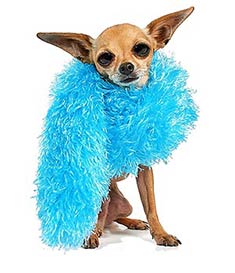
When you take your Chihuahua outdoors, there are some special considerations. First, remember that he is very close to the ground, so look out for hazards that stick up, such as rakes, nails, or stakes in the ground. Second, because he is so small, animals of prey, particularly birds, may think he's a tasty snack. The Chihuahua may challenge larger dogs, and will almost surely lose the fight. Your Chihuahua should be kept away from small children to lessen the chance he will bite them.
Overall, the Chihuahua can be a wonderful companion for you, particularly if you live in a small apartment where larger dogs can cause a problem. However, make sure you are ready to give him the proper attention he craves and that you are prepared to make a long commitment to this long-lived friend.

Doggies Den: Latest Articles
 Homemade Thanksgiving Treats for Your Dog
NUTRITION We all want to include our dogs in our holiday celebrations, but hopefully, you're aware that sharing table scraps with your dog isn't always the best idea.
 Keeping Your Dog Safe during the Summer Months
HEALTH Summer is coming on fast, so it’s time to plan how you will keep your dog safe and healthy through the lazy, carefree, warm days.
 Vaccination Time Again-Keeping Your Puppy Healthy
DOG HEALTH So you have your new puppy picked out. There are quite a few shots, treatments and examinations that will keep the newest member of your family healthy.
 Canine Thanksgiving Feast
NUTRITION With the wide variety of food at Thanksgiving dinner, chances are you'll want to give your dog something special, too. If you're contemplating what to feed your dog for the holiday, here is a guide to a great Canine Thanksgiving Feast.
 Dog Walking Tips Every Owner Should Know
DOG FUN Walking your dog is not only crucial to keeping him healthy and happy, it strengthens the bond between your canine friend and his caregiver. There are a lot of obstacles out there. Don’t forget these simple tips to keep your walk fun and safe in the outside world.
 The Benefits of Physiotherapy for your Dog
HEALTH The same techniques that physiotherapists use to treat a variety of injuries and conditions in humans have been adapted to suit animals with great success. Family pets, show dogs, and working dogs can all benefit greatly from physiotherapy. Dogs whose activities involve a lot of agility are especially susceptible to the types of problems that physiotherapy can address.
 The Decision- Adding a Dog to Your Family
FIRST TIME OWNERSBringing a dog into your family is a decision where many people don’t realize it’s magnitude until after they have the dog. There are a number of things that you need to research before you decide to purchase a dog, and it starts right in your own home.
 Bringing Your Dog Into Your New Baby's Life
HEALTH Many believe that a dog and a new baby cannot happily coexist, so therefore the dog has to go. This is not necessarily the case. A new baby does not mean you have to abandon your dog.

Doggies Den:
Most Popular Articles

Dog Pregnancy Symptoms
HEALTHIf you suspect your dog might be pregnant, check out part one in this series on pregnant dogs, where we cover pregnant dog symptoms.
Dog Birth
HEALTHIn the third article of our dog pregnancy series, we look at the wonderful, but messy, process of bringing newborn puppies into the world.

Indoor Dog Potties
DOG PRODUCTSIt's been a long day at work. You were so busy, you didn't even take time to eat a sandwich, let alone run home to let your dog out. You're on your way home, knowing the poor dog is crossing his or her legs by now, when your car breaks down, delaying you even further. Can't somebody make this easier?
Your Dog’s Digestive System
PHYSIOLOGYEver wonder why your dog eats so fast? Or why he eats gross things? Or why he gets sick to his stomach? Or why his waste stinks so bad? Some of these things are normal, some are not.

Canine Respiratory System
BREATHINGThe basic function of your dog's respiratory system is to bring oxygen in to and remove carbon dioxide from the body. Knowing the symptoms of respiratory diseases can help you help your stay healthy.
Shelter Dog Adoption Tips for Success
ADOPTION Are you intimidated by the prospect of "rescuing" a dog from a shelter? One reason that you may be wary of adopting a dog from a shelter is not knowing how to choose. Adopting a dog from a shelter can be a rewarding process, if you're prepared to do a reasonable amount of research.
Canine Urinary Tract Infections
SYMPTOMS AND TREATMENTDoes your dog seem to be having trouble relieving his or her bladder? Learn how to recognize the signs of urinary tract infections and how to treat them before they spread.
What to do for Dog Diarrhea
SYMPTOMS AND REMEDIESIf you have dogs in your house for any length of time, you have likely experienced at least one bout of dog diarrhea. Beyond the pain in the tuckus involved in cleaning up the mess, you should know what causes diarrhea, and when it's important to see the vet.
What to do for a Dog Bite
DOG BEHAVIOR Getting bitten by a dog can be scary, and you may be tempted to run around in circles for a while, trying to figure out what to do. Here's our guide to help you manage the situation.
Top Ten Tips for Living with a Senior Dog
DOG HEALTH Bringing home a new puppy is so exciting, but it doesn’t take all that long for your exuberant puppy to grow into a senior dog who may have special needs. Here are the doggies.com top ten tips for taking care of your companion who has been with you through so much.