Presidential Dogs
With all of the recent hoopla over when President Obama would get a dog and what type of dog it would be and where he will procure it, the Doggie Den is proud to present this article on Presidential Dogs.

Dogs: The Only Friends in Washington
According to President Calvin Coolidge, "Any man who does not like dogs and want them about does not deserve to be in the White House,"
Nearly every President has kept animals of one kind or another in and around the White House. In fact, Harry S. Truman once famously said, “If you want a friend in Washington, get a dog.’ The White House menagerie has included horses, sheep, silkworms, an alligator, cows, fowl, snakes, swine, tropical birds, fish, elephants, and of course, cats. However, the most common pet to live in the White House is the dog.
“Every president that has a pet seems to be better-liked by the public,” says Claire McLean, founder of the Presidential Pet Museum. “The dog-loving public seems to feel that they are much more real and down-to-earth if they have the same type of behavior as the average family.”
Only Millard Fillmore, Chester Arthur, Franklin Pierce, and James Polk didn’t have animal companions during their presidencies. Martin Van Buren didn’t have pets living with him, but he did accept a pair of tiger cubs from the Sultan of Oman. The tigers were sent immediately to a zoo.
According to Gail Miller, Director of Media Relations at the American Kennel Club, “Dogs give unconditional love and can even help reduce stress levels.” With the pressure inherent in the job of President and leader of the free world, it’s no wonder so many Presidents have kept dogs at the White House. Miller continues, “And, from an image standpoint, nothing humanizes a candidate more than seeing him lovingly dote on his pet or toss a ball around on the White House lawn."
Diplomatic Pets in the White House
Pets in the White House have virtually become celebrities, often used to promote a favorite cause of the President or First Lady or to smooth diplomatic relations. In 1942, Franklin Delano Roosevelt’s Scottish Terrier Fala gave away all of her rubber toys to promote a drive to collect scrap rubber for the war effort.

At the height of the Cold War, President Kennedy was given the gift of a mutt named Pushinka by then Premier of the Soviet Union, Nikita Khrushchev. Liberty, President Ford’s dog, donated one of her puppies to a guide dog program for the blind in 1975, publicizing this cause and encouraging others to donate puppies for training as assistance dogs.
Dogs as Celebrities
Some First Dogs’ celebrity spotlights have actually outshined those of their Presidents. FDR’s Fala was hugely popular and was the subject of an MGM short film which depicted the home front during World War II from the dog’s perspective. This pampered pooch had a bone brought to him on the President’s breakfast tray each morning and reportedly slept on a special chair at the foot of the Roosevelt’s bed.
Barney, the second President Bush’s Scottish Terrier, had his own website showing his antics. Dubbed the “Barney Cam”, the site featured videos of the dog as he went about his daily activities. Millie, the senior President Bush’s Springer Spaniel, dictated a best-selling book to First Lady Barbara Bush and gave birth to Spot, who is the only second generation Presidential dog, having lived in the White House with George W. and Laura Bush.
Rob Roy, the beloved white collie who lived in the Coolidge White House, actually appears in First Lady Grace Coolidge’s official portrait.
Lara, a Newfie who lived with the Buchanans, was well-known for lying motionless around the White House for hours, one eye closed, the other focused on the President.
Dogs as Help-Mates
Presidential dogs have also served a helpful purpose for the Commanders in Chief. Reagan’s Cavalier King Charles Spaniel, Rex, often pulled too hard on his leash and would drag the Reagans away from reporters and photographers before anyone could ask the President any questions. Liberty, President Ford’s Golden Retriever, would apparently wag his tail upon receiving a silent signal from his master. The tail wagging was known as the motion to adjourn whatever meeting was being conducted. Ford apparently used this trick to keep his meetings short!
Richard Nixon used his Cocker Spaniel Checkers to save his political career. As a Vice Presidential candidate in 1952, Nixon was accused of accepting illegal gifts. In a famous speech, he said the only thing he had ever received was Checkers, and that no matter what, he was keeping the dog because his children had become attached to him. Voters were apparently so charmed by the dog that they overlooked any other purported improprieties. Perhaps if we had paid more attention, we wouldn’t have ended up with Watergate!
Laddie Boy, an Airedale Terrier who lived in the Harding White House, once subbed for the President and First Lady as host of the White House Easter Egg Roll in 1923, while the Hardings were on a trip to Georgia. This dog was so special he even had a special chair in the Cabinet room where he attended high-level meetings. He also had a birthday party at the White House, complete with a dog bone cake. There is a statue of Laddie Boy in the Smithsonian museum.
Herbert Hoover’s best friend, a Belgian Shepherd named King Tut served as Hoover’s bodyguard. Tut had been trained as a police dog before being adopted by the Hoovers.
Trouble in a Four-Legged Package
Like all dogs, Presidential dogs have caused their share of trouble. Theodore Roosevelt’s Bull Terrier, Meggie, once ripped off the French ambassador’s pants during a White House function, very nearly sparking an international incident.
Amy, President Carter’s daughter, received a dog named Grits as a gift from her teacher when the family moved to Washington. Unfortunately, the dog was so aggressive he had to be returned.
Lucky, President Reagan’s Bouvier des Flanders, was known to chase reporters around the White House, and President George H.W. Bush’s spaniel Barney actually bit a reporter from Reuters at a press conference soon after Obama won the 2008 election.
Liberty and President Ford often left the White House without the Secret Service’s knowledge to take care of business on the lawn. They would often become locked out and have to seek out the guards around the White House to be let back in.
President Eisenhower’s Weimaraner, Heidi, once had an accident on a $20,000 rug in a diplomatic reception area. The housekeeping staff was unable to remove the stain, and the rug had to be removed from the White House.
Dogs Causing Controversy
Although Presidential pups have usually raised their master’s standings, some have become controversial and actually damaged the Commander in Chief’s reputation.
Lyndon Johnson had two beagles named Him and Her. (How original.) In 1964, Johnson was trying to get Him to do a trick for reporters on the White House lawn. When the dog didn’t perform, Johnson picked Him up by his ears, leading to outrage from dog lovers throughout the country. Him and Her subsequently appeared on the cover of Life magazine. After the dogs died, J. Edgar Hoover of the FBI, gave Johnson a new beagle who was dubbed Edgar.
Harry S. Truman was criticized for re-gifting his Cocker Spaniel, Feller, to the White House physician. The dog was handed off eight times before finally finding a permanent home on a farm in Ohio.
Where to Find a Perfect Dog for the White House
Vice President Joe Biden reportedly got his new puppy from a breeder soon after the Inauguration. Due to outrage from the shelter and rescue community, he promised to get a second dog from a shelter. He has not yet followed through on this promise. Much similar interest has been directed to President Obama, hoping he would bring home a shelter dog for his daughters Sasha and Malia.
Perhaps they could borrow a page from President Johnson, whose beloved dog Yuki was found at a Texas gas station by First Daughter Luci. Yuki and Johnson became close friends and often sang together in the Oval Office, performing for whoever would listen.
Time Magazine has a photo essay here
Another slideshow, this from White House 101
The Traveling Dogs website has a fun quiz here

Doggies Den: Latest Articles
 Homemade Thanksgiving Treats for Your Dog
NUTRITION We all want to include our dogs in our holiday celebrations, but hopefully, you're aware that sharing table scraps with your dog isn't always the best idea.
 Keeping Your Dog Safe during the Summer Months
HEALTH Summer is coming on fast, so it’s time to plan how you will keep your dog safe and healthy through the lazy, carefree, warm days.
 Vaccination Time Again-Keeping Your Puppy Healthy
DOG HEALTH So you have your new puppy picked out. There are quite a few shots, treatments and examinations that will keep the newest member of your family healthy.
 Canine Thanksgiving Feast
NUTRITION With the wide variety of food at Thanksgiving dinner, chances are you'll want to give your dog something special, too. If you're contemplating what to feed your dog for the holiday, here is a guide to a great Canine Thanksgiving Feast.
 Dog Walking Tips Every Owner Should Know
DOG FUN Walking your dog is not only crucial to keeping him healthy and happy, it strengthens the bond between your canine friend and his caregiver. There are a lot of obstacles out there. Don’t forget these simple tips to keep your walk fun and safe in the outside world.
 The Benefits of Physiotherapy for your Dog
HEALTH The same techniques that physiotherapists use to treat a variety of injuries and conditions in humans have been adapted to suit animals with great success. Family pets, show dogs, and working dogs can all benefit greatly from physiotherapy. Dogs whose activities involve a lot of agility are especially susceptible to the types of problems that physiotherapy can address.
 The Decision- Adding a Dog to Your Family
FIRST TIME OWNERSBringing a dog into your family is a decision where many people don’t realize it’s magnitude until after they have the dog. There are a number of things that you need to research before you decide to purchase a dog, and it starts right in your own home.
 Bringing Your Dog Into Your New Baby's Life
HEALTH Many believe that a dog and a new baby cannot happily coexist, so therefore the dog has to go. This is not necessarily the case.  A new baby does not mean you have to abandon your dog.

Doggies Den:
Most Popular Articles
Dog Pregnancy Symptoms
HEALTHIf you suspect your dog might be pregnant, check out part one in this series on pregnant dogs, where we cover pregnant dog symptoms.
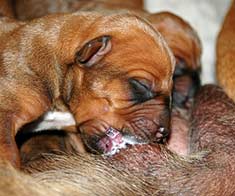
Dog Birth
HEALTHIn the third article of our dog pregnancy series, we look at the wonderful, but messy, process of bringing newborn puppies into the world.
Indoor Dog Potties
DOG PRODUCTSIt's been a long day at work. You were so busy, you didn't even take time to eat a sandwich, let alone run home to let your dog out. You're on your way home, knowing the poor dog is crossing his or her legs by now, when your car breaks down, delaying you even further. Can't somebody make this easier?
Your Dog’s Digestive System
PHYSIOLOGYEver wonder why your dog eats so fast? Or why he eats gross things? Or why he gets sick to his stomach? Or why his waste stinks so bad? Some of these things are normal, some are not.
Canine Respiratory System
BREATHINGThe basic function of your dog's respiratory system is to bring oxygen in to and remove carbon dioxide from the body. Knowing the symptoms of respiratory diseases can help you help your stay healthy.
Shelter Dog Adoption Tips for Success
ADOPTION Are you intimidated by the prospect of "rescuing" a dog from a shelter? One reason that you may be wary of adopting a dog from a shelter is not knowing how to choose. Adopting a dog from a shelter can be a rewarding process, if you're prepared to do a reasonable amount of research.
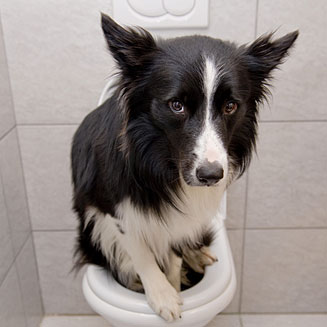
Canine Urinary Tract Infections
SYMPTOMS AND TREATMENTDoes your dog seem to be having trouble relieving his or her bladder? Learn how to recognize the signs of urinary tract infections and how to treat them before they spread.
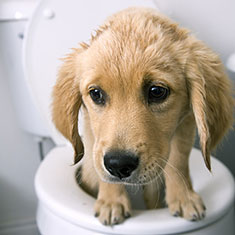
What to do for Dog Diarrhea
SYMPTOMS AND REMEDIESIf you have dogs in your house for any length of time, you have likely experienced at least one bout of dog diarrhea. Beyond the pain in the tuckus involved in cleaning up the mess, you should know what causes diarrhea, and when it's important to see the vet.
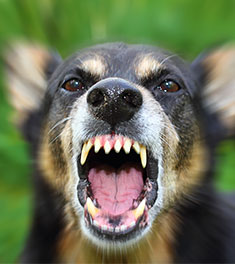
What to do for a Dog Bite
DOG BEHAVIOR Getting bitten by a dog can be scary, and you may be tempted to run around in circles for a while, trying to figure out what to do. Here's our guide to help you manage the situation.
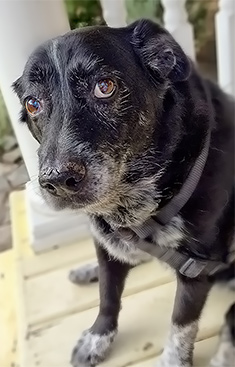
Top Ten Tips for Living with a Senior Dog
DOG HEALTH Bringing home a new puppy is so exciting, but it doesn’t take all that long for your exuberant puppy to grow into a senior dog who may have special needs. Here are the doggies.com top ten tips for taking care of your companion who has been with you through so much.