Your Dog’s Digestive System
Ever wonder why your dog eats so fast? Or why he eats inappropriate things? Or why he gets sick to his stomach? Or why his waste stinks so bad? Some of these things are normal, some are not. Find out which is which below.
It all starts with the teeth and jaws
Although many parts of a dog’s digestive system are similar to yours, their functions are just a bit different. For example, your molars are flat, allowing you to grind up your food because you are an omnivore, capable of eating and digesting just about any type of food. Your dog, on the other hand, is primarily a carnivore, so his back teeth are shaped more like blades. They are used to tear and shred meat. In addition, the dog cannot move his jaw sideways as you can because he does not typically need to grind his food.
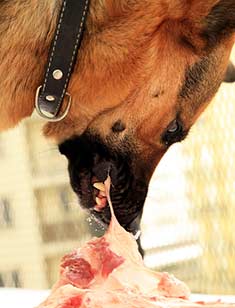
Even though it looks like your dog may have fewer teeth than you do, he actually has 42 as compared to your 32. The gaps in his teeth are there to allow him to take in large hunks of meat at one time. His hinged jaw allows him to open much wider than you can. Both of these factors are important because he wants to make sure he gets enough of whatever prey his pack brought down in the wild.
Salivary enzymes
Both you and your dog use saliva to moisten food as it is chewed into small pieces. However, the make-up of the saliva is slightly different. Your saliva contains amylase, which helps to break down starchy foods into sugars before they even leave the mouth.
Your dog, on the other hand, does not have any amylase enzyme in his saliva, so the starches tend to stick to his teeth, causing plaque and tartar to build up. Your dog is much more likely to develop gum disease from the tartar, while humans tend to develop cavities from the sugars.
Your dog’s saliva contains a different enzyme, known as lysozyme, which is important in killing any bacteria that may be present in whatever your dog chooses to eat. Humans, who generally cook their food before eating it, do not have this protective enzyme.
Digestion continues in the stomach
After the food is chewed, it then passes into the esophagus where muscles work in waves to move the food into the stomach. Here we see another difference between human and canine digestion. Although both stomachs use acid to break down food, the dog’s stomach is much more acidic, carrying a pH of about 1, while a human stomach weighs in with a pH between 4 and 5. This is another protective enzyme that allows your dog to eat some really gross things and not get sick. His very acidic stomach kills most of the bacteria found in less-than-fresh roadkill and any other tasty tidbits he may find. The highly acidic environment is also more conducive to digesting bits of bone.
Nutrient absorption from the small intestine
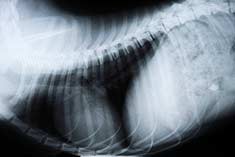
As the food leaves the stomach to pass into the small intestine, it is in the form of a liquid known as chyme. The liver and pancreas secrete digestive enzymes into the small intestine to aid in the breakdown of carbohydrates and fats, and all of the nutrients from the food should be absorbed into the bloodstream before the remaining elements pass into the large intestine.
In the large intestine, bacteria break down anything that has not been fully digested and absorbed, leaving the waste products to be excreted into your yard.
Because your dog’s digestive tract is relatively short and simple, he is unable to fully process large amounts of grains and fiber. These foods simply pass through the dog, leading to more waste for you to clean up.
Compared to you, your dog keeps his food in his stomach for a longer period of time, allowing the acid to break down animal proteins, bones, and fats. This explains why the dog can live with being fed only once or twice a day. He feels full longer because the food remains in his stomach longer.
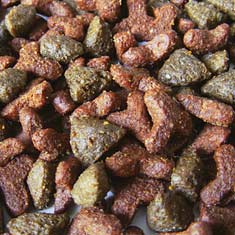
Once the food clears the stomach, however, the food travels through the rest of the dog’s digestive system much more quickly than it does in yours because the dog’s intestines are only about 5% as long as yours. Food will pass through a canine digestive tract in about a day, whereas it takes up to three days to pass through yours. This is another protective feature to prevent bacteria from entering the dog’s body, but it also means you have to provide food that is easily digestible in order to get the maximum amount of nutrients absorbed in the shortest amount of time.
Why does my dog eat so fast?
Although your dog has millions more scent receptors than you do, he has thousands fewer taste buds. Where you have close to 10,000, he has fewer than 2,000. This goes back to his ancestry. Remember that dogs evolved from wolves. They had to eat fast to get their fair share when the pack was feasting, and they had to be sure to clear the area quickly before something else came along and ate them! Taste wasn’t exactly a high priority.
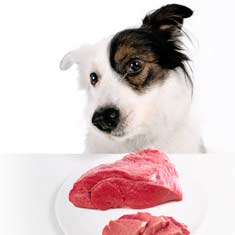
If you have more than one dog, you may be making your dog eat faster than he would if he were fed in a room alone because he reverts to that pack mentality. He wants to make sure he gets his before anyone else shoves him out of the way. If you notice your dog eating so fast that he immediately vomits it back up, try moving his dish further away from your other dogs, or try feeding him a handful at a time.
What nutrients are important for my dog?
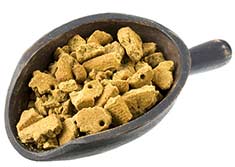
Your dog’s number one nutritional need is protein. As you have seen from the above discussion, your dog’s entire digestive system was built to digest proteins, not the fiber and carbohydrates found as the primary ingredient in most commercial dog foods.
Your dog can’t read the food labels, so you need to do it for him. Premium dog foods such as Orijen and Life’s Abundance are made with wholesome, natural ingredients and provide high-quality protein. In addition, these foods include vitamins, minerals, anti-oxidants, omega-3 fatty acids, calcium, and even a few fruits and vegetables to balance your dog’s diet.
Because these foods are heavy on protein, you can expect to pay more for them. However, because they give your dog the things he needs, you can feed less. In addition, as the food passes through the dog’s digestive system, he will be able to absorb almost all of it, leaving less waste for you to clean up. And because the waste will not contain as much partially digested food, it should smell just a wee bit better.
Why does my dog eat poop?
This is one of the grosser habits engaged in by some dogs, but it’s more than just bad behavior. If you are feeding a cheaper, grain-based food, it is likely that much of the food is passing through your dog into his waste without ever being absorbed. This can cause a problem in that your dog must eat more to get less nutritional value. In addition, it means that his waste smells pretty much like his food. How’s he to know the difference?
This might also explain why he eats things that are not strictly food. By feeding a grain-based dog food, you are forcing him to look elsewhere for the protein he craves. When he gets into things he shouldn’t, you are just asking for an upset stomach and lots of vomit you will have to clean up.

Doggies Den: Latest Articles
 Homemade Thanksgiving Treats for Your Dog
NUTRITION We all want to include our dogs in our holiday celebrations, but hopefully, you're aware that sharing table scraps with your dog isn't always the best idea.
 Keeping Your Dog Safe during the Summer Months
HEALTH Summer is coming on fast, so it’s time to plan how you will keep your dog safe and healthy through the lazy, carefree, warm days.
 Vaccination Time Again-Keeping Your Puppy Healthy
DOG HEALTH So you have your new puppy picked out. There are quite a few shots, treatments and examinations that will keep the newest member of your family healthy.
 Canine Thanksgiving Feast
NUTRITION With the wide variety of food at Thanksgiving dinner, chances are you'll want to give your dog something special, too. If you're contemplating what to feed your dog for the holiday, here is a guide to a great Canine Thanksgiving Feast.
 Dog Walking Tips Every Owner Should Know
DOG FUN Walking your dog is not only crucial to keeping him healthy and happy, it strengthens the bond between your canine friend and his caregiver. There are a lot of obstacles out there. Don’t forget these simple tips to keep your walk fun and safe in the outside world.
 The Benefits of Physiotherapy for your Dog
HEALTH The same techniques that physiotherapists use to treat a variety of injuries and conditions in humans have been adapted to suit animals with great success. Family pets, show dogs, and working dogs can all benefit greatly from physiotherapy. Dogs whose activities involve a lot of agility are especially susceptible to the types of problems that physiotherapy can address.
 The Decision- Adding a Dog to Your Family
FIRST TIME OWNERSBringing a dog into your family is a decision where many people don’t realize it’s magnitude until after they have the dog. There are a number of things that you need to research before you decide to purchase a dog, and it starts right in your own home.
 Bringing Your Dog Into Your New Baby's Life
HEALTH Many believe that a dog and a new baby cannot happily coexist, so therefore the dog has to go. This is not necessarily the case.  A new baby does not mean you have to abandon your dog.
Doggies Den:
Most Popular Articles
Dog Pregnancy Symptoms
HEALTHIf you suspect your dog might be pregnant, check out part one in this series on pregnant dogs, where we cover pregnant dog symptoms.
Dog Birth
HEALTHIn the third article of our dog pregnancy series, we look at the wonderful, but messy, process of bringing newborn puppies into the world.
Indoor Dog Potties
DOG PRODUCTSIt's been a long day at work. You were so busy, you didn't even take time to eat a sandwich, let alone run home to let your dog out. You're on your way home, knowing the poor dog is crossing his or her legs by now, when your car breaks down, delaying you even further. Can't somebody make this easier?
Your Dog’s Digestive System
PHYSIOLOGYEver wonder why your dog eats so fast? Or why he eats gross things? Or why he gets sick to his stomach? Or why his waste stinks so bad? Some of these things are normal, some are not.

Canine Respiratory System
BREATHINGThe basic function of your dog's respiratory system is to bring oxygen in to and remove carbon dioxide from the body. Knowing the symptoms of respiratory diseases can help you help your stay healthy.
Shelter Dog Adoption Tips for Success
ADOPTION Are you intimidated by the prospect of "rescuing" a dog from a shelter? One reason that you may be wary of adopting a dog from a shelter is not knowing how to choose. Adopting a dog from a shelter can be a rewarding process, if you're prepared to do a reasonable amount of research.
Canine Urinary Tract Infections
SYMPTOMS AND TREATMENTDoes your dog seem to be having trouble relieving his or her bladder? Learn how to recognize the signs of urinary tract infections and how to treat them before they spread.
What to do for Dog Diarrhea
SYMPTOMS AND REMEDIESIf you have dogs in your house for any length of time, you have likely experienced at least one bout of dog diarrhea. Beyond the pain in the tuckus involved in cleaning up the mess, you should know what causes diarrhea, and when it's important to see the vet.
What to do for a Dog Bite
DOG BEHAVIOR Getting bitten by a dog can be scary, and you may be tempted to run around in circles for a while, trying to figure out what to do. Here's our guide to help you manage the situation.
Top Ten Tips for Living with a Senior Dog
DOG HEALTH Bringing home a new puppy is so exciting, but it doesn’t take all that long for your exuberant puppy to grow into a senior dog who may have special needs. Here are the doggies.com top ten tips for taking care of your companion who has been with you through so much.