Caring for Your Dog’s Teeth
Ever wonder why your dog has such nasty breath? Maybe it’s because, like most of us, you haven’t given much thought to his dental care.
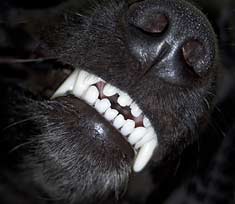
Normal Dental Anatomy
The typical dog’s mouth contains 42 teeth. In the front, there are six incisors, used to pick up items, scrape meat from bones, and remove fleas or other irritating things from his skin while grooming himself. Next are the canines, what we would call in humans the eye teeth. The canines are used to bite into something the dog wishes to hang on to such as a toy. Next are eight premolars, used to chew food, and finally the molars which break down large bites or hard food into a size and consistency which the premolars can handle. In the lower jaw there are six molars, and in the upper jaw there are four.
In the premolar area, many dogs have either extra teeth or missing teeth. This is genetically determined and doesn’t usually cause any problems, except that extra teeth may cause over-crowding, making removal essential. Greyhounds and spaniels are the most likely breeds to have extra teeth, while Collies and Doberman Pinchers often have missing premolars.
Regardless of the type of tooth, each tooth’s anatomy is similar. Below the gums, are the roots, which carry the pulp of the tooth. The pulp carries the nerves and blood vessels to supply food and oxygen to the tooth. Above the gumline, is the crown of the tooth, consisting of the enamel on the outside, covering the top of the pulp and root.
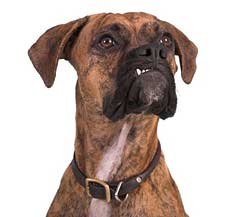
Bite
Depending on the breed of dog, the teeth come together in two different ways. The scissors bite, with the teeth of top jaw closing in front of those of the other jaw, occurs in dogs with long, narrow muzzles such as Dobermans, Greyhounds, and Collies. Breeds with short, wide muzzles such as Bulldogs, Pugs, and Boxers tend to have a reverse scissors bite, with the lower incisors in front of the upper when the dog’s mouth is closed, often called an underbite or an undershot jaw. The breed standard for each breed will tell you which type of bite your dog should have. In some breeds, it is acceptable to have a level bite, where the incisors meet tip-to-tip. However, this can cause the teeth to wear down more quickly than they should.
Using teeth to estimate age
For dogs under the age of six, you can often judge the age of the dog by the condition and number of his teeth. Puppies have just 23 baby teeth, which are replaced by the 42 permanent teeth over the course of puppyhood. Starting at the age of one year, the incisors begin to wear down, beginning with the teeth in the very front of the mouth, with the wear and tear working their way back through the incisors.
Plaque, Tartar, and Gingivitis
Just as in humans, tartar and gingivitis are the biggest oral problems for dogs. When dogs eat, food particles get trapped between the teeth and under the gums. Bacteria come in to feed off of the food particles, the mixture of food and bacteria form plaque and create the foul odor known as dog breath. Within twelve hours, the plaque combines with elements of the dog’s own saliva and hardens into tartar. The rough surface created by tartar attracts more food, which attracts more bacteria, and the cycle continues. If the plaque is not cleaned out, it can cause an infection of the gums known as gingivitis.
Plaque, tartar, and gingivitis are important not only because they make your dog have bad breath. The infection around the dog’s teeth can also spread into the gums and from there to the rest of the body, destroying bones, organs, and muscles.
If your dog has worse bad breath than usual, or has inflamed gums, bleeding gums, thick and sticky saliva, or swelling around the mouth, he should be seen by a veterinarian or vet dentist for a thorough teeth cleaning.
Brushing your dog’s teeth
You can brush your dog’s teeth at home, using specially formulated pet toothpaste that won’t harm the dog if he swallows it. Dog toothpaste actually comes in flavors like beef and chicken. Most dogs take to it without too much trouble, but you might want to get the dog used to the smell of the paste before trying to jam a toothbrush in his mouth. For the first few days, you may want to put the toothpaste on your finger and use that instead of a brush to get your dog used to having something in his mouth. Once your dog is used to the smell and the feeling of having someone work on his teeth, you can begin gently brushing his teeth with a real toothbrush. You may want to just brush a few teeth the first day, then brush a few more the next day, adding more teeth until your dog is comfortable with the process.
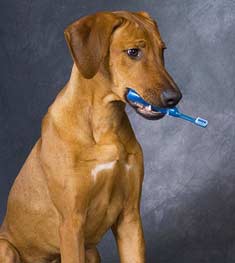
The dog is usually able to keep the inside surface of his teeth relatively clean with his tongue and saliva. However, the surface facing the cheeks is tough for him to take care of. This is where you should concentrate your efforts.
If you start this process early enough and keep at it faithfully, you may be able to prevent the build-up of hardened tartar. Once tartar hardens on the teeth, it cannot be removed by simply brushing. It requires scaling using a specialized dental tool. This is most often done by a dentist, but can be done at home. You may be able to purchase a scaler from your veterinarian if you are interested in pursuing this.
Preventing Plaque and Tartar Build-up
Although nothing will replace brushing, there are several steps you can take to minimize the oral health problems your dog might experience. First, there are certain dog foods designed to help prevent plaque and tartar build-up. Available from several manufacturers, these products will include the words “oral care” or “dental care” in their names. Rawhide chew toys, while high in sodium, are actually very effective at removing both plaque and tartar.
Sprays and rinses can bind to the teeth and gums, providing antibacterial protection for 24 – 48 hours. The chemical name of the compound in these sprays and rinses is chlorhexidine gluconate. Your vet should be able to either supply this to you or tell you where you can buy some. One routine some experts find helpful is to treat the dog’s teeth with chlorhexidine gluconate twice a week, and brush the dog’s teeth on the days you are not using the rinse or spray.
Lastly, a vaccine is being developed by Pfizer which will be effective toward the bacteria that cause gingivitis. Although this will not replace brushing, it can help to prevent infections which can cause greater harm to the dog.
Canine Orthodontics
Many of us can’t afford braces for our kids, let alone on our dogs! However, orthodontics are now available for our canine friends who need them. In the past, teeth that were misaligned were usually just removed. Teeth that are poorly aligned can cause problems for a dog because it may cause other teeth to dig into the gums, it may cause the teeth to wear down prematurely, and it may cause pain in the jaw.
If a veterinary orthodontist determines that your dog might benefit from braces, make sure to ask him if the risks from repeated anesthesia are less than or worse than the risks your dog faces from misaligned teeth. Your dog will be put under general anesthesia while a mold of his mouth is made, as well as when the appliance is placed in his mouth. In some cases, the dog must be anesthetized even when his mouth X-rays are taken on the first visit. Because there are risks associated with anesthesia, braces should never be put on a dog strictly for cosmetic reasons.
The price for canine braces usually ranges from $1,000 to $2,000, and dog guardians must commit to diligent brushing and antiseptic spraying of the dog’s mouth while the appliance is in place. A dog wearing braces must eat soft food and give up chew toys for the duration of the treatment, which is normally measured in weeks or months, rather than years. Long-haired dogs may have to wear one of those big plastic cones (known as Elizabethan collars) to keep their hair from becoming entangled in the braces.
Other veterinary dental specialists can treat gingivitis, oral cancers, abscesses, and can even give your dog a root canal!
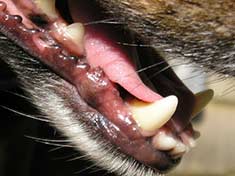
What else do I need to know about my dog’s teeth?
You should inspect your dog’s mouth at least once a week, looking for any changes since the last time you checked. If your dog is extremely resistant to having you check his teeth, it may mean that he already has a problem and should be checked by your vet.
If your dog loses a permanent tooth, it must be put back in his mouth within 30 minutes or the implantation will likely not be successful. Put the tooth in a glass of milk and proceed immediately to your vet’s office.

Doggies Den: Latest Articles
 Homemade Thanksgiving Treats for Your Dog
NUTRITION We all want to include our dogs in our holiday celebrations, but hopefully, you're aware that sharing table scraps with your dog isn't always the best idea.
 Keeping Your Dog Safe during the Summer Months
HEALTH Summer is coming on fast, so it’s time to plan how you will keep your dog safe and healthy through the lazy, carefree, warm days.
 Vaccination Time Again-Keeping Your Puppy Healthy
DOG HEALTH So you have your new puppy picked out. There are quite a few shots, treatments and examinations that will keep the newest member of your family healthy.
 Canine Thanksgiving Feast
NUTRITION With the wide variety of food at Thanksgiving dinner, chances are you'll want to give your dog something special, too. If you're contemplating what to feed your dog for the holiday, here is a guide to a great Canine Thanksgiving Feast.
 Dog Walking Tips Every Owner Should Know
DOG FUN Walking your dog is not only crucial to keeping him healthy and happy, it strengthens the bond between your canine friend and his caregiver. There are a lot of obstacles out there. Don’t forget these simple tips to keep your walk fun and safe in the outside world.
 The Benefits of Physiotherapy for your Dog
HEALTH The same techniques that physiotherapists use to treat a variety of injuries and conditions in humans have been adapted to suit animals with great success. Family pets, show dogs, and working dogs can all benefit greatly from physiotherapy. Dogs whose activities involve a lot of agility are especially susceptible to the types of problems that physiotherapy can address.
 The Decision- Adding a Dog to Your Family
FIRST TIME OWNERSBringing a dog into your family is a decision where many people don’t realize it’s magnitude until after they have the dog. There are a number of things that you need to research before you decide to purchase a dog, and it starts right in your own home.
 Bringing Your Dog Into Your New Baby's Life
HEALTH Many believe that a dog and a new baby cannot happily coexist, so therefore the dog has to go. This is not necessarily the case.  A new baby does not mean you have to abandon your dog.

Doggies Den:
Most Popular Articles
Dog Pregnancy Symptoms
HEALTHIf you suspect your dog might be pregnant, check out part one in this series on pregnant dogs, where we cover pregnant dog symptoms.
Dog Birth
HEALTHIn the third article of our dog pregnancy series, we look at the wonderful, but messy, process of bringing newborn puppies into the world.
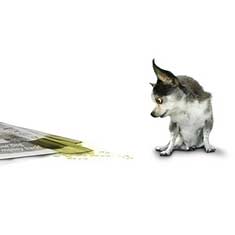
Indoor Dog Potties
DOG PRODUCTSIt's been a long day at work. You were so busy, you didn't even take time to eat a sandwich, let alone run home to let your dog out. You're on your way home, knowing the poor dog is crossing his or her legs by now, when your car breaks down, delaying you even further. Can't somebody make this easier?
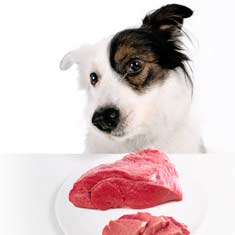
Your Dog’s Digestive System
PHYSIOLOGYEver wonder why your dog eats so fast? Or why he eats gross things? Or why he gets sick to his stomach? Or why his waste stinks so bad? Some of these things are normal, some are not.

Canine Respiratory System
BREATHINGThe basic function of your dog's respiratory system is to bring oxygen in to and remove carbon dioxide from the body. Knowing the symptoms of respiratory diseases can help you help your stay healthy.
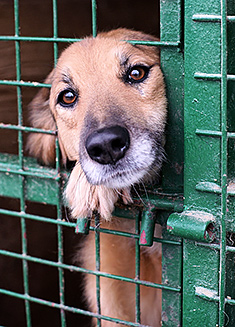
Shelter Dog Adoption Tips for Success
ADOPTION Are you intimidated by the prospect of "rescuing" a dog from a shelter? One reason that you may be wary of adopting a dog from a shelter is not knowing how to choose. Adopting a dog from a shelter can be a rewarding process, if you're prepared to do a reasonable amount of research.
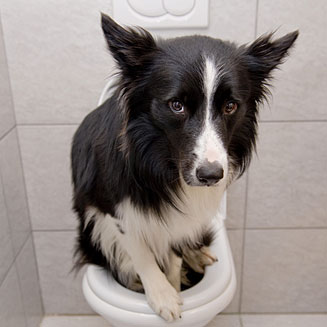
Canine Urinary Tract Infections
SYMPTOMS AND TREATMENTDoes your dog seem to be having trouble relieving his or her bladder? Learn how to recognize the signs of urinary tract infections and how to treat them before they spread.
What to do for Dog Diarrhea
SYMPTOMS AND REMEDIESIf you have dogs in your house for any length of time, you have likely experienced at least one bout of dog diarrhea. Beyond the pain in the tuckus involved in cleaning up the mess, you should know what causes diarrhea, and when it's important to see the vet.
What to do for a Dog Bite
DOG BEHAVIOR Getting bitten by a dog can be scary, and you may be tempted to run around in circles for a while, trying to figure out what to do. Here's our guide to help you manage the situation.
Top Ten Tips for Living with a Senior Dog
DOG HEALTH Bringing home a new puppy is so exciting, but it doesn’t take all that long for your exuberant puppy to grow into a senior dog who may have special needs. Here are the doggies.com top ten tips for taking care of your companion who has been with you through so much.