Socializing Your New Puppy to Your Older Dog: Kindergarten Revisited
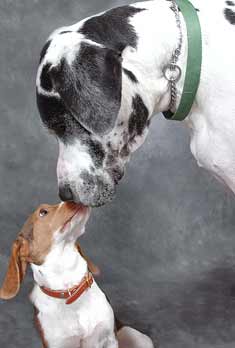
Are you someone who can’t get enough of a good thing, and have found that you enjoy the companionship of your beloved dog so much that you want to welcome a new puppy into your life? A multiple dog household can certainly be fun, but the odds of doggie number one being as enthusiastic about a little brother or sister as you are may not be as great as you think.
Even the most docile and obedient of dogs may be threatened by the introduction of an attention (and tail) grabbing puppy. Fortunately, there are things you can do to make sure that both your current dog and your future puppy become the best of friends, and your transition from a single to a two-dog household goes as comfortably as possible for canines and humans alike.
Assess current dog’s personality
The first priority you have, if you are considering a new puppy, is to be honest about your current dog’s personality traits and decide if he or she has aggression issues that you need to address. Puppies are naturally social animals, and your new one will almost certainly want to make a playmate of your dog. Unless you control the animals’ “getting-to-know-you” period, which can take anywhere from a day to months, the puppy will be at risk of bullying and even physical harm from the older dog.
Remember, dogs are pack animals
This less than desirable (in human terms) state of affairs is to be expected simply because dogs are pack animals, and every pack must have its leader. In most packs of wild dogs it is the biggest or oldest animal which reigns supreme, simply because that animal has the physical strength or mental smarts to have survived.
So you should not simply set your new puppy down in the middle of the front yard and turn Dog #1 loose for an introduction. Dog #1 is very likely to see the puppy as an unwelcome intruder in the family’s territory, and react accordingly. You will have to have both animals under control (leashed) at all times. You will also have to oversee their interactions for as long as it takes them to be comfortable with each other.
Puppy needs to learn his place
This may demand a considerable amount of patience, because it won’t happen until your new puppy has learned to recognize your older dog’s messages of dominance. Your dog knows that the puppy is a baby, and will instinctively exert mild discipline over the baby until the baby’s behavior becomes so annoying that the dog simply can’t handle it any more, and becomes unacceptably aggressive.
Until the puppy accepts its place in the pack hierarchy and begins to exhibit the acceptable submissive behavior, it will be at risk of being nipped or even pinned by your older pet. So unless your Dog #1 is a small breed and your puppy a large one, you should not leave the two of them alone until they are closer in size, and you should take all the steps you can to respect your older dog’s comfort zone.
Give both dogs their own space
One very effective way of doing this is to make sure each animal has its own space. You can get a crate for you puppy to stay in when you are not around during the socializing period, and you can also feed the two animals in different locations. Give the puppy his or her own chew toys, so that there isn’t any problem with sharing (if this sounds like you will be dealing with a couple of kindergarten kids, well, that’s just about how it works!)
Having a crate will let you remove the puppy to socialize with your older dog for a few minutes at a time, yet also allow him or her to have a “secure” area in which to rest, eat, or play with the puppy toys. You can increase the socialization periods by a few minutes each day, and you should know by the end of the first month whether or not your two pets are going to be happy together.
Takes time and commitment
You’ll also have to give up some of your personal time to make sure that each of your dogs is getting plenty of individual attention from you. It’s essential during the puppy socialization period that you don’t deprive your older dog of an ounce of the affection and play time and walks he or she has been used to receiving, or you will risk unleashing some serious displays of jealousy. It’s natural to feel protective of a young puppy, but don’t forget that your older dog sees you as its parent too!
If you think you are up to that kind of commitment to two different dogs, then you can begin to prepare Dog # 1 for the arrival of the new puppy well in advance. If you intend to get your puppy from a kennel, visit the breeder and ask if you can handle the puppy and rub it with a piece of fabric to pick up its scent. Dogs identify each other primarily through their sense of smell, and by having the puppy’s scent already present in your home, you may help your older dog feel less threatened when the puppy actually arrives.
Introduce them somewhere neutral
If the breeder will allow it, you can even bring your dog to the kennel to meet the puppy, and then arrange for a second meeting at a neutral setting like a bark park. Meeting the puppy in a neutral environment will disarm your dog’s territorial instincts and let him or her concentrate on getting to know the puppy better.
By taking it slow and understanding the psychological processes at work in the minds of both your dog and your puppy, you will almost certainly have a happy two-dog household in a matter of weeks. But if you have an older dog who simply can’t make the adjustment, and have fallen in love with your puppy, don’t give up until you have talked to an animal behavior expert and tried whatever is necessary both to help your older dog feel secure, and to keep your puppy safe.

Doggies Den: Latest Articles
 Homemade Thanksgiving Treats for Your Dog
NUTRITION We all want to include our dogs in our holiday celebrations, but hopefully, you're aware that sharing table scraps with your dog isn't always the best idea.
 Keeping Your Dog Safe during the Summer Months
HEALTH Summer is coming on fast, so it’s time to plan how you will keep your dog safe and healthy through the lazy, carefree, warm days.
 Vaccination Time Again-Keeping Your Puppy Healthy
DOG HEALTH So you have your new puppy picked out. There are quite a few shots, treatments and examinations that will keep the newest member of your family healthy.
 Canine Thanksgiving Feast
NUTRITION With the wide variety of food at Thanksgiving dinner, chances are you'll want to give your dog something special, too. If you're contemplating what to feed your dog for the holiday, here is a guide to a great Canine Thanksgiving Feast.
 Dog Walking Tips Every Owner Should Know
DOG FUN Walking your dog is not only crucial to keeping him healthy and happy, it strengthens the bond between your canine friend and his caregiver. There are a lot of obstacles out there. Don’t forget these simple tips to keep your walk fun and safe in the outside world.
 The Benefits of Physiotherapy for your Dog
HEALTH The same techniques that physiotherapists use to treat a variety of injuries and conditions in humans have been adapted to suit animals with great success. Family pets, show dogs, and working dogs can all benefit greatly from physiotherapy. Dogs whose activities involve a lot of agility are especially susceptible to the types of problems that physiotherapy can address.
 The Decision- Adding a Dog to Your Family
FIRST TIME OWNERSBringing a dog into your family is a decision where many people don’t realize it’s magnitude until after they have the dog. There are a number of things that you need to research before you decide to purchase a dog, and it starts right in your own home.
 Bringing Your Dog Into Your New Baby's Life
HEALTH Many believe that a dog and a new baby cannot happily coexist, so therefore the dog has to go. This is not necessarily the case.  A new baby does not mean you have to abandon your dog.

Doggies Den:
Most Popular Articles
Dog Pregnancy Symptoms
HEALTHIf you suspect your dog might be pregnant, check out part one in this series on pregnant dogs, where we cover pregnant dog symptoms.
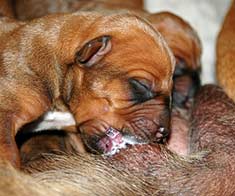
Dog Birth
HEALTHIn the third article of our dog pregnancy series, we look at the wonderful, but messy, process of bringing newborn puppies into the world.
Indoor Dog Potties
DOG PRODUCTSIt's been a long day at work. You were so busy, you didn't even take time to eat a sandwich, let alone run home to let your dog out. You're on your way home, knowing the poor dog is crossing his or her legs by now, when your car breaks down, delaying you even further. Can't somebody make this easier?
Your Dog’s Digestive System
PHYSIOLOGYEver wonder why your dog eats so fast? Or why he eats gross things? Or why he gets sick to his stomach? Or why his waste stinks so bad? Some of these things are normal, some are not.

Canine Respiratory System
BREATHINGThe basic function of your dog's respiratory system is to bring oxygen in to and remove carbon dioxide from the body. Knowing the symptoms of respiratory diseases can help you help your stay healthy.
Shelter Dog Adoption Tips for Success
ADOPTION Are you intimidated by the prospect of "rescuing" a dog from a shelter? One reason that you may be wary of adopting a dog from a shelter is not knowing how to choose. Adopting a dog from a shelter can be a rewarding process, if you're prepared to do a reasonable amount of research.
Canine Urinary Tract Infections
SYMPTOMS AND TREATMENTDoes your dog seem to be having trouble relieving his or her bladder? Learn how to recognize the signs of urinary tract infections and how to treat them before they spread.
What to do for Dog Diarrhea
SYMPTOMS AND REMEDIESIf you have dogs in your house for any length of time, you have likely experienced at least one bout of dog diarrhea. Beyond the pain in the tuckus involved in cleaning up the mess, you should know what causes diarrhea, and when it's important to see the vet.
What to do for a Dog Bite
DOG BEHAVIOR Getting bitten by a dog can be scary, and you may be tempted to run around in circles for a while, trying to figure out what to do. Here's our guide to help you manage the situation.
Top Ten Tips for Living with a Senior Dog
DOG HEALTH Bringing home a new puppy is so exciting, but it doesn’t take all that long for your exuberant puppy to grow into a senior dog who may have special needs. Here are the doggies.com top ten tips for taking care of your companion who has been with you through so much.