Training Begins with Your Puppy's First Steps
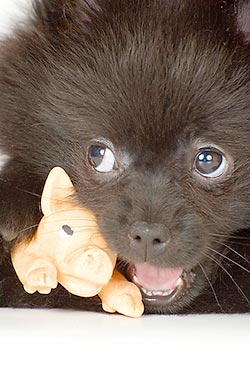
It’s so exciting to bring home a new puppy! You’ve studied the various breeds, searched out a reputable breeder or waited for the perfect dog to come into the shelter. You’ve made the trip to the pet store to find a collar and matching leash and some designer dog dishes. You’ve agonized over a name. And now, finally, you have the puppy in your home. Now what? Your new friend needs to know not only the basics such as where his bathroom is located, but also some manners like staying in an assigned area or off the furniture, and not chewing every pair of shoes you own.
Puppy Proof Your Home
Let’s start with chewing. It is important that you puppy-proof your home to keep the dog safe, but you will never be able to get rid of all the things a puppy might think to chew. Therefore, you must start training right away. Provide plenty of chew toys for your puppy and make sure they are accessible at all times. The things you want to keep safe should be put up out of puppy’s reach. It’s not just shoes and slippers that are of interest. Puppies have been known to chew furniture legs, windowsills, baseboards, even children’s toys.
Provide Plenty of Appropriate Chew Toys
Have you ever seen a child who is teething? They generally like to chew on rattles, teething rings or anything else they can fit in their mouths. Rubbing things over the gums helps the new tooth to break through, easing the pain they are experiencing. Puppies are the same way, and those small mouths can be amazingly destructive! To reduce the amount of damage, put away your belongings and provide lots of appropriate chew toys for the dog.
Direct Him on What to Chew On
When you do catch the puppy chewing on something that doesn’t belong to him, carefully take away the object while firmly saying, “No!” Then give the dog one of his own toys. Once the dog shows interest in his own toy, be sure to tell him what a good dog he is! When you happen to walk into a room and find the puppy chewing on his own toy, praise him for all you’re worth. Let him know how proud you are that he made such a good choice.
Playing and Crating
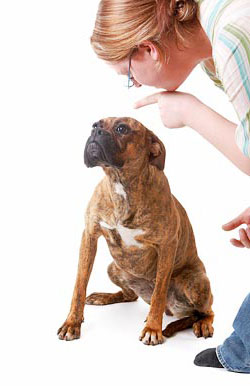
Two other strategies that can help with chewing: keeping the dog occupied and utilizing a crate. Making sure the dog gets enough play time and exercise will tire him out so that he rests rather than chewing on your stuff. For the safety of the dog, as well as for your home, dogs should be kept in a crate when you are away or not able to supervise them directly. The dog may protest at first, but you must persist. Make the crate a fun place, not a punishment, by providing toys. When you first get the puppy, place him in his crate and sit nearby so the dog can see you. Talk to him so he knows you are not ignoring him or angry with him. When the dog is out of the crate, keep him occupied by playing with him.
Crate Training Helps Housebreaking
Crate training can also help with housebreaking. As a general rule, dogs will not soil their dens, which is how they consider their crates. A good strategy used by many breeders is to crate the dog at all times except when you are directly playing with them. Playing outside allows you to “catch them being good.” Whenever the dog does his business where he is supposed to, you must act like he is the smartest animal that ever lived, even if it has taken him months to latch on to the concept. After you feed the dog, chances are he will need to empty his bowels within 10 – 20 minutes. This is a good time to go outside and play. When he starts sniffing around for a place to go, take a break from playing and tell him what a good dog he is. Reward him with your praise for thinking about the right thing to do. Then, when he actually does it, gush over him appropriately.
Provide Frequent Opportunities for Puppy to Go.
Puppies have very small bladders and must be given frequent trips to the yard to establish the pattern that the yard is the appropriate place to relieve themselves. Very small dogs should be taken out no less frequently than every hour. Larger breeds have larger bladders and may be able to contain themselves for several hours at a time. The same process applies as we discussed above. Take the dog outside, praise him when he begins to find his spot, then really let him know what a great dog he is when he does take care of business. A small treat when you return to the indoors is also not a bad idea.
Consistency is Critical to Successful Training
To keep your dog in an assigned area, such as in your yard, off the carpeted floors inside, or off of the furniture, consistency is the key. Every time the dog goes to the wrong area, you must sharply tell him “No!” and guide him to the correct place for some fun and attention. Very soon, the dog will begin to associate the “right” places with play time and belly rubs. Every time the dog thinks about going into the wrong area, but then stops himself, you must praise him. If the dog fails to get the concept, you can use a shaker can to distract him. Place a few pennies in an empty aluminum can. When the dog heads toward the forbidden area, shake the can. This will startle him, making it easier for you to redirect him to the place where you want him to be. Some people put duct tape over the can’s opening and roll the can near the dog to get his attention. This is acceptable only if you do not aim to hit the dog with the can, which will just scare him.
Work With Your Dog’s Motivation
As you think about training your new puppy, it is vital that you remember that there are two major things that motivate a dog: food and attention. Your dog will learn much faster if you use these positive motivators rather than punishment. In fact, there are some dogs who will actually rebel against harsh training methods and willfully disobey you just to be ornery.
Discipline vs. Punishment
Let’s think for a minute about the difference between discipline and punishment. Discipline comes from the same root as disciple. What did the disciples of all the prophets do? They learned from Christ, Mohammed, Buddha, or whoever their leader was. Therefore, discipline is about learning. Punishment, on the other hand, is only about “getting even” or making you, the owner, feel as if you have ultimate power. This is really kind of silly. Of course you are in charge! There is no need to prove it to anyone.
Punishment Leads to “Fight or Flight” Response
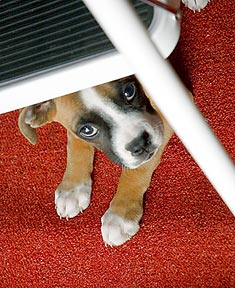
When you go into punishment mode, the dog becomes frightened, causing the release of stress hormones. The dog’s whole system prepares for fight or flight. One of the first things that happens is that the logical, thinking part of the brain shuts down, and the brainstem takes over. The brainstem is responsible only for survival. Even the lowest forms of animals have a brainstem because this is the portion of the brain that keeps our hearts beating and our lungs working. An animal that is using only his brainstem is capable of merely surviving.
Positive Training More Effective Than Negative
When you use calm, positive motivation to teach your dog, you allow the animal to keep using the rest of his brain, not just his brainstem. He can actually think about what you are trying to teach him, rather than concentrating only on keeping himself safe. The dog will in fact learn more quickly with positive motivators than with negative motivators. No matter what you are trying to teach your puppy, teach him with love.
Reward Him When He Performs
Many trainers carry small treats in a fanny pack or pocket to reward the dog each time he performs as expected. If you do this, make sure you compensate in the dog’s diet, cutting back on regular meals during heavy training. The last thing you want is a well-trained dog that is so fat he can’t show off his new tricks! When you first start training, you will want to reward the dog every time he does what you are asking him to do, or even if he is coming closer and closer to doing it. Then, once it is clear that the dog understands the command, but is selectively choosing when to do it, you will want to reward him sporadically. This will keep him following the command, knowing that one of these times he’s going to get a treat.
Praise Instead of Food as a Reward
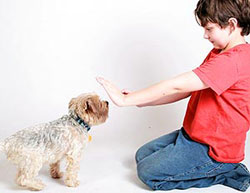
If you choose not to use food as a reward, the next best thing is praise. Your dog will do just about anything for your attention and a good belly scratch. This method will take you a bit longer than using food, but it will work if you are consistent. That means you must reward the dog EVERY time…even in the middle of the night…even when the baby is crying…even when you have the flu. If you tell the dog to sit and he sits, you simply HAVE to make a big deal about it! Once the dog has caught on, you can cut back on the amount of praise. You will still want to let your dog feel the love sporadically so the lesson gets reinforced periodically.
How Long Does Training Take?
How long should you expect training to take? It depends on the complexity of the activity, your relationship with the dog, the intelligence of the specific dog, the animal’s prior experiences with training, and to some degree, the breed with which you are working. For example, Beagles are well-known for being stubborn. This means training will take a little more time and a lot more patience. Other breeds such as German Shepherds or Collies are relatively easier to train.
Patience Will be Rewarded
No matter what breed you are working with, be patient. Most dogs eventually learn their manners. Just keep being consistent, lavishing them with praise, and focusing on building a good relationship with the animal. All of these things will make the dog anxious to please you, and he’ll be jumping through hoops in no time!

Doggies Den: Latest Articles
 Homemade Thanksgiving Treats for Your Dog
NUTRITION We all want to include our dogs in our holiday celebrations, but hopefully, you're aware that sharing table scraps with your dog isn't always the best idea.
 Keeping Your Dog Safe during the Summer Months
HEALTH Summer is coming on fast, so it’s time to plan how you will keep your dog safe and healthy through the lazy, carefree, warm days.
 Vaccination Time Again-Keeping Your Puppy Healthy
DOG HEALTH So you have your new puppy picked out. There are quite a few shots, treatments and examinations that will keep the newest member of your family healthy.
 Canine Thanksgiving Feast
NUTRITION With the wide variety of food at Thanksgiving dinner, chances are you'll want to give your dog something special, too. If you're contemplating what to feed your dog for the holiday, here is a guide to a great Canine Thanksgiving Feast.
 Dog Walking Tips Every Owner Should Know
DOG FUN Walking your dog is not only crucial to keeping him healthy and happy, it strengthens the bond between your canine friend and his caregiver. There are a lot of obstacles out there. Don’t forget these simple tips to keep your walk fun and safe in the outside world.
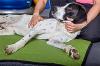 The Benefits of Physiotherapy for your Dog
HEALTH The same techniques that physiotherapists use to treat a variety of injuries and conditions in humans have been adapted to suit animals with great success. Family pets, show dogs, and working dogs can all benefit greatly from physiotherapy. Dogs whose activities involve a lot of agility are especially susceptible to the types of problems that physiotherapy can address.
 The Decision- Adding a Dog to Your Family
FIRST TIME OWNERSBringing a dog into your family is a decision where many people don’t realize it’s magnitude until after they have the dog. There are a number of things that you need to research before you decide to purchase a dog, and it starts right in your own home.
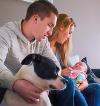 Bringing Your Dog Into Your New Baby's Life
HEALTH Many believe that a dog and a new baby cannot happily coexist, so therefore the dog has to go. This is not necessarily the case.  A new baby does not mean you have to abandon your dog.
Doggies Den:
Most Popular Articles
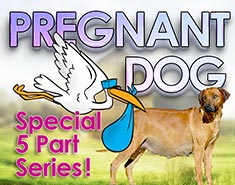
Dog Pregnancy Symptoms
HEALTHIf you suspect your dog might be pregnant, check out part one in this series on pregnant dogs, where we cover pregnant dog symptoms.
Dog Birth
HEALTHIn the third article of our dog pregnancy series, we look at the wonderful, but messy, process of bringing newborn puppies into the world.
Indoor Dog Potties
DOG PRODUCTSIt's been a long day at work. You were so busy, you didn't even take time to eat a sandwich, let alone run home to let your dog out. You're on your way home, knowing the poor dog is crossing his or her legs by now, when your car breaks down, delaying you even further. Can't somebody make this easier?
Your Dog’s Digestive System
PHYSIOLOGYEver wonder why your dog eats so fast? Or why he eats gross things? Or why he gets sick to his stomach? Or why his waste stinks so bad? Some of these things are normal, some are not.
Canine Respiratory System
BREATHINGThe basic function of your dog's respiratory system is to bring oxygen in to and remove carbon dioxide from the body. Knowing the symptoms of respiratory diseases can help you help your stay healthy.
Shelter Dog Adoption Tips for Success
ADOPTION Are you intimidated by the prospect of "rescuing" a dog from a shelter? One reason that you may be wary of adopting a dog from a shelter is not knowing how to choose. Adopting a dog from a shelter can be a rewarding process, if you're prepared to do a reasonable amount of research.
Canine Urinary Tract Infections
SYMPTOMS AND TREATMENTDoes your dog seem to be having trouble relieving his or her bladder? Learn how to recognize the signs of urinary tract infections and how to treat them before they spread.
What to do for Dog Diarrhea
SYMPTOMS AND REMEDIESIf you have dogs in your house for any length of time, you have likely experienced at least one bout of dog diarrhea. Beyond the pain in the tuckus involved in cleaning up the mess, you should know what causes diarrhea, and when it's important to see the vet.
What to do for a Dog Bite
DOG BEHAVIOR Getting bitten by a dog can be scary, and you may be tempted to run around in circles for a while, trying to figure out what to do. Here's our guide to help you manage the situation.
Top Ten Tips for Living with a Senior Dog
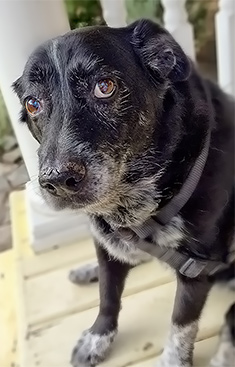
DOG HEALTH Bringing home a new puppy is so exciting, but it doesn’t take all that long for your exuberant puppy to grow into a senior dog who may have special needs. Here are the doggies.com top ten tips for taking care of your companion who has been with you through so much.