Yorkshire Terrier Breed Guide
Known as the Yorkie to all who love them, this lovable member of the toy group is very intelligent, loving, and loyal. The Yorkie has no real desire to be the alpha dog in the pack, so he is an ideal dog to add to a family which already has other pets. His small size makes him ideal for apartment living. They are described as confident, vigorous, and self-important in the breed standard, and most Yorkies fully live up to this description. Although they may be a bit skittish around younger children, they bond quickly and deeply with older children and adults.
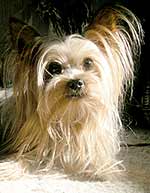
Appearance of the Yorkie
The Yorkshire Terrier is a very small dog of no more than seven pounds, usually standing 8 to 9 inches tall. The breed standard doesn’t distinguish between different sizes of Yorkies, meaning there is no separate standard for so-called Teacup Yorkies.
They have long hair in a single layer that continuously grows and rarely falls out. Shedding is minimal and is normally seen only when the dog is brushed. In addition, Yorkies carry less dander on their coats than some other dogs, making them one of the dogs recommended for dog-lovers who have allergies.
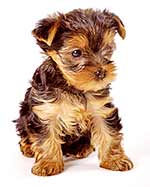
At birth, Yorkies have a puffy black and tan coat, which matures into glossy, fine, silky hair. From the back of the neck to the base of the tail, the adult coat is a dark steel blue, while hair on the tail is a darker blue. Tan hair covers the head, chest and legs, and is darker at the roots than at the tips.
In a show-quality dog, great emphasis is placed on the coat’s texture and coloration. Straight, silky hair is a must, and the colors should show a definite demarcation between the tan and blue portions. The coat is kept long, parted down the middle of the back for show, but may be cut to floor length or in a general puppy cut in pet Yorkies, depending on how much time you have available for grooming.
Grooming a Yorkie
If you plan on showing your dog, you must also plan on spending hours each day brushing his long hair to prevent tangles. Between shows, the coat is often oiled and wrapped in rice paper or tissue paper to keep it healthy. The wraps must be re-done quite often to prevent them from breaking the hair, and the oil must be washed out and replaced weekly.
The good news is that if you are not showing your Yorkie, maintenance is much easier. Some Yorkies go to the groomer every six weeks or so for a clipping, keeping the hair short all over in a style known as a puppy cut. Others carry floor-length hair that is maintained with regular trimming either at home or by a groomer. The hair on the feet and around the tips of the ears is also trimmed to make daily grooming easier. To keep the coat in good shape, the Yorkie should be brushed daily and bathed at least once a month.
Training a Yorkshire Terrier
As with most dogs, Yorkies benefit greatly from early socialization. This early conditioning will help assure that your Yorkie maintains his natural outgoing, bold, and friendly attitude. Without early training, some Yorkies become aloof, timid, or nervous. The best way to encourage your Yorkie to like people is to make sure he is around a variety of people at every opportunity.
To the extent possible, take him with you everywhere you go for the first several months after he joins your family. Obviously, you can’t leave him in the car alone, but you can take your spouse, a friend, or one of your children with you when you run errands and leave the puppy with that person outside the store while you run in to complete your shopping.
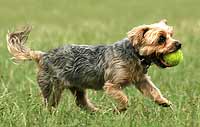
If you are going to your kids’ ballgames, bring the dog along. Find some shade and make sure you provide plenty of water, but let the kids come and play (gently!) with the puppy to get him used to being around children. Walk him daily, both to get him used to the leash and to let him become accustomed to the people in your neighborhood.
Housebreaking and obedience training for the Yorkie is also similar to that for other dogs. Consistency is the name of the game. Remember that you are the alpha dog in your family, and simply insist that your puppy learn and obey your rules every time. Most puppies benefit from an obedience class, even if you have already attended with previous dogs and know how to train the dog. Taking your puppy to class provides another socialization opportunity for him.
History of the Yorkie
Yorkshire Terriers originated in Yorkshire, a county of northern England, at the peak of the industrial revolution in the mid-19th century. Miners and mill workers from Scotland came to England in search of work, bringing with them several small long-coated terriers to hunt vermin. Although the exact ancestry of the breed isn’t known, it is thought that the Yorkie’s small stature, long hair and blue color are from the Clydesdale, Paisley, and Skye terriers of Scotland, while his color patterning is likely from the English Black and Tan Terrier.
Very rarely in the annals of dog breed ancestry is there agreement on the beginnings of a breed. However, for the Yorkie, it is universally accepted that the modern breed sprang from the loins of Huddersfield Ben, a dog born in 1865 in the town of Huddersfield, county of Yorkshire. Although he died at the age of 6, he won 70 prizes at dog shows and was an exceptional ratter. He single-handedly brought the breed to popularity in England.
The Yorkie was brought to the United States in 1872 and was one of the first breeds approved for registration by the American Kennel Club. The dog was popular with those in America who followed the customs of Victorian England, but his popularity fell in the 1940’s. During World War II, a famous war dog named Smoky saved the breed from obscurity.
Designer Dogs
Yorkies are often bred with other small dogs, in hopes of creating a cross-breed that will be hypoallergenic. Sometimes this works, but often it doesn’t. Breeding a Yorkshire Terrier with a Poodle, creating what is known as a Yorkie-Poo, is a fairly reliable way to get a dog that doesn’t shed, as neither of the parent breeds is a heavy shedder. Varying levels of success have been found by mating the Yorkie to the Maltese (creating a Morkie) or by mating the Yorkie to the Miniature Pinscher (making a Yorkie Pin).
It should be noted, however, that the shed fur is not what most commonly causes allergic reactions to dogs. Rather it is a reaction to the dog’s saliva and dander. Dander, composed primarily of dead skin cells, falls off of the dog regardless of whether or not the dog is losing hair.
Famous Yorkies
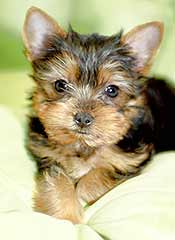
Due to their small size and sleek good looks, the Yorkie has been featured in many films from Funny Face to A Fish Called Wanda to the High School Musical series. The breed has also appeared on TV in such series as Green Acres, Lou Grant, and The George Carlin Show.
Yorkshire Terriers have enriched the lives of countless celebrities, including Tricia Nixon, Britney Spears, Audrey Hepburn, Joan Rivers, Justin Timberlake, Bruce Willis, Brett Favre, and Raven-Symone.
If you are looking for a small, beautiful dog with minimal shedding, the Yorkie may just be the breed for you. However, make sure you are committed to the time the breed requires for grooming before you make a commitment to this dog. He may live as long as 15 years, so you need to be sure you are willing to provide excellent care for him over the long haul.

Doggies Den: Latest Articles
 Homemade Thanksgiving Treats for Your Dog
NUTRITION We all want to include our dogs in our holiday celebrations, but hopefully, you're aware that sharing table scraps with your dog isn't always the best idea.
 Keeping Your Dog Safe during the Summer Months
HEALTH Summer is coming on fast, so it’s time to plan how you will keep your dog safe and healthy through the lazy, carefree, warm days.
 Vaccination Time Again-Keeping Your Puppy Healthy
DOG HEALTH So you have your new puppy picked out. There are quite a few shots, treatments and examinations that will keep the newest member of your family healthy.
 Canine Thanksgiving Feast
NUTRITION With the wide variety of food at Thanksgiving dinner, chances are you'll want to give your dog something special, too. If you're contemplating what to feed your dog for the holiday, here is a guide to a great Canine Thanksgiving Feast.
 Dog Walking Tips Every Owner Should Know
DOG FUN Walking your dog is not only crucial to keeping him healthy and happy, it strengthens the bond between your canine friend and his caregiver. There are a lot of obstacles out there. Don’t forget these simple tips to keep your walk fun and safe in the outside world.
 The Benefits of Physiotherapy for your Dog
HEALTH The same techniques that physiotherapists use to treat a variety of injuries and conditions in humans have been adapted to suit animals with great success. Family pets, show dogs, and working dogs can all benefit greatly from physiotherapy. Dogs whose activities involve a lot of agility are especially susceptible to the types of problems that physiotherapy can address.
 The Decision- Adding a Dog to Your Family
FIRST TIME OWNERSBringing a dog into your family is a decision where many people don’t realize it’s magnitude until after they have the dog. There are a number of things that you need to research before you decide to purchase a dog, and it starts right in your own home.
 Bringing Your Dog Into Your New Baby's Life
HEALTH Many believe that a dog and a new baby cannot happily coexist, so therefore the dog has to go. This is not necessarily the case.  A new baby does not mean you have to abandon your dog.

Doggies Den:
Most Popular Articles
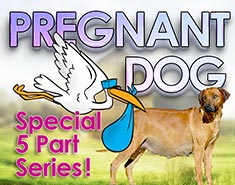
Dog Pregnancy Symptoms
HEALTHIf you suspect your dog might be pregnant, check out part one in this series on pregnant dogs, where we cover pregnant dog symptoms.
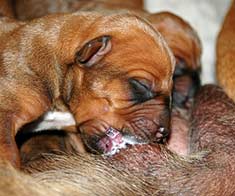
Dog Birth
HEALTHIn the third article of our dog pregnancy series, we look at the wonderful, but messy, process of bringing newborn puppies into the world.
Indoor Dog Potties
DOG PRODUCTSIt's been a long day at work. You were so busy, you didn't even take time to eat a sandwich, let alone run home to let your dog out. You're on your way home, knowing the poor dog is crossing his or her legs by now, when your car breaks down, delaying you even further. Can't somebody make this easier?
Your Dog’s Digestive System
PHYSIOLOGYEver wonder why your dog eats so fast? Or why he eats gross things? Or why he gets sick to his stomach? Or why his waste stinks so bad? Some of these things are normal, some are not.

Canine Respiratory System
BREATHINGThe basic function of your dog's respiratory system is to bring oxygen in to and remove carbon dioxide from the body. Knowing the symptoms of respiratory diseases can help you help your stay healthy.
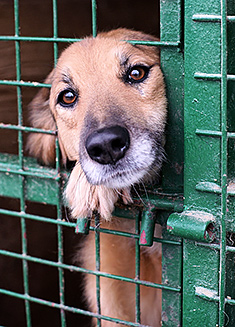
Shelter Dog Adoption Tips for Success
ADOPTION Are you intimidated by the prospect of "rescuing" a dog from a shelter? One reason that you may be wary of adopting a dog from a shelter is not knowing how to choose. Adopting a dog from a shelter can be a rewarding process, if you're prepared to do a reasonable amount of research.
Canine Urinary Tract Infections
SYMPTOMS AND TREATMENTDoes your dog seem to be having trouble relieving his or her bladder? Learn how to recognize the signs of urinary tract infections and how to treat them before they spread.
What to do for Dog Diarrhea
SYMPTOMS AND REMEDIESIf you have dogs in your house for any length of time, you have likely experienced at least one bout of dog diarrhea. Beyond the pain in the tuckus involved in cleaning up the mess, you should know what causes diarrhea, and when it's important to see the vet.
What to do for a Dog Bite
DOG BEHAVIOR Getting bitten by a dog can be scary, and you may be tempted to run around in circles for a while, trying to figure out what to do. Here's our guide to help you manage the situation.
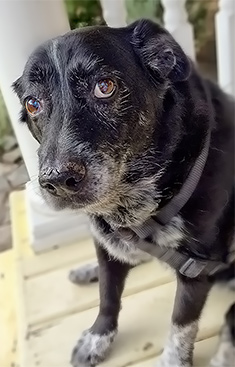
Top Ten Tips for Living with a Senior Dog
DOG HEALTH Bringing home a new puppy is so exciting, but it doesn’t take all that long for your exuberant puppy to grow into a senior dog who may have special needs. Here are the doggies.com top ten tips for taking care of your companion who has been with you through so much.