Puppy Mills: Why and How to Avoid Them
What is a Puppy Mill?
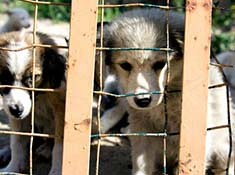
Probably the most basic definition is that a puppy mill is any large-scale breeder who uses irresponsible breeding practices with the goal of making the most money possible in the shortest period of time. Smaller-scale breeders who are irresponsible are usually referred to as backyard breeders, although the problems are the same regardless of the size of the operation.
Irresponsible breeders are not concerned with the health of the puppies they sell. They don't usually keep good records of which puppies came from which parents, and they don't selectively breed out undesirable traits. The puppies are often weaned too early, creating nutritional and immune system deficits.
Conditions at a puppy mill are usually far less than ideal. Overcrowded cages are not cleaned regularly, and veterinary care is scarce to non-existent.
Females in puppy mills are bred every time they come into heat, and when they cannot serve as incubators, they are killed to make way for dogs that can. As a dog is repetitively bred, she produces smaller and smaller litters until she is taken "out of service" due to the reduction in her productivity and profitability.
If the last paragraph sounds to you like something that would be said of a machine, congratulations. You have taken the first step in helping to eliminate puppy mills.
What happens to puppies that come from puppy mills?
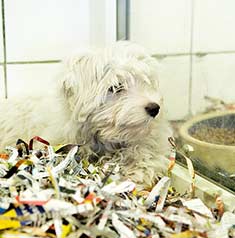
Any puppies that survive their horrible beginnings are generally sold to pet stores to be passed on to customers who don't know any better. They may be transported long distances to the pet store, which results in the death of even more puppies. As they grow older, puppy mill dogs are likely to display the results of bad genetics.
Because their parents are not screened for things like hip dysplasia or eye problems, these puppies are more likely than most to develop these genetic conditions. In addition, the overcrowded conditions at puppy mills can lead to respiratory problems and pneumonia.
Dogs born in puppy mills are often not properly socialized, as they are generally left in their cages until shipped off to the point of sale. This results in dogs that are more likely to be aggressive, which can lead to painful, disfiguring bites to their adoptive families. In addition, these puppies may have a tough time getting along with other dogs in the family.
How did puppy mills get started?
After World War II, many farmers returned home from the front looking for a cash crop and found that as people moved to the suburbs, they wanted puppies to complete their American dreams. At the same time, suburbanites began going to malls which often contained chain pet stores where they could buy puppies by the dozens.
Because the farmers often had chicken coops or rabbit hutches on their properties already, they began to fill them with dogs to satisfy the demand of the pet stores. However, the farmers often didn't make enough money to secure high quality or frequent veterinary care for their dogs.
Until the Humane Society of the United States lobbied for the passage of the Animal Welfare Act in 1966, these kennels were largely unregulated, cruelly producing animals with severe health and behavioral problems. High volume breeding with little or no veterinary care and no regulatory oversight is the epitome of a recipe for disaster.
Thousands of puppy mills still exist in the United States, with high concentrations in the rural areas of Pennsylvania, Arkansas, Kansas, and Missouri. With the advent of Internet sales, demand for puppies has risen again, with buyers often unaware they are purchasing dogs born in a puppy mill.
How can I identify a responsible breeder?
At a bare minimum, you should make sure you visit the breeder to see conditions for yourself. Never, never, never purchase a dog over the Internet or at a pet store without seeing where he came from. Don't believe any pictures you see that purport to show you where the dogs were born (see our blog entry on doctored pictures here).
Ask the breeder to show you where the puppies spend most of their time. Is the area clean and well-maintained?
Take a look at the puppy's parents and ask to see their certification from the OFA, which shows that they have been checked for hip dysplasia and found to be free of genetic orthopedic problems. Also, many breeders will have their dogs checked for genetic eye problems and will have a certificate from CERF, although this is a bit less common than an OFA certification.
Ask the breeder to show you his records. He should keep track of which dogs have been bred with which other dogs, and what the results were. This helps him to selectively breed for desired traits such as gentle personalities or even certain colors. He should also be able to show you each puppy's worming records and each adult dog's shot records.
Ask how many breeds the breeder deals in. Ideally, a breeder will specialize in one or two breeds and will be able to tell you the breed standard of each. He cannot breed to the standard if he doesn't know what it is. As you are talking to the breeder, you will get a good sense of why he is in the business. A high quality breeder has an interest in creating the "perfect" specimen of his preferred breed. He will likely be able to tell you the awards his dogs have won at shows.
Responsible breeders will not usually tell you to "come on over and take your pick of the litter." Rather, they will take your name and let you know when they have a puppy available for you. This is good; it indicates they are not wearing out their breed stock.
While you are interviewing the breeder, he should also be interviewing you. He should want to take some responsibility for sending his puppies to good homes. He should insist that you sign a contract to spay or neuter your dog if you are not buying a show quality dog. He should ask who you intend to use as your veterinarian and what kind of training you plan to provide. He should inquire as to whether the dog will be allowed to live in your house, and if you rent, he should require proof from your landlord that he allows pets.
Aren't there laws that regulate puppy mills?
There is minimal supervision of puppy mills by the United States Department of Agriculture, whose investigators look for violations of the Animal Welfare Act. Commercial breeders are supposed to be licensed and meet minimal standards of care. Certain states have similar laws. However, if a breeder operates without a license or fails to meet minimum standards, it is often not until he is reported that he gets inspected or cited. Penalties are substantially less than what would be required to encourage improvements.
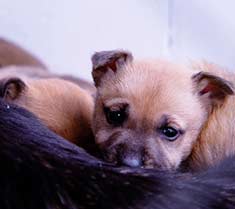
The Humane Society of the United States has a website on puppy mills and devotes an entire page to the USDA Hall of Shame. Here are a few of the things the USDA has found at puppy mills that are still licensed.
"The owner had told USDA that he performs surgical procedures…on animals. Owner has no analgesic or anesthetic agents and no sterilization apparatus present at the facility and is not licensed to practice veterinary medicine…"
"The temperatures…were 34 to 39 degrees Fahrenheit…No bedding was present to offset this temperature drop. There are two functional gas wall heaters present at this time but only the pilots were burning."
"There was a lab female with 7 puppies that was very thin. Her ribs were visible. There was no fresh food in the pen…and the dog was digging in the gravel trying to get to old food that had spilled and was wet."
"Currently, the owner's wife says that the kennel has not been cleaned in probably over a month."
"There are two enclosures, each containing four adults, which has bloody stool on the ground surface."
"The Record of Acquisition of Dogs & Cats on Hand lists approximately 169 breeding adults. The total number of adults accounted for during inspection is 447 adults and 116 puppies."
"Some animals are observed to not have sufficient space to lie in a comfortable position all at once."
If this makes you want to cry, keep reading.
How can I help stop puppy mills?
- The most important thing you can do to stop puppy mills is to take away their business! Simply refuse to buy a puppy if you don't know about his ancestry and haven't seen his parents or birthplace. You may be "rescuing" the one or two dogs you take, but you are encouraging the overall growth of the business by contributing to the mill's profits.
- If you want a purebred, consider adopting from a shelter or breed rescue group, rather than from a commercial breeder.
- Educate others by helping the Humane Society of the United States with its ad campaign. Visit StopPuppyMills.org to find out how to help.
- Lobby state and federal legislators to pass laws that actually protect puppies with stiff penalties for those who fail to comply.
- If you live near a puppy mill, write a letter to your local newspaper or TV station, asking them to expose what is going on at these mills.
- Post flyers on your website or in your town, near pet stores and vet offices, advising people on how to find good dog breeders.
- Help the Humane Society of the United States in its campaign to stop puppy mills. Donate here.

Doggies Den: Latest Articles
 Homemade Thanksgiving Treats for Your Dog
NUTRITION We all want to include our dogs in our holiday celebrations, but hopefully, you're aware that sharing table scraps with your dog isn't always the best idea.
 Keeping Your Dog Safe during the Summer Months
HEALTH Summer is coming on fast, so it’s time to plan how you will keep your dog safe and healthy through the lazy, carefree, warm days.
 Vaccination Time Again-Keeping Your Puppy Healthy
DOG HEALTH So you have your new puppy picked out. There are quite a few shots, treatments and examinations that will keep the newest member of your family healthy.
 Canine Thanksgiving Feast
NUTRITION With the wide variety of food at Thanksgiving dinner, chances are you'll want to give your dog something special, too. If you're contemplating what to feed your dog for the holiday, here is a guide to a great Canine Thanksgiving Feast.
 Dog Walking Tips Every Owner Should Know
DOG FUN Walking your dog is not only crucial to keeping him healthy and happy, it strengthens the bond between your canine friend and his caregiver. There are a lot of obstacles out there. Don’t forget these simple tips to keep your walk fun and safe in the outside world.
 The Benefits of Physiotherapy for your Dog
HEALTH The same techniques that physiotherapists use to treat a variety of injuries and conditions in humans have been adapted to suit animals with great success. Family pets, show dogs, and working dogs can all benefit greatly from physiotherapy. Dogs whose activities involve a lot of agility are especially susceptible to the types of problems that physiotherapy can address.
 The Decision- Adding a Dog to Your Family
FIRST TIME OWNERSBringing a dog into your family is a decision where many people don’t realize it’s magnitude until after they have the dog. There are a number of things that you need to research before you decide to purchase a dog, and it starts right in your own home.
 Bringing Your Dog Into Your New Baby's Life
HEALTH Many believe that a dog and a new baby cannot happily coexist, so therefore the dog has to go. This is not necessarily the case. A new baby does not mean you have to abandon your dog.

Doggies Den:
Most Popular Articles
Dog Pregnancy Symptoms
HEALTHIf you suspect your dog might be pregnant, check out part one in this series on pregnant dogs, where we cover pregnant dog symptoms.
Dog Birth
HEALTHIn the third article of our dog pregnancy series, we look at the wonderful, but messy, process of bringing newborn puppies into the world.
Indoor Dog Potties
DOG PRODUCTSIt's been a long day at work. You were so busy, you didn't even take time to eat a sandwich, let alone run home to let your dog out. You're on your way home, knowing the poor dog is crossing his or her legs by now, when your car breaks down, delaying you even further. Can't somebody make this easier?
Your Dog’s Digestive System
PHYSIOLOGYEver wonder why your dog eats so fast? Or why he eats gross things? Or why he gets sick to his stomach? Or why his waste stinks so bad? Some of these things are normal, some are not.
Canine Respiratory System
BREATHINGThe basic function of your dog's respiratory system is to bring oxygen in to and remove carbon dioxide from the body. Knowing the symptoms of respiratory diseases can help you help your stay healthy.
Shelter Dog Adoption Tips for Success
ADOPTION Are you intimidated by the prospect of "rescuing" a dog from a shelter? One reason that you may be wary of adopting a dog from a shelter is not knowing how to choose. Adopting a dog from a shelter can be a rewarding process, if you're prepared to do a reasonable amount of research.
Canine Urinary Tract Infections
SYMPTOMS AND TREATMENTDoes your dog seem to be having trouble relieving his or her bladder? Learn how to recognize the signs of urinary tract infections and how to treat them before they spread.
What to do for Dog Diarrhea
SYMPTOMS AND REMEDIESIf you have dogs in your house for any length of time, you have likely experienced at least one bout of dog diarrhea. Beyond the pain in the tuckus involved in cleaning up the mess, you should know what causes diarrhea, and when it's important to see the vet.
What to do for a Dog Bite
DOG BEHAVIOR Getting bitten by a dog can be scary, and you may be tempted to run around in circles for a while, trying to figure out what to do. Here's our guide to help you manage the situation.
Top Ten Tips for Living with a Senior Dog
DOG HEALTH Bringing home a new puppy is so exciting, but it doesn’t take all that long for your exuberant puppy to grow into a senior dog who may have special needs. Here are the doggies.com top ten tips for taking care of your companion who has been with you through so much.