Breed Popularity
Each year the American Kennel Club comes out with its list of the most popular purebreds in the United States. Did you ever wonder how these lists are determined or how different breeds have fared through history? Wonder no longer! Doggies.com provides all the information you need to know.
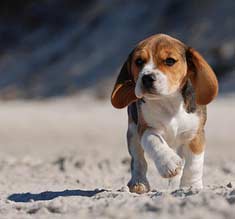
How are dogs ranked for the list?
If you've ever had a purebred dog or hoped to be a breeder, you know that a dog's ancestry, known as his pedigree, is considered a good indication of whether or not the dog will do well in the show ring. Proof of pedigree is provided by registrations with the American Kennel Club. If you want to show your dog, you will insist that your breeder show you the puppy's pedigree before you purchase from him. Most pedigrees go back several generations, showing the mother (dam) and the father (sire), as well as the dam and sire's lineage.
Once you have purchased your dog with the intent of showing or breeding him, you need to register the puppy with the American Kennel Club, so that his place in the family's ancestry is recorded for when he or she is bred. This allows the breeder to show the purchasers of your dog's puppies that the pedigree is continuous. If your dog wins shows, this information will also be entered on his record as proof of a good bloodline.
The American Kennel Club then ranks dogs according to the number of dogs of each breed that are registered each year. This indicates popularity only in so much that it counts dogs who are registered. Many purebred puppy purchasers have no reason to register their dogs as they are only interested in having a pet, not in showing or breeding. Because registration is a fairly expensive proposition, many dogs remain unregistered with the AKC, even if they have an impressive list of ancestors.
Obviously, mutts and mixed breeds cannot be registered as the ancestry is often not known and they cannot be shown in sanctioned show rings due to their questionable heritage.
How many breeds does the American Kennel Club recognize?
This number fluctuates as new breeds are added. When the AKC was founded in 1884, it listed just nine breeds: Pointer, Chesapeake Bay Retriever, English Setter, Gordon Setter, Irish Setter, Clumber Spaniel, Cocker Spaniel, Irish Water Spaniel, and Sussex Spaniel. At the time, the English Cocker Spaniel and the Cocker Spaniel were considered one breed; they have since been separated. These breeds are reflective of the use of dogs at the time as important work animals. Today, they are all members of the Sporting Group of dogs used to flush out and retrieve game.
Many breeds have been developed since 1884, some as the result of cross-breeding, some as a product of selective breeding for specific desired traits. The number of breeds registered today stands at 161 and includes eight variety groups: Sporting, Hound, Working, Terrier, Toy, Non-Sporting, Herding, and Miscellaneous.
Sporting dogs, as mentioned above have wonderful instincts in both water and the woods, and are used to flush out birds and other small prey, and to retrieve downed animals for the hunter. A dog name including the words pointer, retriever, setter, or spaniel indicates membership in the Sporting group.
Hounds are also used for hunting, but are used either to find prey by following their scent trail or to tire out the prey by running him around in circle. Most of the hounds carry the name "hound" in their breed name, but there are exceptions such as the Beagle. Many hounds can be identified by their distinctive howling, known as baying.
Working dogs have been bred to do just as the name implies. They are good at pulling sleds and guarding property. Examples include the Doberman Pinscher, the Siberian Husky, and the Great Dane. Most of them are very large and require good training to keep them under their handlers' control.
Terriers are generally feisty and energetic, ranging in size from about 10 - 15 pounds all the way up to 60 - 75 pounds. The Cairn Terrier may be the best known; these are the dogs like Toto of Wizard of Oz fame. Other examples include the Norfolk Terrier and the huge Airedale Terrier. These dogs' original purpose was to kill vermin. They had to be fast and able to follow their prey down into dens. They required "stripping", a grooming technique important to keeping their coats in proper shape.
Toy dogs are the ones that fit in your purse. Ranging from the Maltese to the Yorkie to the Chihuahua, the main purpose of these breeds is to please their families. They have no hunting ability or work aptitude, but they are great for people who live in apartments or small homes.
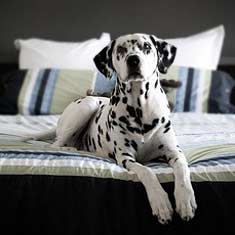
Non-sporting dogs also have no real purpose. They include breeds such as the Chow Chow, Dalmation, and Poodle. This is a very diverse breed in appearance, size, and personality.
The Herding group is the newest variety group, having been created in just 1983. It can be considered a subset of the Working group, which is where all these dogs used to be. The reason it was separated out to its own group is that the Herders are, as the name implies, able to make other animals move to where they are needed. Whether they are herding cattle, sheep, geese, or human children these dogs are valuable members of any ranch team. By gently nipping the ankles of their charges, they can move large groups of even the biggest animals from one pasture to another. Examples of the group include Collies, Corgis, and the Old English Sheepdog.
Finally, the miscellaneous group is used to classify dogs who are members of breeds that are not fully recognized by the AKC. These breeds may be entered into the Stud Book, providing a path of development by selective breeding to bring out the desired characteristic traits. In order to be admitted to the miscellaneous class, the AKC must find that there is "substantial, sustained nationwide interest and activity in the breed." To leave the class and go to one of the other seven classes requires that the Board of Directors of the AKC be "satisfied that a breed is continuing a healthy, dynamic growth." Dogs in the miscellaneous class can compete in conformation shows, but cannot earn championship points. Dogs currently included in the miscellaneous class include the Bluetick Coonhound, the Icelandic Sheepdog, and the Cane Corso.
How do different breeds rate?
The popularity of different breeds changes over time. For example, of the nine original breeds from 1884, only two (the Cocker Spaniel and the Chesapeake Bay Retriever) remain in the top 50.
The 2008 top ten is as follows:
- 10 - Shih Tzu
- 9 - Poodle
- 8 - Bulldog
- 7 - Dachshund
- 6 - Boxer
- 5 - Beagle
- 4 - Golden Retriever
- 3 - German Shepherd
- 2 - Yorkshire Terrier
- 1 - Labrador Retriever
While the Lab has consistently been number one for at least 10 years, it is interesting to look at some of the big movers and shakers on the list. For example, looking at results from the past 10 years, the French Bulldog has risen 50 points from number 76 to number 26. Conversely, the Dalmation has fallen 46 points, from number 30 to number 76. The chart shows the biggest and smallest changes in rank since 1998, with members of the 2008 top ten shown in red.
If you want to see the complete list, click here.
To see the top 10 dogs in the 50 largest United States cities, click here.

Doggies Den: Latest Articles
 Homemade Thanksgiving Treats for Your Dog
NUTRITION We all want to include our dogs in our holiday celebrations, but hopefully, you're aware that sharing table scraps with your dog isn't always the best idea.
 Keeping Your Dog Safe during the Summer Months
HEALTH Summer is coming on fast, so it’s time to plan how you will keep your dog safe and healthy through the lazy, carefree, warm days.
 Vaccination Time Again-Keeping Your Puppy Healthy
DOG HEALTH So you have your new puppy picked out. There are quite a few shots, treatments and examinations that will keep the newest member of your family healthy.
 Canine Thanksgiving Feast
NUTRITION With the wide variety of food at Thanksgiving dinner, chances are you'll want to give your dog something special, too. If you're contemplating what to feed your dog for the holiday, here is a guide to a great Canine Thanksgiving Feast.
 Dog Walking Tips Every Owner Should Know
DOG FUN Walking your dog is not only crucial to keeping him healthy and happy, it strengthens the bond between your canine friend and his caregiver. There are a lot of obstacles out there. Don’t forget these simple tips to keep your walk fun and safe in the outside world.
 The Benefits of Physiotherapy for your Dog
HEALTH The same techniques that physiotherapists use to treat a variety of injuries and conditions in humans have been adapted to suit animals with great success. Family pets, show dogs, and working dogs can all benefit greatly from physiotherapy. Dogs whose activities involve a lot of agility are especially susceptible to the types of problems that physiotherapy can address.
 The Decision- Adding a Dog to Your Family
FIRST TIME OWNERSBringing a dog into your family is a decision where many people don’t realize it’s magnitude until after they have the dog. There are a number of things that you need to research before you decide to purchase a dog, and it starts right in your own home.
 Bringing Your Dog Into Your New Baby's Life
HEALTH Many believe that a dog and a new baby cannot happily coexist, so therefore the dog has to go. This is not necessarily the case. A new baby does not mean you have to abandon your dog.

Doggies Den:
Most Popular Articles
Dog Pregnancy Symptoms
HEALTHIf you suspect your dog might be pregnant, check out part one in this series on pregnant dogs, where we cover pregnant dog symptoms.
Dog Birth
HEALTHIn the third article of our dog pregnancy series, we look at the wonderful, but messy, process of bringing newborn puppies into the world.
Indoor Dog Potties
DOG PRODUCTSIt's been a long day at work. You were so busy, you didn't even take time to eat a sandwich, let alone run home to let your dog out. You're on your way home, knowing the poor dog is crossing his or her legs by now, when your car breaks down, delaying you even further. Can't somebody make this easier?
Your Dog’s Digestive System
PHYSIOLOGYEver wonder why your dog eats so fast? Or why he eats gross things? Or why he gets sick to his stomach? Or why his waste stinks so bad? Some of these things are normal, some are not.
Canine Respiratory System
BREATHINGThe basic function of your dog's respiratory system is to bring oxygen in to and remove carbon dioxide from the body. Knowing the symptoms of respiratory diseases can help you help your stay healthy.
Shelter Dog Adoption Tips for Success
ADOPTION Are you intimidated by the prospect of "rescuing" a dog from a shelter? One reason that you may be wary of adopting a dog from a shelter is not knowing how to choose. Adopting a dog from a shelter can be a rewarding process, if you're prepared to do a reasonable amount of research.
Canine Urinary Tract Infections
SYMPTOMS AND TREATMENTDoes your dog seem to be having trouble relieving his or her bladder? Learn how to recognize the signs of urinary tract infections and how to treat them before they spread.
What to do for Dog Diarrhea
SYMPTOMS AND REMEDIESIf you have dogs in your house for any length of time, you have likely experienced at least one bout of dog diarrhea. Beyond the pain in the tuckus involved in cleaning up the mess, you should know what causes diarrhea, and when it's important to see the vet.
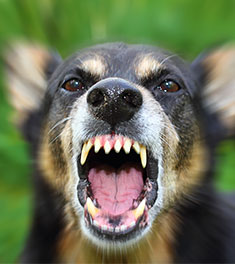
What to do for a Dog Bite
DOG BEHAVIOR Getting bitten by a dog can be scary, and you may be tempted to run around in circles for a while, trying to figure out what to do. Here's our guide to help you manage the situation.
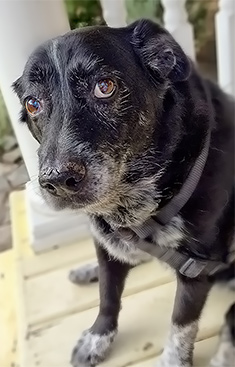
Top Ten Tips for Living with a Senior Dog
DOG HEALTH Bringing home a new puppy is so exciting, but it doesn’t take all that long for your exuberant puppy to grow into a senior dog who may have special needs. Here are the doggies.com top ten tips for taking care of your companion who has been with you through so much.