Mixed Breed Dogs
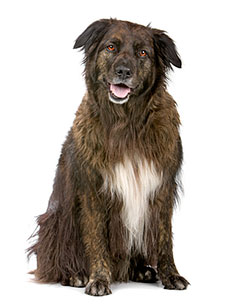
Some call them mutts, others call them mixed breeds, still others call them wonder dogs (because you wonder what they are). No matter what name you give them, these non-purebred dogs can be a wonderful addition to any family.
Mutts around the world
It's interesting that there are so many names for these dogs. In the United Kingdom, they're known as mongrels, while in Hawaii they're known as poi dogs. My favorite name comes from the Bahamas, where dogs of uncertain heritage are known as potcakes, after the leftover table scraps of food they are given. In South Africa, they are known as pavement specials, while in the Philippines, the name askals is a contraction of the word for street dog.
In Australia, they are called "bitsa", meaning "bits o' this and bits o' that". In some South American countries, the name vira-lata means trash can tipper. In the United States, some mutts are called All American dogs, while others are referred to as Heinz 57 dogs, a direct nod to the H. J. Heinz company, which once boasted of making 57 varieties of pickles.
Genetic mysteries
While we'd like to think that purebred dogs are the result of breeding the same type of parents back for centuries, that's really not true. In fact, what we think of as a purebred is actually the result of careful breeding to create a dog of certain size, ability, temperament, and coat. For example, the Bullmastiff, now a recognized breed on its own, was created by mating the Mastiff and the Bulldog. The Leonberger was created by mixing a Landseer Newfoundland and a Saint Bernard with a bit of Pyrenees Mountain Dog.

In fact, only fourteen breeds have been identified as surviving in pretty much the same form now as they were in ancient times. The fourteen breeds are the Afghan Hound, the Chow Chow, the Lhasa Apso, the Pekingese, the Shar Pei, the Shih Tzu, the Tibetan Terrier, the Saluki, the Basenji, the Akita, the Shiba Inu, the Samoyed, the Siberian Husky, and the Alaskan Malamute. To a purist, all other dogs are mixed breeds.
In common parlance, the term mixed breed usually refers to a dog that is the result of mating two dogs without deliberate planning or supervision. Unless you see the actual mating, it can be tough to determine the parentage of the puppies. Due to the magic of genetics, the progeny may look totally unlike either of the parents, making it tough to say what breeds were mixed to create any particular dog.
In 2007, several companies began to market DNA analysis tests that purport to tell the exact ancestry of a dog using DNA gathered from a blood test or cheek swab. These companies have validated some, but not all, of the existing breeds against the test, so it is not 100% accurate. The tests cannot indicate how "pure" a dog is as measured against any particular breed; however, they can look for specific sequences of DNA that are known to exist in specific breeds. If a particular sequence is found that is common to Golden Retrievers, for example, it can be said that the tested dog shares some heritage with Golden Retrievers. There is no way of knowing whether the Golden was a parent, grandparent, or great-grandparent.
Are mutts healthier than purebreds?
In short, the answer to this question depends on the care taken in breeding each dog. If a breeder doesn't take particular care when matching up purebreds into breeding pairs, you may get a population of in-bred dogs who have genetic issues, much as you would have if you had children with a first cousin. Because the gene pool that produces good specimens of purebred dogs is limited, it is not uncommon to create genetically-passed diseases along with the traits needed to meet the breed standard. Most genetic diseases are spread by a recessive trait and can only result in disease if both parents have the same recessive trait. In a small gene pool, it is more likely that both parents will have the specific trait.
For example, the breed standard for a Vizsla states that medium sized with a short, golden-rust single coat. There are specific gene sequences that correlate with medium size, short coat, golden-rust color, and no undercoat. If the specific combination of these four gene sequences also contains the gene sequence that creates blindness, you might end up with beautiful Vizslas that conform in all respects to the breed standard, but who are blind.
In mixed breed dogs, you have a much larger gene pool, meaning that genetic problems are uncommon. Both parents of any one dog are unlikely to carry the same recessive genes, thus few of the offspring will develop the genetic disease. Experts refer to this as "hybrid vigor," suggesting that mixed breed dogs will be healthier. However, this fails to take into account that many mixed breed dogs end up living on the streets, meaning that they can fall ill from a number of environmental factors. Purebred dogs, because of their expense, are rarely left on their own to pick up rabies, parvo, and parasites, or to fall victim to severe injury.
Can my mixed breed dog do typical dog activities and sports?
In large part, the answer to this question depends on the rules of the specific sport. In most activities, other than conformance shows, mixed breed dogs are welcomed with open arms. Because there is no breed standard for mutts, it's tough to judge them in conformance shows and they are excluded.
For a long time, mixed breeds were not allowed in obedience trials, but the American Mixed Breed Obedience Registry and the Mixed Breed Dog Clubs of America have created mixed breed obedience competitions.
In some cases, these organizations also run conformance shows, looking for general traits such as character, health, and temperament, rather than the more typical elements such as size, shape, coat color, and bite.
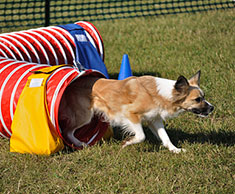
Agiility, flyball, Frisbee competitions, and dock diving have no breed requirements. Lure coursing, on the other hand, is typically restricted to purebred sight hounds.
Are purebreds smarter than mutts?
There is no empirical evidence to suggest that purebreds are smarter than mutts nor that mutts are smarter than purebreds. On the contrary, it is most likely that there are smart and not-so-smart dogs in both categories.
Similarly, there is no evidence that purebreds or mutts are superior to the other in any category including temperament, lifespan, adoptability, or ability to work as a hunter, watchdog, or herder.
About all you can say with certainty about Heinz 57 dogs is that they are unique and need just as much love as any other dog.

Doggies Den: Latest Articles
 Homemade Thanksgiving Treats for Your Dog
NUTRITION We all want to include our dogs in our holiday celebrations, but hopefully, you're aware that sharing table scraps with your dog isn't always the best idea.
 Keeping Your Dog Safe during the Summer Months
HEALTH Summer is coming on fast, so it’s time to plan how you will keep your dog safe and healthy through the lazy, carefree, warm days.
 Vaccination Time Again-Keeping Your Puppy Healthy
DOG HEALTH So you have your new puppy picked out. There are quite a few shots, treatments and examinations that will keep the newest member of your family healthy.
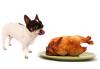 Canine Thanksgiving Feast
NUTRITION With the wide variety of food at Thanksgiving dinner, chances are you'll want to give your dog something special, too. If you're contemplating what to feed your dog for the holiday, here is a guide to a great Canine Thanksgiving Feast.
 Dog Walking Tips Every Owner Should Know
DOG FUN Walking your dog is not only crucial to keeping him healthy and happy, it strengthens the bond between your canine friend and his caregiver. There are a lot of obstacles out there. Don’t forget these simple tips to keep your walk fun and safe in the outside world.
 The Benefits of Physiotherapy for your Dog
HEALTH The same techniques that physiotherapists use to treat a variety of injuries and conditions in humans have been adapted to suit animals with great success. Family pets, show dogs, and working dogs can all benefit greatly from physiotherapy. Dogs whose activities involve a lot of agility are especially susceptible to the types of problems that physiotherapy can address.
 The Decision- Adding a Dog to Your Family
FIRST TIME OWNERSBringing a dog into your family is a decision where many people don’t realize it’s magnitude until after they have the dog. There are a number of things that you need to research before you decide to purchase a dog, and it starts right in your own home.
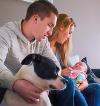 Bringing Your Dog Into Your New Baby's Life
HEALTH Many believe that a dog and a new baby cannot happily coexist, so therefore the dog has to go. This is not necessarily the case. A new baby does not mean you have to abandon your dog.

Doggies Den:
Most Popular Articles
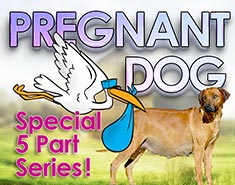
Dog Pregnancy Symptoms
HEALTHIf you suspect your dog might be pregnant, check out part one in this series on pregnant dogs, where we cover pregnant dog symptoms.
Dog Birth
HEALTHIn the third article of our dog pregnancy series, we look at the wonderful, but messy, process of bringing newborn puppies into the world.
Indoor Dog Potties
DOG PRODUCTSIt's been a long day at work. You were so busy, you didn't even take time to eat a sandwich, let alone run home to let your dog out. You're on your way home, knowing the poor dog is crossing his or her legs by now, when your car breaks down, delaying you even further. Can't somebody make this easier?
Your Dog’s Digestive System
PHYSIOLOGYEver wonder why your dog eats so fast? Or why he eats gross things? Or why he gets sick to his stomach? Or why his waste stinks so bad? Some of these things are normal, some are not.

Canine Respiratory System
BREATHINGThe basic function of your dog's respiratory system is to bring oxygen in to and remove carbon dioxide from the body. Knowing the symptoms of respiratory diseases can help you help your stay healthy.
Shelter Dog Adoption Tips for Success
ADOPTION Are you intimidated by the prospect of "rescuing" a dog from a shelter? One reason that you may be wary of adopting a dog from a shelter is not knowing how to choose. Adopting a dog from a shelter can be a rewarding process, if you're prepared to do a reasonable amount of research.
Canine Urinary Tract Infections
SYMPTOMS AND TREATMENTDoes your dog seem to be having trouble relieving his or her bladder? Learn how to recognize the signs of urinary tract infections and how to treat them before they spread.
What to do for Dog Diarrhea
SYMPTOMS AND REMEDIESIf you have dogs in your house for any length of time, you have likely experienced at least one bout of dog diarrhea. Beyond the pain in the tuckus involved in cleaning up the mess, you should know what causes diarrhea, and when it's important to see the vet.
What to do for a Dog Bite
DOG BEHAVIOR Getting bitten by a dog can be scary, and you may be tempted to run around in circles for a while, trying to figure out what to do. Here's our guide to help you manage the situation.
Top Ten Tips for Living with a Senior Dog
DOG HEALTH Bringing home a new puppy is so exciting, but it doesn’t take all that long for your exuberant puppy to grow into a senior dog who may have special needs. Here are the doggies.com top ten tips for taking care of your companion who has been with you through so much.