Newborn Puppy Care
The fourth article in our dog pregnancy series focuses on caring for the newborn puppies. Previous articles in the series were dog pregnancy symptoms, caring for pregnant dogs, and dog births.
Keeping Newborn Puppies Warm
Mama will provide most of the care for her newborn puppies, but one thing she can’t do is keep the environment warm enough for them. During the first week after birth, puppies should be kept in an area that is about 90 degrees. During the second week, this can be reduced to 85 degrees, then to 80 degrees during the third week, and room temperature (about 70 – 75 degrees) during the fourth week. You can accomplish this by hanging a livestock heat lamp above the whelping pen. By adjusting the distance from the lamp to the ground, you can adjust the temperature. Hanging the lamp over one corner of the box allows the dog and pups to move closer when they are cold and further away when they are warm. Make sure there is safety mesh to prevent the bulb from spraying glass over the pen if it breaks, and make sure none of the dogs can reach the lamp. Use these lamps with care, as they have been known to cause fires.
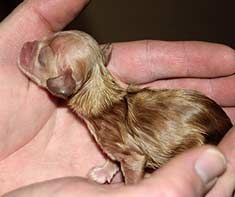
Newborn Puppy Weight
The puppies are likely to lose weight during the first 24 hours, but then should begin gaining and should double their birth weight in about a week to ten days. A puppy who doesn’t gain weight should be seen immediately by a vet to determine the cause and find a solution.
Newborn Puppies and Water
Another common puppy problem is dehydration. Gently pinch some of the skin on the top of your puppies’ necks and let go. Properly hydrated dogs’ skin will bounce right back into place, while a dehydrated dog’s skin will remain tented. If your puppy is dehydrated, you will need to use a small syringe (no needle) to force-feed him some Pedialyte.
Newborn Puppy Umbilical Cord Care
A healthy umbilical should be hard and stringy within hours and usually falls off by day two or three. If the cord becomes spongy, soft, or discolored, it is a sign of infection, which must be treated quickly before it travels into the puppy’s bloodstream.
Watch your mama dog carefully. Although most dogs make excellent mothers, some may occasionally reject a puppy. Often, this is an indication that the puppy has a problem. Carefully check over the rejected puppy for signs of infection or low body temperature.
Feeding Newborn Puppies
Check the mama’s breasts each day. Hot, hard breasts are an indication that the milk is not being emptied regularly. Use hot compresses to soften the milk and help the dog to expel it. If your dog is not able to feed her puppies, or if she is uninterested, you may have to hand feed them.
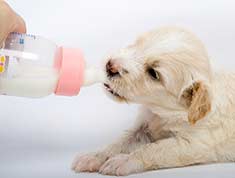
To make puppy formula, mix together a 13 oz. can of evaporated milk, an equal amount of distilled water, 4 oz. of plain yogurt, 4 egg yolks, and 1 tablespoon of liquid vitamins. Feed 2 – 3 cc of formula every 2 – 3 hours if your puppy is less than 7 oz. Over that weight, feed 1 cc per ounce of body weight, every four hours. The safest way to feed your puppy is with a tube threaded down his throat into his stomach. If you are unable to do this, you can use a bottle, but make sure to burp your puppy after bottle-feeding, just as you would a human baby.
When Will Your Newborn Puppies Open Their Eyes?
Your puppies’ eyes should open at about 2 weeks of age. If they are not open by 3 weeks, see the vet. If you notice pus draining from a puppy’s swollen eyes, it is indicative of an eye infection, which can be cleaned out with boric acid solution, then treated with antibiotic eye ointment.
For about the first week of the puppy’s life, he or she cannot pee or poop without stimulation. The mother’s licking takes care of this normally, but if you are having to hand-raise your pups due to the mother’s death, disappearance, illness, or lack of maternal instincts, you will need to stroke the puppy’s tummy and anus with a warm, moist cotton ball several times a day.
Your puppies’ stool should be soft and yellowish-brown. Watery diarrhea can mean a problem with the mother’s diet. Diarrhea combined with vomiting usually means an infection and requires immediate veterinary care. If the puppy becomes constipated, try adding a tablespoon of Karo syrup to the puppy’s formula.
Care of Newborn Puppies
In addition, if the mama is not caring for the puppies, you will need to wash them with a warm, rough washcloth several times each day. The old axiom, “a mother’s work is never done” will definitely be true if you are hand raising newborn puppies!
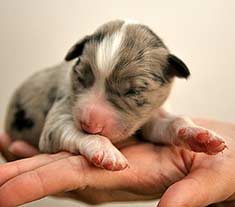
Spend enough time with the puppies so you can catch any problems early enough to have them treated. A healthy puppy plays hard and sleeps hard. During sleep, you should see the puppy twitch occasionally, and when he is awake, he will likely never stop moving! A healthy puppy will have a warm, pink tongue and will energetically nurse, either from the mother or from a bottle. Some signs that something is wrong include a cool tongue, a limp body, vomiting, diarrhea, incessant crying, and rattling as they breathe.
Above all, enjoy your newborn puppies! (And, don’t forget to check back in for the fifth and final article in our series, an FAQ about dog pregnancy and newborn puppies.)

Doggies Den: Latest Articles
 Homemade Thanksgiving Treats for Your Dog
NUTRITION We all want to include our dogs in our holiday celebrations, but hopefully, you're aware that sharing table scraps with your dog isn't always the best idea.
 Keeping Your Dog Safe during the Summer Months
HEALTH Summer is coming on fast, so it’s time to plan how you will keep your dog safe and healthy through the lazy, carefree, warm days.
 Vaccination Time Again-Keeping Your Puppy Healthy
DOG HEALTH So you have your new puppy picked out. There are quite a few shots, treatments and examinations that will keep the newest member of your family healthy.
 Canine Thanksgiving Feast
NUTRITION With the wide variety of food at Thanksgiving dinner, chances are you'll want to give your dog something special, too. If you're contemplating what to feed your dog for the holiday, here is a guide to a great Canine Thanksgiving Feast.
 Dog Walking Tips Every Owner Should Know
DOG FUN Walking your dog is not only crucial to keeping him healthy and happy, it strengthens the bond between your canine friend and his caregiver. There are a lot of obstacles out there. Don’t forget these simple tips to keep your walk fun and safe in the outside world.
 The Benefits of Physiotherapy for your Dog
HEALTH The same techniques that physiotherapists use to treat a variety of injuries and conditions in humans have been adapted to suit animals with great success. Family pets, show dogs, and working dogs can all benefit greatly from physiotherapy. Dogs whose activities involve a lot of agility are especially susceptible to the types of problems that physiotherapy can address.
 The Decision- Adding a Dog to Your Family
FIRST TIME OWNERSBringing a dog into your family is a decision where many people don’t realize it’s magnitude until after they have the dog. There are a number of things that you need to research before you decide to purchase a dog, and it starts right in your own home.
 Bringing Your Dog Into Your New Baby's Life
HEALTH Many believe that a dog and a new baby cannot happily coexist, so therefore the dog has to go. This is not necessarily the case.  A new baby does not mean you have to abandon your dog.
Doggies Den:
Most Popular Articles
Dog Pregnancy Symptoms
HEALTHIf you suspect your dog might be pregnant, check out part one in this series on pregnant dogs, where we cover pregnant dog symptoms.
Dog Birth
HEALTHIn the third article of our dog pregnancy series, we look at the wonderful, but messy, process of bringing newborn puppies into the world.
Indoor Dog Potties
DOG PRODUCTSIt's been a long day at work. You were so busy, you didn't even take time to eat a sandwich, let alone run home to let your dog out. You're on your way home, knowing the poor dog is crossing his or her legs by now, when your car breaks down, delaying you even further. Can't somebody make this easier?
Your Dog’s Digestive System
PHYSIOLOGYEver wonder why your dog eats so fast? Or why he eats gross things? Or why he gets sick to his stomach? Or why his waste stinks so bad? Some of these things are normal, some are not.

Canine Respiratory System
BREATHINGThe basic function of your dog's respiratory system is to bring oxygen in to and remove carbon dioxide from the body. Knowing the symptoms of respiratory diseases can help you help your stay healthy.
Shelter Dog Adoption Tips for Success
ADOPTION Are you intimidated by the prospect of "rescuing" a dog from a shelter? One reason that you may be wary of adopting a dog from a shelter is not knowing how to choose. Adopting a dog from a shelter can be a rewarding process, if you're prepared to do a reasonable amount of research.
Canine Urinary Tract Infections
SYMPTOMS AND TREATMENTDoes your dog seem to be having trouble relieving his or her bladder? Learn how to recognize the signs of urinary tract infections and how to treat them before they spread.
What to do for Dog Diarrhea
SYMPTOMS AND REMEDIESIf you have dogs in your house for any length of time, you have likely experienced at least one bout of dog diarrhea. Beyond the pain in the tuckus involved in cleaning up the mess, you should know what causes diarrhea, and when it's important to see the vet.
What to do for a Dog Bite
DOG BEHAVIOR Getting bitten by a dog can be scary, and you may be tempted to run around in circles for a while, trying to figure out what to do. Here's our guide to help you manage the situation.
Top Ten Tips for Living with a Senior Dog
DOG HEALTH Bringing home a new puppy is so exciting, but it doesn’t take all that long for your exuberant puppy to grow into a senior dog who may have special needs. Here are the doggies.com top ten tips for taking care of your companion who has been with you through so much.