Dog Behavior and You Part 2
Dog Behavior and You: Part 1 here
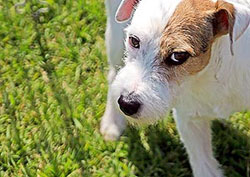
Fear. Do you remember the last time you were really, really scared? Maybe it was when you watched a slasher movie. Or maybe you were frightened when your dog began barking loudly at the door in the middle of the night. What did that fear feel like? Your stomach probably tightened up, your breathing sped up, and your heart raced. But there were other reactions you probably didn’t notice – your pupils dilated, adrenaline coursed through your bloodstream, and the circulation to your vital organs increased.
Physical Reactions to Fear
These physical reactions are the result of your body preparing for fight or flight. This is a response that has evolved over time as a method of survival. All animals experience this, including your dog. It is important that you learn to recognize when your dog is scared, as this will make him act in ways he normally wouldn’t. A scared dog is more likely to bite you or your children, even if he is not normally aggressive.
Sweet Easy-going Jake
Consider Jake, one of the most easy-going dogs you’d ever meet. He doesn’t even react when food is taken from him. His one flaw is that he is scared of children. His owners think he was abused by a child when he was just a pup. One day when Jake was sleeping, a child came to his home to visit. As soon as Jake heard the small voice, he jumped to his feet and hid behind the couch. Wendy, his owner, tried to get him to come out from his hiding place, but he bit her hand, something he had never even hinted at before. He didn’t even growl first as a warning, just lashed out and bit her.
The Tail is one Telltale Sign
The first sign that your dog is experiencing fear is that his tail will go between his legs. If you’ve never seen it, the behavior is quite distinctive. It is more than just an absence of wagging, the tail is actually tucked under the body. It almost looks like it would be painful, as it is such an unnatural position. You are so used to seeing your dog with his tail up and wagging, it almost looks comical to see it held firmly underneath.
Fight or Flight
For most dogs, the fight or flight reaction tends towards the flight side. They will try to escape from the thing that is scaring them. They may back slowly away or they may turn and run as fast as they can, but escaping is generally their first choice. Looking for a safe haven, they may go to their bed or crate or another place where they feel protected. They will often try to fit into places too small for them, such as behind your furniture, under your bed, or even behind you!
Frightened Eyes
If you look closely at a scared dog, you may notice that his pupils are dilated. This is difficult to see in most dogs, as their eyes are so dark, and you really don’t want to get close enough to check while the dog is agitated. The reason for pupil dilation is the same in dogs as it is in people; it allows us to see more acutely. When any animal is scared, he needs to see more clearly to identify escape routes and to identify any further threats that may occur. Dilation of the pupils allows more information to reach the brain, which may prevent the animal from being hurt or killed.
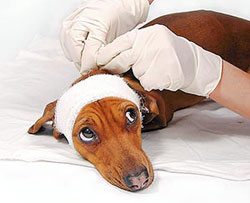
Another characteristic of a scared dog’s eyes is that he will turn them to the side so that the whites of his eyes show. Referred to as “whale eyes”, this action allows the dog to see the threat while not confronting it. To a dog, eye contact means dominance. If a dog is afraid, he is acknowledging the dominance of whatever it is that is scaring him. The last thing he wants to do is challenge that thing by asserting his own dominance.
Scared Dogs Might Bark, or Not
Dogs may or may not bark when they are scared. Although he does not want to challenge the evil, scary thing, he does want to keep it away from him. He also may want to warn other people of the impending danger. Barking is especially likely when the dog is cornered or can’t get away from the danger because of a fence or chain. If the dog cannot get away from the thing that is scaring him, the next best thing is to keep it away from him.
Raised Hackles
Another tactic the dog uses to keep scary things away is to raise his hackles, the fur along his spine. Raised hackles are easiest to see between the shoulder blades, and to some extent at the base of the tail. This behavior can indicate a number of different things, all associated with a heightened sense of excitement. Much as a person might get goose bumps, a dog raises his hackles when he having an emotional response to something. This may be fear, distress, aggression, or general excitement.
Scared Posture
Your dog’s posture will also indicate his level of comfort. If the dog is confident, he will walk with his head held high, his limbs loose. A fearful dog, on the other hand, will walk lower to the ground, holding himself stiffly. You will notice your dog looks almost as if he is taking two steps forward and one step back. The dog is usually curious enough to want to draw nearer, but scared enough to do it very slowly. This stiffness of movement also contributes to whale eyes. The dog does not want to turn his head to face the threat, so he will turn just his eyes, allowing you to see the whites.
Mouth and Ears Give Further Clues
Pay attention to your dog’s lips when you suspect he might be frightened. Like pupil dilation, the shape of the mouth may be difficult for you to see. A frightened dog will pull the corners of his lips back, not necessarily exposing his teeth as he would when he is angry, but enough to stretch his lips out so they appear to be thinner.
The last indicator of fear is the way the dog holds his ears. This is easiest to see in dogs with ears that stand up normally, rather than in hounds, but the principle is the same. A scared dog will slick his ears back against his head. While an uncertain dog will lay his ears back, then release them to a normal position, a truly fearful dog will keep his ears pinned back until he feels safe again.
Pointing Backwards
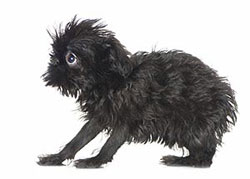
It is important as you try to read your dog’s signals that you look at the whole picture, as well as the context of the situation in which you find him. When someone or something is threatening your dog, everything about the animal points backwards. Lips and ears are back, the tail is underneath, backwards from its normal state. The dog even holds himself back, in a posture that indicates retreat. A relaxed dog is pretty easy to read, and you should attempt to keep your dog in this state as much as possible. However, when your dog begins to exhibit signs of fear, it is time to get him out of the situation as quickly as possible, both for his safety and for your own.
Try to Calm your Dog
If it is not possible to remove your dog from the situation, such as when you are visiting the vet’s office, speak calmly and softly to your dog. Pet him gently, but be sure to keep your hands away from his mouth. Remember Jake, who never threatened anyone, but turned on his own best friend when he was afraid. Reassure him by the tone of your voice and the touch of your hand. He may not get over his fear, but he’ll feel calmer for your efforts.
Be sure to look at the first installment of this series to read about how your dog looks when he is confident, and spend some time observing your dog to learn how his emotions and moods affect his body language. Next time, we’ll talk about aggressive dogs and how to protect yourself when you see one.

Doggies Den: Latest Articles
 Homemade Thanksgiving Treats for Your Dog
NUTRITION We all want to include our dogs in our holiday celebrations, but hopefully, you're aware that sharing table scraps with your dog isn't always the best idea.
 Keeping Your Dog Safe during the Summer Months
HEALTH Summer is coming on fast, so it’s time to plan how you will keep your dog safe and healthy through the lazy, carefree, warm days.
 Vaccination Time Again-Keeping Your Puppy Healthy
DOG HEALTH So you have your new puppy picked out. There are quite a few shots, treatments and examinations that will keep the newest member of your family healthy.
 Canine Thanksgiving Feast
NUTRITION With the wide variety of food at Thanksgiving dinner, chances are you'll want to give your dog something special, too. If you're contemplating what to feed your dog for the holiday, here is a guide to a great Canine Thanksgiving Feast.
 Dog Walking Tips Every Owner Should Know
DOG FUN Walking your dog is not only crucial to keeping him healthy and happy, it strengthens the bond between your canine friend and his caregiver. There are a lot of obstacles out there. Don’t forget these simple tips to keep your walk fun and safe in the outside world.
 The Benefits of Physiotherapy for your Dog
HEALTH The same techniques that physiotherapists use to treat a variety of injuries and conditions in humans have been adapted to suit animals with great success. Family pets, show dogs, and working dogs can all benefit greatly from physiotherapy. Dogs whose activities involve a lot of agility are especially susceptible to the types of problems that physiotherapy can address.
 The Decision- Adding a Dog to Your Family
FIRST TIME OWNERSBringing a dog into your family is a decision where many people don’t realize it’s magnitude until after they have the dog. There are a number of things that you need to research before you decide to purchase a dog, and it starts right in your own home.
 Bringing Your Dog Into Your New Baby's Life
HEALTH Many believe that a dog and a new baby cannot happily coexist, so therefore the dog has to go. This is not necessarily the case.  A new baby does not mean you have to abandon your dog.

Doggies Den:
Most Popular Articles
Dog Pregnancy Symptoms
HEALTHIf you suspect your dog might be pregnant, check out part one in this series on pregnant dogs, where we cover pregnant dog symptoms.
Dog Birth
HEALTHIn the third article of our dog pregnancy series, we look at the wonderful, but messy, process of bringing newborn puppies into the world.
Indoor Dog Potties
DOG PRODUCTSIt's been a long day at work. You were so busy, you didn't even take time to eat a sandwich, let alone run home to let your dog out. You're on your way home, knowing the poor dog is crossing his or her legs by now, when your car breaks down, delaying you even further. Can't somebody make this easier?
Your Dog’s Digestive System
PHYSIOLOGYEver wonder why your dog eats so fast? Or why he eats gross things? Or why he gets sick to his stomach? Or why his waste stinks so bad? Some of these things are normal, some are not.
Canine Respiratory System
BREATHINGThe basic function of your dog's respiratory system is to bring oxygen in to and remove carbon dioxide from the body. Knowing the symptoms of respiratory diseases can help you help your stay healthy.
Shelter Dog Adoption Tips for Success
ADOPTION Are you intimidated by the prospect of "rescuing" a dog from a shelter? One reason that you may be wary of adopting a dog from a shelter is not knowing how to choose. Adopting a dog from a shelter can be a rewarding process, if you're prepared to do a reasonable amount of research.
Canine Urinary Tract Infections
SYMPTOMS AND TREATMENTDoes your dog seem to be having trouble relieving his or her bladder? Learn how to recognize the signs of urinary tract infections and how to treat them before they spread.
What to do for Dog Diarrhea
SYMPTOMS AND REMEDIESIf you have dogs in your house for any length of time, you have likely experienced at least one bout of dog diarrhea. Beyond the pain in the tuckus involved in cleaning up the mess, you should know what causes diarrhea, and when it's important to see the vet.
What to do for a Dog Bite
DOG BEHAVIOR Getting bitten by a dog can be scary, and you may be tempted to run around in circles for a while, trying to figure out what to do. Here's our guide to help you manage the situation.
Top Ten Tips for Living with a Senior Dog
DOG HEALTH Bringing home a new puppy is so exciting, but it doesn’t take all that long for your exuberant puppy to grow into a senior dog who may have special needs. Here are the doggies.com top ten tips for taking care of your companion who has been with you through so much.