Dog Behavior and You Part 1
Did you ever wonder what your dog was trying to tell you? Is he happy or sad? Scared or confident? Looking for play or ready to rest? Wonder no more!
Doggies.com is proud to present this continuing series, translating SpotSpeak into everyday English for you. Although dogs can communicate with barks and growls, they have a much larger repertoire when you learn to read their body language. Everything from the way they hold their bodies to the way they lick their lips, move their tails, hold their ears, and dilate their pupils can give you clues to their mood.
Each installment will consider one mood or emotion and the body language that is indicative of it. Learning how to read a dog’s body language will help you not only to understand your dog, but also to interpret the warning signals an aggressive dog might give so you know when you might be in danger.
Observe Your Dog
Spend some time carefully observing your canine friends to see how they act in different situations. When you play with your dog, he will show you how a happy dog looks. When you take your four legged friend to the dog park, you will see how he looks when he plays with other dogs and establishes himself in the pack order. At the vet’s office, you will likely see his worried look. Careful observation of how the dog behaves under circumstances that are fairly easy to predict will help you to understand what your dog is trying to tell you when you are in new situations where you are unsure what his reaction will be.
A Confident Dog
The first mood we will consider is confidence. Like humans, dogs feel confident when they are secure in their surroundings and comfortable with the people or other animals in the immediate area. Take your dog to a spot in the house or yard where you know he is comfortable and take a look at him. You will see the markings of a confident dog: chest out, tail up and slowly wagging, and ears either pricked up or relaxed. The pupils of the eyes, if you can see them, will be small, and the dog may make direct eye contact with you.
Standing Tall
There’s nothing quite like the look of a confident dog. He stands up big and tall, without a care in the world. Much as a confident person might puff out his chest, the confident dog will puff out his chest, elongating his body to its full length. The dog wants to make sure other dogs know he is secure in his position as the alpha dog in the pack. To do this, he makes himself look bigger than he really is by standing up tall, legs straight and head held high.
The Confident Dog’s Mouth
The mouth of a confident dog is relaxed, with the lips covering the teeth. The dog will not be panting as a behavior, but may be panting to cool himself if it is warm out. You will not see any teeth, as the lips fall gently over them due to gravity. The dog is not generally using any of his mouth muscles to pull the lips back or up when relaxed.
Eyes Provide Further Clues
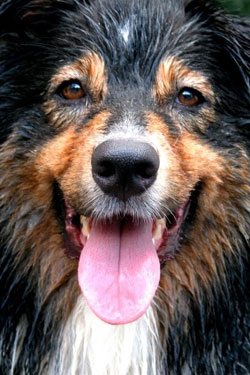
Eye contact is used by dogs to indicate dominance. A confident dog will have no problem maintaining direct eye contact with you, as he already knows he is in charge. A submissive dog, on the other hand, will break eye contact, admitting that you are the alpha dog in the relationship. The pupils will be small and relaxed, and no white will be showing around the eyes of a confident dog. A fearful dog will have dilated pupils, much as a human does. This serves the protective purpose of allowing the dog to take in more information as he prepares for “fight or flight”. A submissive dog will turn his head away while keeping his eyes on the dominant dog, leading to his showing the whites of his eyes.
Tail Posture
A dog can also show his confidence through his tail posture. The dog will hold his tail erect, wagging it in a slow sweep. A recent study showed that dogs wagged their tails towards the right side of their bodies when they were happy and towards the left side when they felt challenged. In the study, Italian neuroscientists and veterinarians presented crated dogs with a glimpse of their owners, an unknown human, a friendly cat, and a dominant dog. The dogs in the study wagged their tails towards the right side of their rumps when they saw either of the humans or the friendly cat. When presented with the dominant dog, however, each of the dogs wagged more to the left side.
Left Brain-Right Brain
This observation tracks with what is seen in other animals, where the left side of the brain specializes in positive feelings while the right side of the brain is associated with negative feelings or depression. You may remember that the right side of the brain controls the left side of the body, resulting in the leftward tail wag under negative stimuli.
The Confident Dog’s Ears
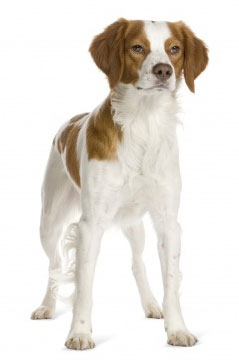
Dogs can tell us a lot with the shape of their ears. A confident dog will hold his ears in a relaxed posture or may have them standing at attention: facing forward and slightly pricked up. You may be familiar with this expectant pricking up of the ears, as a dog will often do this when you hold up a treat. This is in contrast to an aggressive dog which pins his ears back or a submissive dog who lays his ears down as a symbol of subservience.
Coming Up Next
In the next installment of this series, we’ll consider the fearful dog, as well as some calming behaviors you can use to help him become more confident. Until then, spend some time observing your dog in different situations so you can see what makes him feel the most confident, with an erect posture, relaxed mouth, erect slow-wagging tail, pricked-up ears, and direct eye contact through relaxed eyes. Like humans, dogs love to feel confident, so you will want to maximize his time in the environments that make him feel this way.
Dog Behavior and You: Part 2 here
Dog Behavior and You: Part 3 here

Doggies Den: Latest Articles
 Homemade Thanksgiving Treats for Your Dog
NUTRITION We all want to include our dogs in our holiday celebrations, but hopefully, you're aware that sharing table scraps with your dog isn't always the best idea.
 Keeping Your Dog Safe during the Summer Months
HEALTH Summer is coming on fast, so it’s time to plan how you will keep your dog safe and healthy through the lazy, carefree, warm days.
 Vaccination Time Again-Keeping Your Puppy Healthy
DOG HEALTH So you have your new puppy picked out. There are quite a few shots, treatments and examinations that will keep the newest member of your family healthy.
 Canine Thanksgiving Feast
NUTRITION With the wide variety of food at Thanksgiving dinner, chances are you'll want to give your dog something special, too. If you're contemplating what to feed your dog for the holiday, here is a guide to a great Canine Thanksgiving Feast.
 Dog Walking Tips Every Owner Should Know
DOG FUN Walking your dog is not only crucial to keeping him healthy and happy, it strengthens the bond between your canine friend and his caregiver. There are a lot of obstacles out there. Don’t forget these simple tips to keep your walk fun and safe in the outside world.
 The Benefits of Physiotherapy for your Dog
HEALTH The same techniques that physiotherapists use to treat a variety of injuries and conditions in humans have been adapted to suit animals with great success. Family pets, show dogs, and working dogs can all benefit greatly from physiotherapy. Dogs whose activities involve a lot of agility are especially susceptible to the types of problems that physiotherapy can address.
 The Decision- Adding a Dog to Your Family
FIRST TIME OWNERSBringing a dog into your family is a decision where many people don’t realize it’s magnitude until after they have the dog. There are a number of things that you need to research before you decide to purchase a dog, and it starts right in your own home.
 Bringing Your Dog Into Your New Baby's Life
HEALTH Many believe that a dog and a new baby cannot happily coexist, so therefore the dog has to go. This is not necessarily the case.  A new baby does not mean you have to abandon your dog.

Doggies Den:
Most Popular Articles
Dog Pregnancy Symptoms
HEALTHIf you suspect your dog might be pregnant, check out part one in this series on pregnant dogs, where we cover pregnant dog symptoms.
Dog Birth
HEALTHIn the third article of our dog pregnancy series, we look at the wonderful, but messy, process of bringing newborn puppies into the world.
Indoor Dog Potties
DOG PRODUCTSIt's been a long day at work. You were so busy, you didn't even take time to eat a sandwich, let alone run home to let your dog out. You're on your way home, knowing the poor dog is crossing his or her legs by now, when your car breaks down, delaying you even further. Can't somebody make this easier?
Your Dog’s Digestive System
PHYSIOLOGYEver wonder why your dog eats so fast? Or why he eats gross things? Or why he gets sick to his stomach? Or why his waste stinks so bad? Some of these things are normal, some are not.

Canine Respiratory System
BREATHINGThe basic function of your dog's respiratory system is to bring oxygen in to and remove carbon dioxide from the body. Knowing the symptoms of respiratory diseases can help you help your stay healthy.
Shelter Dog Adoption Tips for Success
ADOPTION Are you intimidated by the prospect of "rescuing" a dog from a shelter? One reason that you may be wary of adopting a dog from a shelter is not knowing how to choose. Adopting a dog from a shelter can be a rewarding process, if you're prepared to do a reasonable amount of research.
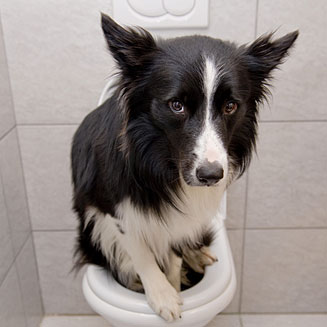
Canine Urinary Tract Infections
SYMPTOMS AND TREATMENTDoes your dog seem to be having trouble relieving his or her bladder? Learn how to recognize the signs of urinary tract infections and how to treat them before they spread.
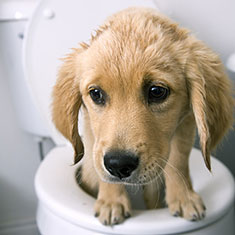
What to do for Dog Diarrhea
SYMPTOMS AND REMEDIESIf you have dogs in your house for any length of time, you have likely experienced at least one bout of dog diarrhea. Beyond the pain in the tuckus involved in cleaning up the mess, you should know what causes diarrhea, and when it's important to see the vet.
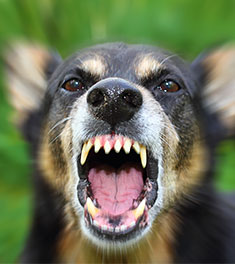
What to do for a Dog Bite
DOG BEHAVIOR Getting bitten by a dog can be scary, and you may be tempted to run around in circles for a while, trying to figure out what to do. Here's our guide to help you manage the situation.
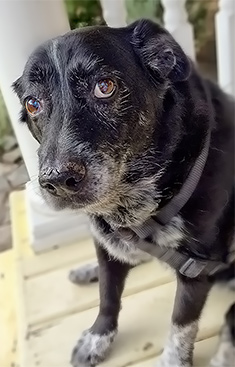
Top Ten Tips for Living with a Senior Dog
DOG HEALTH Bringing home a new puppy is so exciting, but it doesn’t take all that long for your exuberant puppy to grow into a senior dog who may have special needs. Here are the doggies.com top ten tips for taking care of your companion who has been with you through so much.